


"We have to learn to live together as brothers or perish together as fools."
—Martin Luther King Jr.
From 2015 through 2018, I witnessed a shift on college campuses. Over four years, they went from being places of inquiry and debate to those of consensus and suppression. Of course, this shift wasn’t as sudden as it seemed – it was simply the materialization of an ethos that had long been building on college campuses.
During that time, I had a unique vantage point as editor-in-chief of a national magazine whose mission was advocating for diversity and inclusion in higher education. Through interviews and stories, we championed underrepresented groups and their causes.
But on the ground, it was percentages that mattered.
Because magazine sales themselves weren’t a big moneymaker, we developed and sold campus climate surveys. These were surveys for students, faculty and staff that measured the representation of people from groups society deemed diverse, as well as their levels of comfort and belonging on campus. Rather than prioritizing diversity of thought and openness to dialogue, these surveys became a litmus test for how virtuous a university was based solely on predetermined DEI metrics.
I watched as characteristics like skin color, sexuality and immigration status increasingly took precedence over long-held values like freedom of speech, dialogue and debate — those central to America. I saw students voice their grievances loudly and proudly, but show little willingness to engage in discussions with those they disagreed with. University administrators often accommodated their demands rather than encourage meaningful engagement and debate. Thus shouting down speakers and creating safe spaces became the norm.
Ultimately, two sides emerged: liberals, who often supported DEI-related efforts, and conservatives, who were seen as being opposed to diversity on its face.
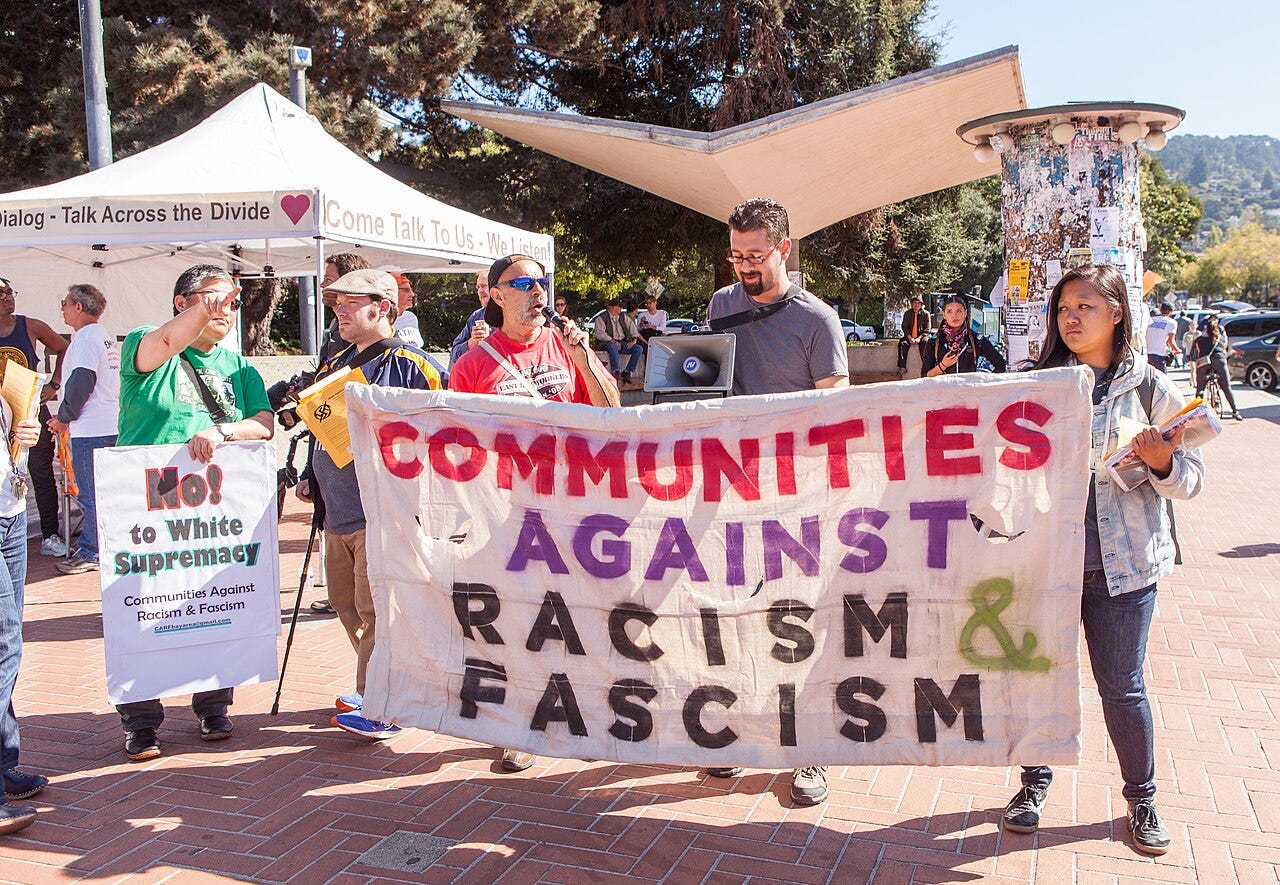
It’s often said that what happens on college campuses doesn’t stay on college campuses — it bleeds over into society at large. Today, we’re seeing the consequences of an unwillingness to engage across differences in real-time.
We’re at a point where 65% of Americans say they don’t engage in in-person or online political discussions with people who have different political opinions; 56% say they’ve stopped talking to someone about political news because of something they said; and 58% say concern about making things uncomfortable has kept them from discussing the news with others.

Perhaps this reluctance is linked to our growing inability to listen – to be curious instead of judgmental. In a 2026 survey, half of U.S. adults said they believe that in most conversations about politics or social issues, people are largely trying to prove they’re right as opposed to trying to understand where others are coming from. Additionally, 85% said they’d avoided bringing up a topic in the previous month because of fear it might turn into an argument. And despite 91% of people agreeing that most Americans seek out information that confirms what they already believe, only 22% admitted to doing so themselves.
The nation, it seems, has become a radical extension of the college campus.
And when fellow citizens won’t talk to one another, bad things happen. For one thing, we increasingly see others as morally corrupt.
In a 2025 Pew Research Center survey, Americans were more likely than people in the 24 other countries surveyed to question the morality of their fellow citizens. The U.S. was the only country where more adults characterized the morality and ethics of their peers as bad (53%) as opposed to good (47%).
Professor and author Dr. Robin Reames writes of the repercussions of this in her book The Ancient Art of Thinking for Yourself: The Power of Rhetoric in Polarized Times. “The further we are from rhetoric and argumentation,” she writes, “the closer we are to violence and coercion.”
The data do seem to suggest that political violence is up, with most Americans agreeing.
How to escape the cave of our ignorance

A conversation with Robin Reames, author of "The Ancient Art of Thinking for Yourself."
Eight-five percent of respondents in an October 2025 Pew Research Center poll said they believe politically motivated violence is on the rise in the U.S., though they’re divided over why. For individuals of both parties, the most cited reason for the recent increase in political violence was the rhetoric and behavior of the “other side”; polarization and lack of understanding ranked second and third.
This is compounded by the fact that 35.6% of American adults in a 2024-2025 study by UC Davis Centers for Violence Prevention said they believe violence is “usually or always” justified to advance political objectives.
Regardless of what the polls show, it’s not difficult to see how we’ve gotten to this point. We live among yet don’t speak to one another, and thus know little about each other. What’s worse, we’ve convinced ourselves we like it this way.
Yet our lack of insight into one another, as well as our motives, doesn’t keep us from making judgements.

Charlie Kirk’s murder is a prime example of the danger posed by the modern ethos that got its start on college campuses. A man whose life was centered around having conversations with people with whom he disagreed was shot and killed while doing the very thing that many people – young and old – are seemingly incapable of doing today. This is despite the fact they might find it to be a positive experience, as research by Michael Kardas suggests.

His 2024 study of 198 people of varying races, ethnicities, religions and political ideologies revealed that people often walk away from political conversations with strangers feeling more optimistic than they anticipated. “Conversation has a way of surfacing these areas of agreement that people don’t seem to recognize before they’ve had the conversation,” Kardas, an assistant professor of management and human resources at the University of Wisconsin–Madison, told me. “Expressing genuine curiosity and learning from another person is not experienced as a threat to what you cherish — it’s more of a window into a different side of an issue.”
Civil rights and women’s rights didn’t come about by advocates avoiding, screaming at or physically assaulting their opponents. Throughout all of history, progress has been achieved through the slow, uncomfortable, often fraught discussing and hashing out of ideas and perspectives.
English philosopher and politician John Stuart Mill succinctly captures the importance of this pursuit in his book On Liberty, published in 1859: “He who knows only his own side of the case, knows little of that.”
After all, having a diversity of perspectives – as opposed to relying on characteristics like race, ethnicity or sexual identity, which aren’t necessarily the best indicators of a person’s life experience or ideology – is a foundational principle of America. A commitment to individual liberty, rather than a common ethnicity, is what sets her apart from other nations.
As Libby Stegger notes, in America, “all perspectives have value and are necessary” — a concept called pluralism.
“That is a central organizing principle that doesn’t cut people off, but rather invites people in,” Stegger, founder of Civic Bridgers, told me. “I might prioritize a value differently than you do, but it doesn’t mean you don’t have values. It doesn’t mean there aren’t places where we can work together.”
Knowing this, perhaps the best place to start is higher education …

Do you agree/disagree? Please share your thoughts in the comments — but, please, be civil. (Successful dialogue depends on it.)
This post contains affiliate links. We earn a small commission from books purchased through these links.

You and @IvyExile should compare notes and commiserate about working at a university and trying to do an honest job.
Politics might be downstream from culture, but with academia thoroughly politicized and polarized, so is education. The slow march thru the institutions by Marxists and gushers of US Government money have turned education into indoctrination and no deviation from “approved thinking” is tolerated.
I posit that far too many people on all sides of the populace, but mostly on what is called the Left, are certain they are right, even when their ideas are nonsense, unworkable and have been tried before and failed miserably. Shouting people down when they point out that Socialism has failed every single time it has been tried, and with catastrophic results BTW, and insisting that “Real Socialism has never been tried!” is not helpful or useful.
And calling people Fascists, especially when you have no idea what the term really means, and that everything they say is “Hate Speech” simply to silence them and stop a conversation you do not like does not promote civil conversations.
I was a reporter/flack for Columbia 2011-2022. It was already a stilted and closed-minded an environment and got worse throughout Obama's presidency, but the bottom really fell out once Trump had his shock victory in 2016.