Putting the public good over politics
Is building connections outside of "big P" politics a better way to maintain our democracy?

“You say that we’ve got nothing in common
No common ground to start from
And we’re falling apart.”
—“Breakfast at Tiffany’s” by Deep Blue Something
In 2020, Libby Stegger was living in Minnesota’s Twin Cities when the nation caught fire.
With the pandemic still in its early days, the region experienced a more tragic and personal blow – the death of George Floyd on the streets of Minneapolis. The resulting public outcry gave way to a wave of violent protests that would define that summer, while a divisive election loomed.
It was in this context that Stegger caught herself doing something uncharacteristic.
“I realized I was making assumptions about a lot of people who I didn’t know that weren’t true,” she says. “I had become a victim of polarization, and I realized there was some cognitive dissonance. I saw myself as a bridger – as someone who respected people from different experiences and walks of life – yet somehow I was led to believe an entire group of people were fundamentally opposed to my worldview.”
So Stegger did what any curious, humble person would do … she began making an effort to build relationships with people with different perspectives. In the process, she discovered something surprising: “We often shared a lot of core values,” Stegger says, “but maybe we disagreed on how to achieve them.”
With this understanding, Stegger founded Civic Bridgers, a nonprofit whose mission is to prepare emerging leaders to bridge divides. By focusing on the population that’s feeling the greatest lack of agency – that is the “belief that their actions can make a difference in the world,” Stegger says – Civic Bridgers strives to build a sense of community among these young people.
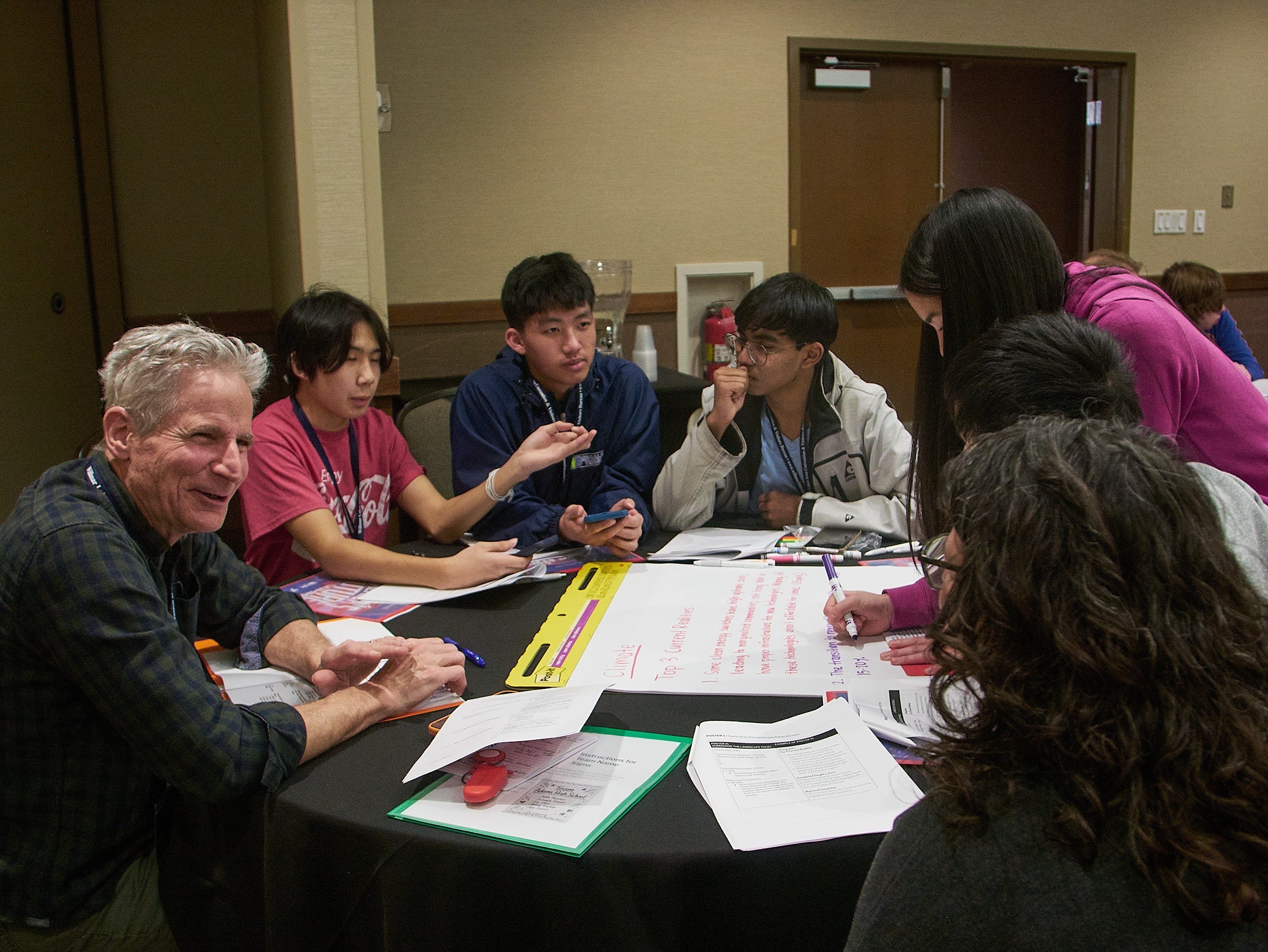
“Bridging is about reconnecting people with civic life and with each other,” says Stegger. “It’s about leveraging our connective tissue and our belief and trust in each other to solve big challenges and find common ground where it does exist.”
As polarizing as politics is currently, that common ground — the way to bring people together to engage in and foster a more robust civic life — often exists elsewhere. Stegger believes it starts at a more basic, human level.
“A lot of what we learn in school is that civics is politics — it’s voting, and then you’re done — but we think about civic life as public life,” she says. “It starts with building connections regardless of our politics, regardless of our identities and backgrounds, so we don’t start by flattening.”
By flattening she’s referring to the radical notion of seeing people as more than a Democrat or Republican, or even Independent.
By embracing the complexity of each individual — yes, their political ideology, but also their background, personal values, ideas, et cetera — Stegger believes we may just find some common ground.
“We often say, ‘That person’s values don’t align with mine, so we can’t work together,’ when actually it’s about identifying how someone else might value something,” says Stegger. “I might prioritize a value differently than you do. It doesn’t mean you don’t have values. It doesn’t mean there aren’t places where we can work together.”
This concept is one called pluralism – the idea “that multiple perspectives have value, that they’re necessary in this world,” Stegger says. “That is a central organizing principle that doesn’t cut people off, but rather invites people in.”
Working toward a common cause
With programs for people in their early teens through young adulthood, Civic Bridgers is helping people build “the skill and will to engage in public life and bridge divides,” Stegger says, with groups working together toward a common cause. This can include engaging in a school community, local gardening or park cleanups, or working directly with civic organizations.
Politics is not the point.
A Civic Bridger is someone who engages in public life and does so with the core values of humanity, humility and accountability, Stegger says.
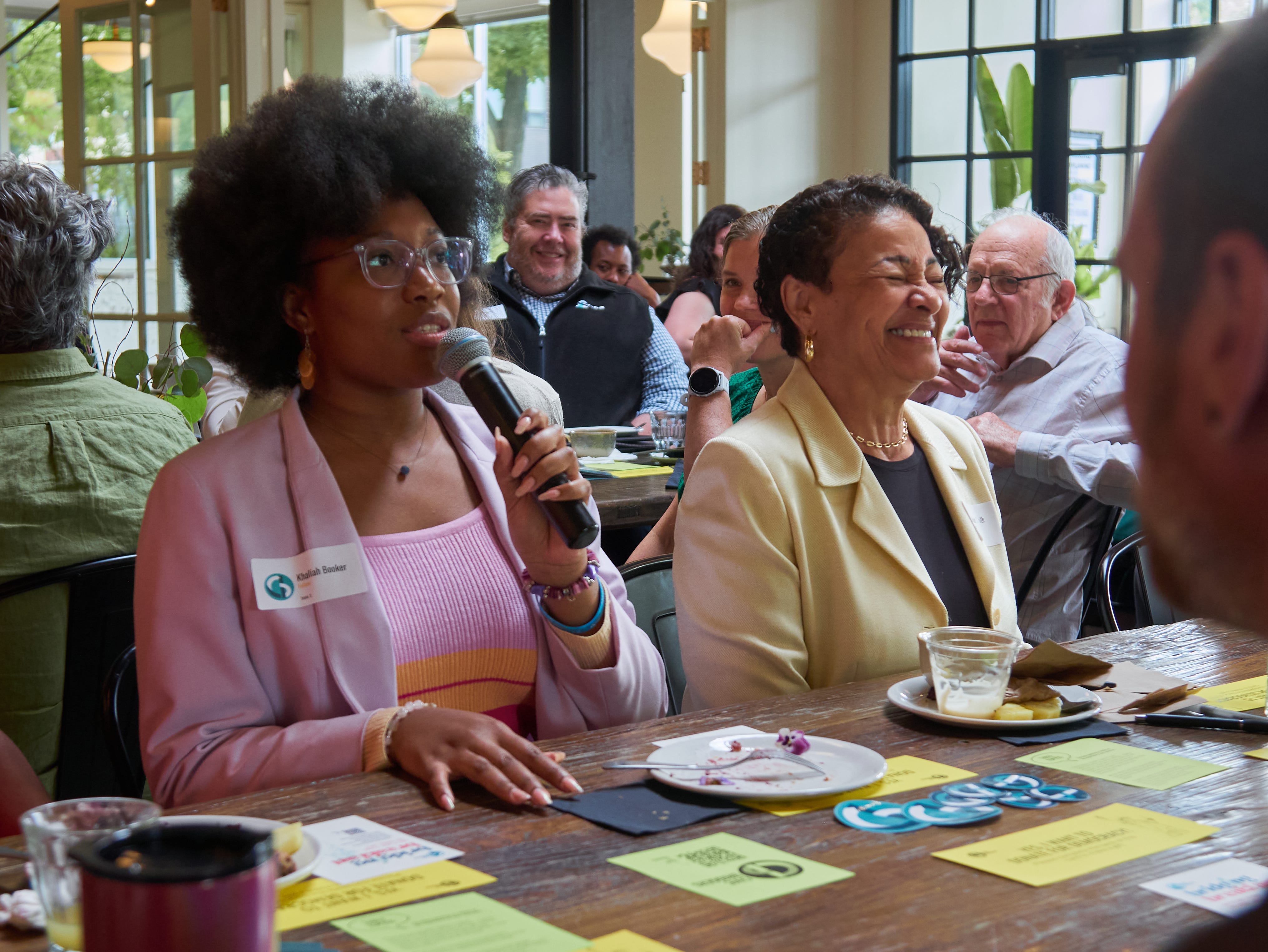
“Humanity means recognizing everyone’s inherent worth, acknowledging that we’re all imperfect – we make mistakes, and we’re accountable to each other,” she says. “Accountability means we take responsibility when we make mistakes, but we also take responsibility to say, ‘How can I help? How do I show up in my community to better these spaces?’
“Humility means genuinely seeking to understand different ways of knowing, being uncomfortable sometimes, being comfortable with uncertainty, being comfortable saying, ‘I don’t know’ or ‘Help me see it differently.’ It’s not about compromising our core beliefs, rather recognizing that in a plural nation, we can exist with different belief systems.”
Civic Bridgers — the individuals — thus reflect America’s rich diversity of faiths, races and ethnicities, languages, nationalities and perspectives, Stegger says. Together they’re learning how to overcome polarization by focusing on the public good over politics.
There’s the America’s Future Summit, a two-day “high-energy” gathering, where high school students learn how to engage in their communities in ways that bridge divides. It culminates with teams pitching an idea and competing for prize money to bring their idea to fruition. Then there’s the 10-week high school program Beyond Civics in which students design a community action initiative to solve a problem in their area. For one group in Pelican Rapids, this included hosting various social activities for young people to get to know each other throughout the summer – color wars, bike rides, et cetera.
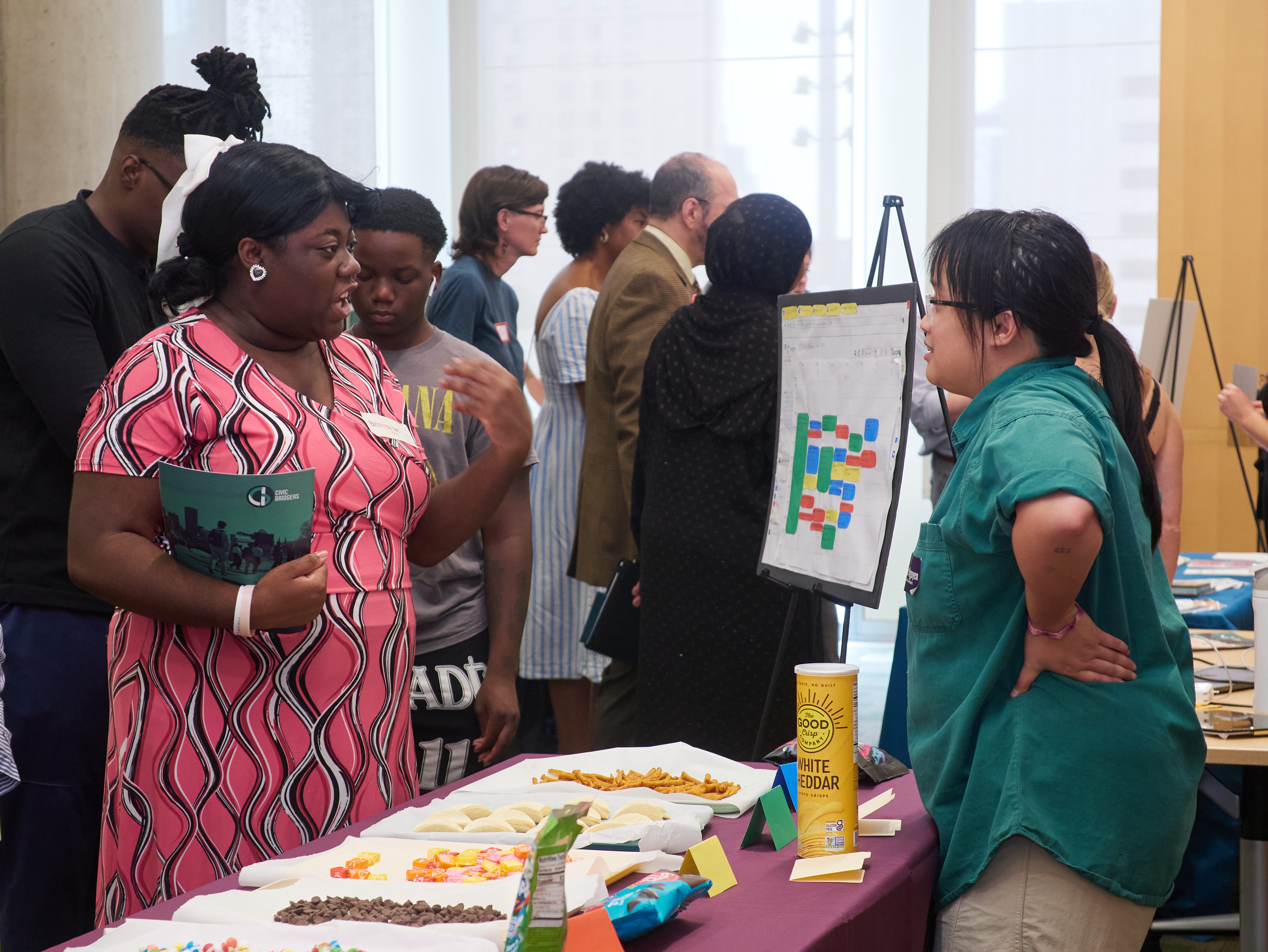
“That is absolutely civic engagement, it’s civic leadership, it’s bridging. It’s not political,” Stegger says. “All of it is good, and all of it is necessary for us to build strong, resilient communities.”
There’s also the early career fellowship component, with a year-long immersion program for emerging professionals, and the ambassador program for mid-career leaders.
Yet across all of Civic Bridgers’ programs, the goal remains the same: to help young people build the skills “to engage a group of people toward a common cause,” Stegger says.
This is what “bridging” looks like in real life. And it’s a skill Stegger believes is necessary if America is to not just flourish, but to exist in its current form.

“For the American experiment to continue for the next 250 years, we have to adapt to the current moment,” she says. “We have to understand that this is our shared future, that no one’s going anywhere. And if we want to live in a space that values that diversity, that values those different perspectives, we actually have to live that. That’s our civic duty.
“Our civic duty is to participate in ways that we can, in ways that value our own strengths, and to have the humility to recognize that we don’t always have all the answers and that there’s value in the perspectives other people bring.”
The risks of ceding our power
Contrary to traditional ideas of “civic duty,” Civic Bridgers’ philosophy emphasizes contributing in ways that marry what a person’s good at with what they care about for the betterment of their community. This approach not only helps individuals retain a sense of personal agency, but it’s a much more welcoming and empowering place to start.
“We believe the power of community and engagement and people bringing their strengths to bear is what fuels participation — not me telling them, ‘You must go do this because it’s your duty,’” says Stegger. “Start from what you love, what you’re good at and what you care about. This is a way of inviting people back in, telling them there’s a space for them – that whether or not they want to be involved in big ‘P’ politics, their voice still matters and their participation in their local community matters.”
This level of engagement in public life isn’t just a nice-to-have — it’s imperative to ensuring harmony, civility and autonomy.
“When we give into division, when we give into despair and withdraw from each other and from civic life, we are ceding our inherent power,” Stegger says. “Divide and conquer is a real strategy, and when we’re all infighting, there are a lot of other forces that will step into that power vacuum and direct us the way they want to — or who will distract us from the core work of building community and solving the problems that need solving.”
“The work is laid out before us,” she adds. “It’s not small, but it’s also very possible.”
How do you make an intentional effort to connect with people beyond politics? How have you seen people of different political ideologies come together to solve problems in your community?