

The fallacy of good versus evil
Our tendency to cast people as either villains or saints undermines the dynamic nature of humanity.

“There is no saint without a past, no sinner without a future.”
— St. Augustine
The philosopher St. Augustine didn’t believe in the existence of evil, rather that evil is the absence, or privation, of good. For Augustine, evil and suffering in a world created by an all-good God could be attributed to humans’ free will — a theory known as privatio boni.
No matter the theory you subscribe to, however, good and evil – or the absence of it – are two sides of the same coin. Strange bedfellows bound together in an eternal relationship that ebbs and flows with the passage of time, good and evil cannot exist independently of one another. Despite this, our culture tends to flatten people into heroes and villains, good and bad, black and white — especially after they’re gone (a tendency that says more about us than the people we’re judging).
In the aftermath of conservative activist Charlie Kirk’s murder, people were quick to lump him into one of two categories: a hatemonger, racist, misogynist and white supremacist, or a saint and martyr. And while we could refute the validity of all such claims, the one thing we know for certain is that he was human. Neither completely virtuous nor utterly villainous.
Yet, like our proclivity for both good and evil, our tendency to categorize people and things is a natural one. Traced back to our ancestors, this instinct was honed through years of natural selection.
Like all living things, it’s in our nature to seek the path of least resistance — a way of simplifying and navigating the world. Our brain, in an attempt to conserve energy, constantly takes mental shortcuts — rapidly interpreting available information, then classifying people, objects or ideas as “good” or “bad,” threatening or nonthreatening, in mere seconds. This cognitive process served us well when confronted by a sabre-toothed tiger in the forest or when distinguishing between Queen Anne’s Lace and Water Hemlock. But, in the modern world, the instinct to categorize based on broad generalizations often works against us (the collective “us” that is), fueling prejudice, stereotypes and tribalism — and instilling in those making the judgements a sense of moral superiority that gives defense to otherwise morally reprehensible acts.
This inclination leads us to idolize and raise up those with whom we most agree – forgetting or ignoring any wrongdoing – while vilifying and attempting to erase the contributions of those with whom we disagree. The problem with this us-versus-them mindset is that it limits our ability for empathy and genuine understanding, harming society more broadly.
Consider Thomas Jefferson, a man who authored the Declaration of Independence, commissioned the Lewis & Clark Expedition, doubled the size of the U.S. with the Louisiana Purchase and founded the University of Virginia — but who also owned slaves. Or Henry Ford, whose major contributions to innovation include the Model T, the moving assembly line and mass production; in addition, he doubled workers’ daily wage while reducing the workday to eight hours. But he was also an outspoken anti-Semite. Then there’s Martin Luther King Jr., a civil rights pioneer whose nonviolent resistance efforts led to the Civil Rights Act of 1964 and the Voting Rights Act of 1965, but who was known as a philanderer. And, of course, John F. Kennedy, an inspirational leader and champion of civil rights with a reputation for being a womanizer. And finally, Steve Jobs, a visionary tech leader known for his staggering cruelty to both his daughter and his employees.

These men prove that two things can be true at once — that a person can do extraordinary good but also do wrong. If we were to dismiss them entirely for their misdeeds, we would also diminish their unique and lasting contributions to society — contributions that we still benefit from today: freedom from a tyrannical government, the achievement of equal rights, manufacturing excellence, unmatched technological innovation. Instead, we should see them as they really are — not unlike ourselves — understanding that humans are not solely good or bad, villainous or angelic, black or white, but dynamic and complex individuals who are everything all at the same time.
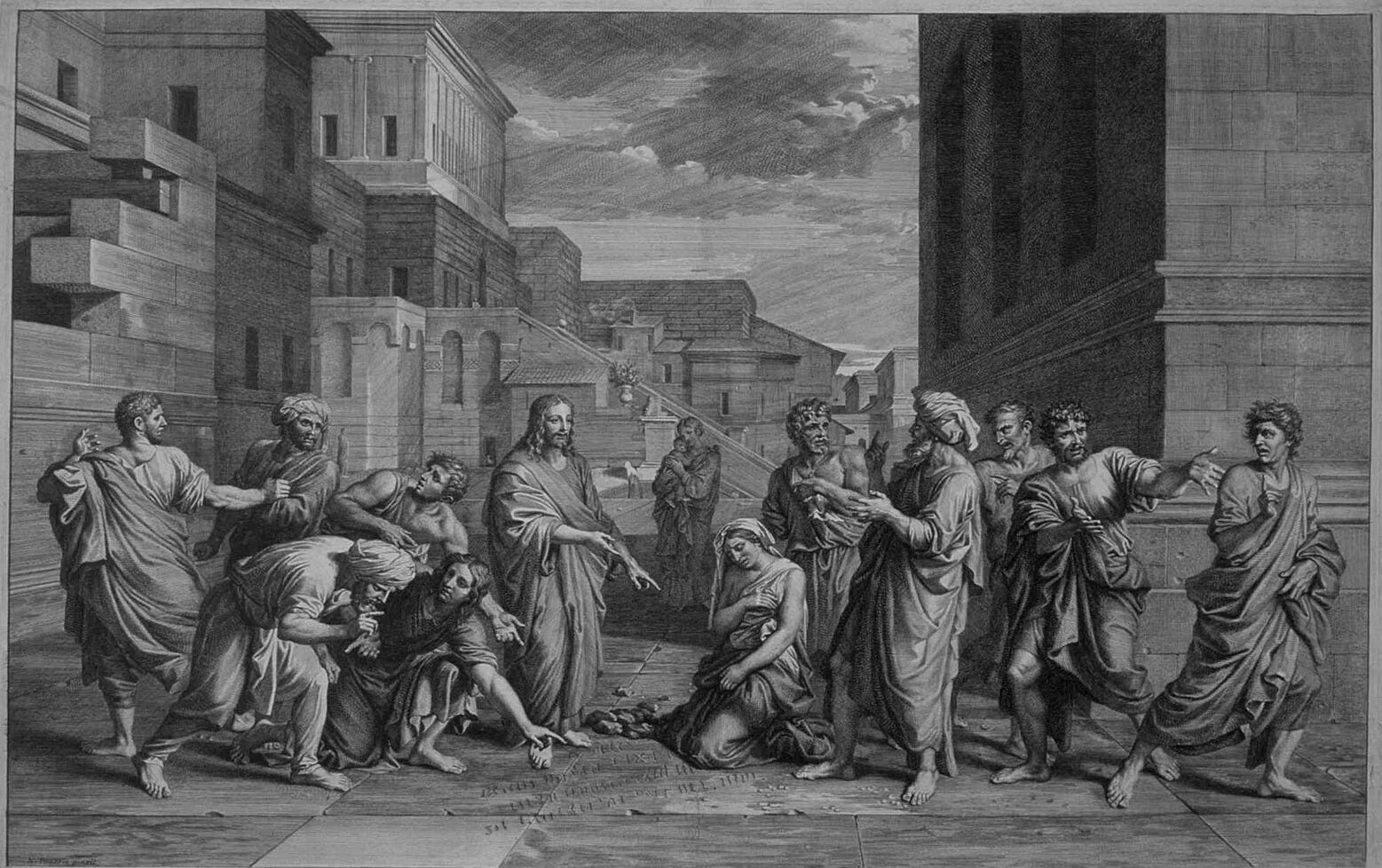
In a world in which evil and good coalesce, we would be wise to consider the words of the person who understood this more than anyone. As Jesus said, “Let he who is without sin cast the first stone.”
Our role is not to cast stones, but to discern carefully, give credit where it’s due and hold people accountable where they’ve failed. Because when we fail to acknowledge the good, we allow evil to fill the void.
How do you strive to see the good in everyone in your daily life? Please share your thoughts below.
“The battleline between good and evil runs through the heart of every man.”
— Aleksandr Solzhenitsyn

To fight evil in ourselves, seek the good in others. Good words to live by, if you’re strong enough. This is why we need God.
Woe to those who think of evil as good and good as evil. For we are all like white washed tombs, clean and beautiful on the outside, but inside well were just filthy af. Thus, this is why we need to discover balance for which our good can deflect the evil from within. This is why God is needed.