

The truth about political disagreements with strangers
Researcher Michael Kardas shares how our expectations don’t often align with reality.

“Honest disagreement is often a good sign of progress.”
— Mahatma Gandhi
It’s no secret that Americans are finding it harder and harder to engage with people we disagree with politically.
This polarization is borne out by research. In a 2025 YouGov study, 65% of Americans said they don’t engage in in-person or online political discussions with people who have different political opinions. Additionally, 61% of U.S. adults said that having political conversations with people they disagree with is “stressful and frustrating,” per a 2023 Pew Research Center study.
But why is that?
Perhaps we assume the conversation will be unpleasant, that it will make us angry, that it will be fruitless, pointless even.
But what if we’re wrong?
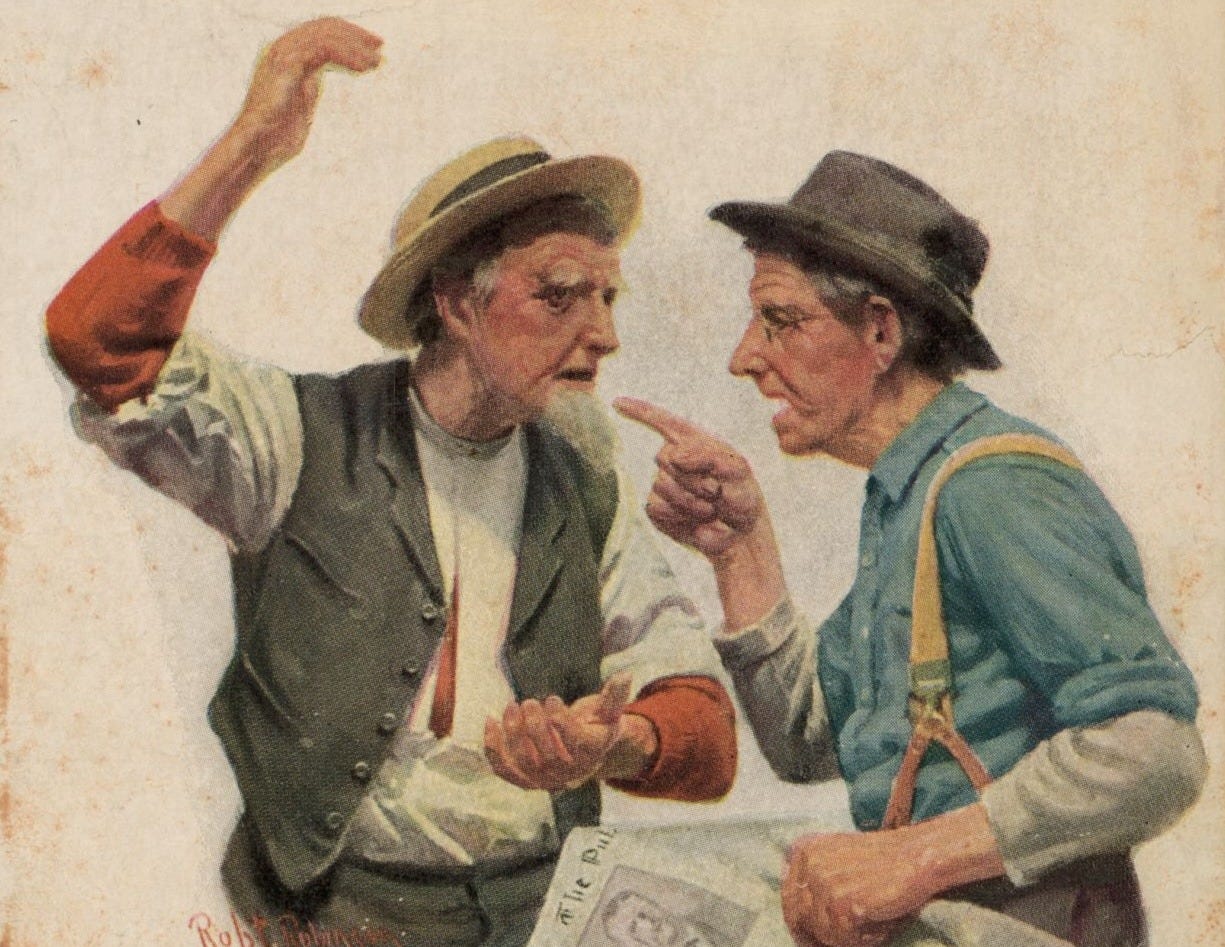
That’s exactly what Michael Kardas, an assistant professor of management and human resources at the University of Wisconsin–Madison, set out to discover.
During his time as a postdoc at Northwestern University, and then as an assistant professor at Oklahoma State University’s Spears School of Business, Kardas and colleagues Kristina A. Wald and Nicholas Epley conducted a study to see if people’s expectations involving political disagreement around contentious issues aligned with reality.
“Misplaced Divides? Discussing Political Disagreement With Strangers Can Be Unexpectedly Positive” showed, per its title, that people often walk away from political conversations with strangers feeling more optimistic than they anticipated. Published in Psychological Science in 2024, the study included 198 people of varying races, ethnicities, religions and political ideologies.
We spoke with Kardas to learn more about the study, its broader implications and where Americans might go from here.
