

The age of intolerance: How our quest for inclusion bred division
Announcing a new interview series highlighting efforts by three organizations to bridge partisan divides.

“Accepting others’ differences is the first step towards building a more inclusive and compassionate world.”
—Dalai Lama
In many ways, our society has become much more accepting over time.
In a 2023 Gallup poll, 71% of Americans said they’re supportive of same-sex marriage. While a 2021 poll showed that 94% of Americans approve of interracial marriage.
Of course, views on marriage aren’t the only mark of “progress.”
More and more people have friends of varying races, ethnicities, sexual identities and national origins. Traditional male-female roles are no longer the norm. Mental health has lost its stigma. And we’ve moved away from rigid ideas of beauty and fashion to those that prioritize self-expression, body positivity and gender fluidity.
The rise of politics
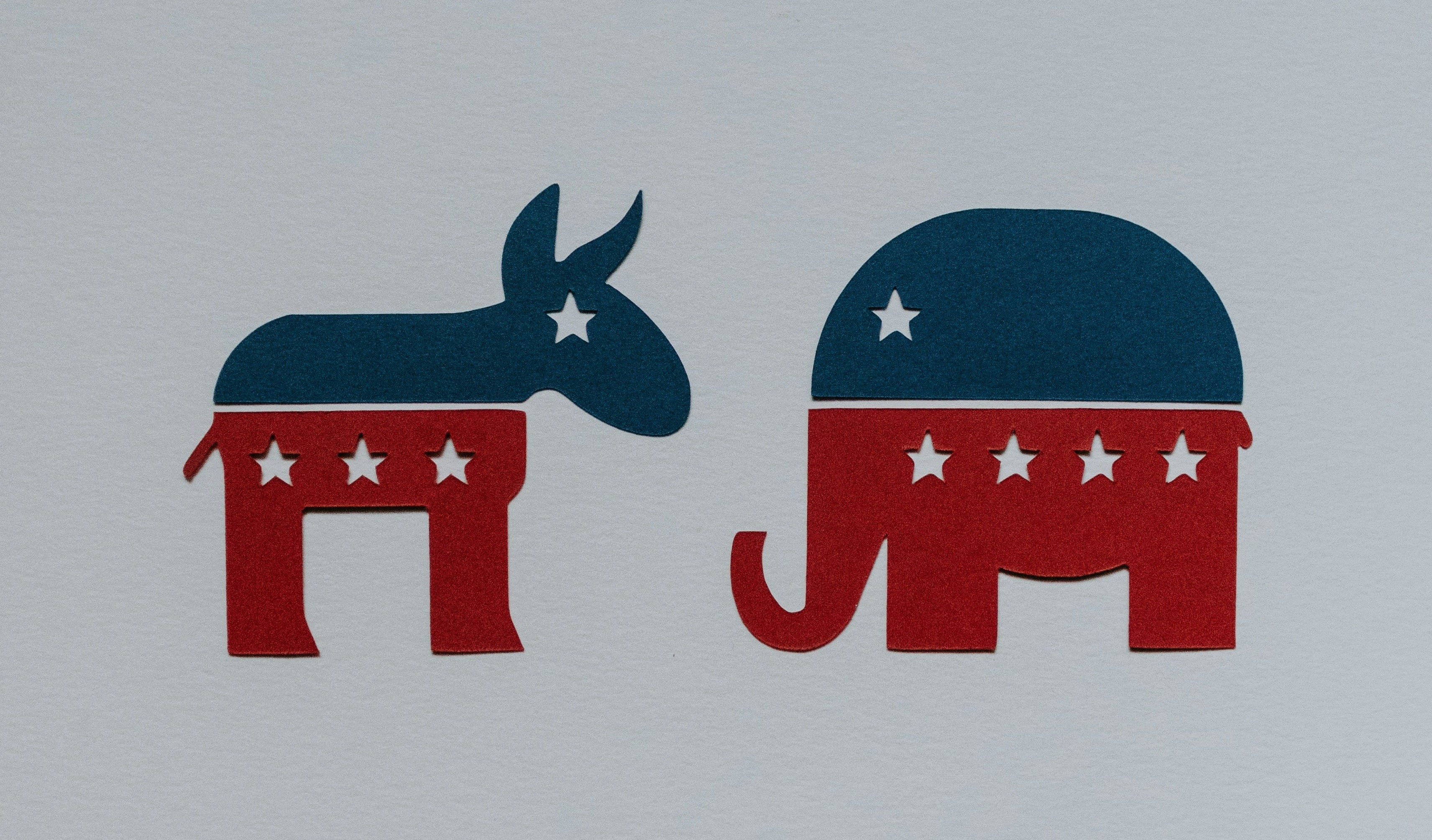
At the same time that acceptance has appeared to be rising, religious affiliation in the U.S. has been declining. The share of U.S. adults who are “religiously unaffiliated” increased from 16% in 2007 to approximately 29% in 2023-2024. Subsequently, political activism has increased and, along with it, political polarization.
Just over a decade ago, a poll asked Americans whether they agreed or disagreed that people in the opposite political party weren’t just wrong but, in fact, evil. Nearly half of respondents from both sides of the aisle agreed.
More recently, a Reuters/Ipsos poll showed that 27% of Democrats said that last year’s presidential election negatively affected their friendships, compared with 10% of Republicans. In the same survey, 55% of Democrats and 43% of Republicans said that the other party can’t be trusted.
Redefining acceptance
That brings me back to acceptance …
Acceptance is a good thing.
So is tolerance.
But acceptance narrowly defined isn’t really acceptance.
Thus, we’ve found ourselves at a place where bearing it all on TV or changing our reproductive anatomy are acceptable, but disagreement is not. It’s a world in which political ideology has supplanted religious ideals, loyalty to a tribe supersedes love for our neighbor and acceptance only applies to those with whom we agree.
The path to progress, however, isn’t a desolate one.
If you want to change someone’s mind, you don’t avoid them, call them names or physically attack them.
Consider how people came around to the idea of gay or interracial marriage — or, more broadly, the equality and dignity of all people across races and ethnicities. It wasn’t by avoiding those individuals. It was by being around them, by talking to them, by getting to know them. And only by doing so were people able to finally see them as human, too.
Curiosity as the ultimate arbiter

Daryl Davis' attempt to understand the KKK's hate for people like him.
Fortunately, there are people and organizations working to bring us back together, to fix our culture gone astray — one that increasingly sees political violence as justifiable. Organizations like Braver Angels, BridgeUSA and One America Movement are working to bridge partisan divides and redefine acceptance in our age of political polarization.
We’re pleased to feature them in our upcoming Bridging Divides series, which kicked off with a story about Braver Angels.
Braver Angels – An interview with Director of Communications and Marketing Gabbi Kearns about the organization’s efforts to strengthen our democracy through a couples-therapy approach
BridgeUSA – Interviews with CEO Manu Meel and President of the University of Tennessee at Knoxville chapter Nicholas Huber about the organization’s work to equip young people with the skills to have conversations (and even friendships) with those they disagree with
One America Movement – An interview with COO Chandra Whetstine about the organization’s mission to bring faith communities together to confront toxic polarization
How do you work to bridge divides and be more accepting in your own life?

"If you want to change someone’s mind, you don’t avoid them, call them names or physically attack them"
Much if not most political communication today is based on a different idea: dominate the communication space thru intimidation of differing voices. See Intimidation vs Persuasion
https://chicagoboyz.net/archives/63567.html
and
The Munzenberg Method, Then and NOw
https://chicagoboyz.net/archives/71040.html
A very useful idea. It won't be easy to find constructive and practical ideas, rather than just good wishes.