Finding common ground in conflict
John F. Kennedy learned the hard way that resolving conflict means meeting your adversary where they're at.

“For good ideas and true innovation, you need human interaction, conflict, argument, debate.”
— Margaret Heffernan
President John F. Kennedy once said, “Peace is not the absence of conflict, but the ability to cope with it.”
Kennedy should know afterall — his own ability to cope with conflict was informed by personal experience with volatile situations.
In October 1962, the U.S. completed its placement of intermediate ballistic missiles in Turkey as part of an agreement with the allied nation. Within a year, U.S. spy planes discovered nuclear missiles in Cuba — having been placed there by the Soviet Union in response to the U.S.’s own defensive military manuevering. Just 90 miles off the coast of Florida, these projectiles were capable of striking American cities within minutes.
The subsequent 13-day standoff between the U.S. and the USSR remains the closest the world ever came to nuclear war. Yet this disastrous outcome was avoided due to the willingness of both sides to engage in discussion.
Recognizing that addressing the problem militarily would risk igniting a larger war, Kennedy and Prime Minister of the Soviet Union Nikita Khrushchev communicated via both public and private letters, as well as through secret backchannels — an approach that allowed them to save face publicly while compromising privately to avoid nuclear war.
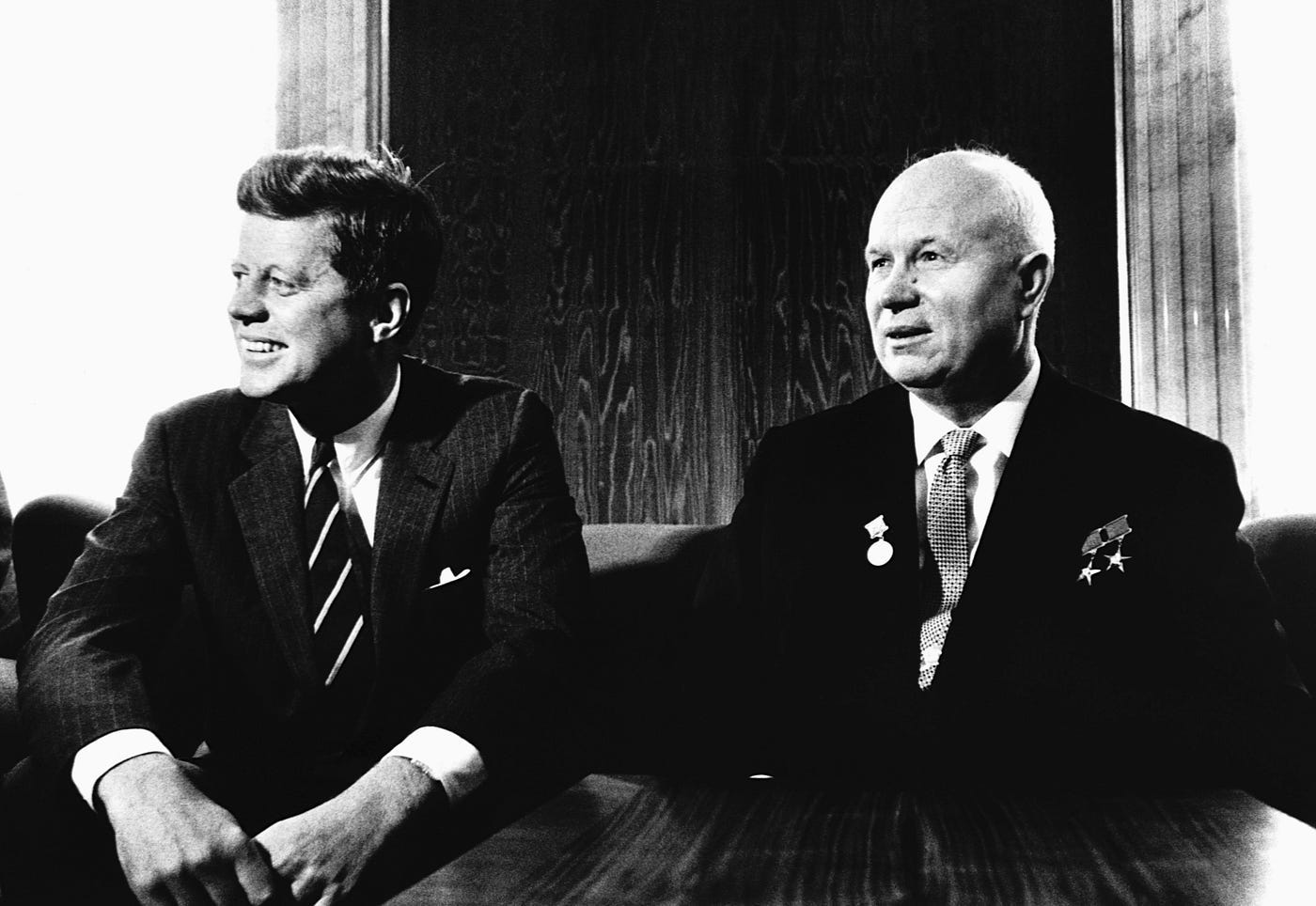
By attempting to see the situation from Khrushchev’s perspective – understanding how the U.S. might respond if a foreign nation placed missiles in Mexico or Canada, for example – Kennedy was able to find common ground with Khrushchev.
The ability of two world powers to resolve their conflict via communication (at the height of the Cold War no less) is remarkable. To this day, the Cuban Missile Crisis is considered one of the most successful examples of crisis diplomacy and conflict avoidance.
It’s especially notable when considered in relation to the attitudes and inclinations of Americans today — many of whom, rather than engaging in dialogue in hopes of resolving conflict avoid it altogether, unable to sympathize or even converse with people with whom they disagree.
A 2025 YouGov study revealed that most Americans (65%) said they don’t engage in in-person or online political discussions with people who have different political opinions. Specifically, 33% said this happens to them not very often, while 32% said it happens not at all often.
It’s no wonder considering how people view these conversations.
In a 2023 Pew Research Center study, 61% of U.S. adults said that having political conversations with people they disagree with is “stressful and frustrating.” (Conversely, 36% said such conversations are “interesting and informative.”)
In that same survey, 81% of Republicans and 75% of Democrats (including those who simply lean one way or the other) said that too little attention is paid to important issues facing the country.
This seems to point to the fact that we may have more in common than we’d like to admit and that our unwillingness to communicate because of political differences may be stymieing the very progress we desire.
This is the premise of much of Michael Kardas’ work.
An assistant professor of management and human resources at the University of Wisconsin–Madison, Kardas studies the differences between the expectations and realities of social interaction. In a study he conducted with colleagues Kristina A. Wald and Nicholas Epley — published in Psychological Science in 2024 — Kardas discovered that people often walk away from political conversations feeling more optimistic than they anticipated. He believes this is due, in part, to the realization that they have more in common with people they disagree with than they expected.
Titled “Misplaced Divides? Discussing Political Disagreement With Strangers Can Be Unexpectedly Positive,” the study included 198 people across the political spectrum, including those of different races and ethnicities. Kardas and his colleagues divided participants into groups of two and assigned each pair a topic to discuss — ranging from immigration to abortion — with some agreeing and some disagreeing about the issue.
Does America need couples therapy?

How Braver Angels is using marriage and family therapy principles to bring us back together again.
Participants then filled out surveys predicting how they thought the conversation would go. After discussing their topics alone with their partner for 10 minutes, participants reflected on how their conversations went.
What Kardas found was that there was a significant discrepancy between the expectations of those engaging with people with whom they disagreed about an issue and how their conversations actually played out in real life. Even more informative were the videos of the conversations, in which participants tended to stay on topic and rarely showed hostility.
“Seeing the data reveals that the conversations are positive, but seeing the conversations reveals it all the more vividly,” Kardas said in a statement. “These are cooperative conversations between people that don’t know each other but, at least once the conversation has begun, are surprisingly interested in understanding each other’s perspectives, even when the issues themselves seem contentious.”
No sane person willingly seeks out conflict — in fact, many people avoid it at all costs — but what Kardas’ research seems to suggest is that facing conflict may be the path to overcoming it … and that doing so is usually not as bad as it seems. Engaging with people with whom we disagree can not only be a positive experience, but also the means for avoiding greater conflict, like nuclear war, in the future.
We recently spoke with Kardas to learn more about the study and its broader implications, why Americans often shy away from these conversations and the harm that does to us, and how social media is contributing. To read the full interview, become a Spirit & Sword paying subscriber today.
The truth about political disagreements with strangers

Researcher Michael Kardas shares how our expectations don’t often align with reality.