Does America need couples therapy?
How Braver Angels is using marriage and family therapy principles to bring us back together again.

“Man’s enemies are not demons, but human beings like himself.”
— Lao Tzu
When Bill Doherty was asked to develop a workshop to get liberals and conservatives together in a room after the 2016 election, he scoffed at the idea.
A marriage and family therapist, Doherty had plenty of experience bringing people — specifically couples on the edge of divorce — together. Yet, the thought of bringing individuals from both sides of the political aisle together after a contentious election, he believed, was “just an awful idea.”
“He was hoping that he’d be busy the day they planned the workshop so that he wouldn’t have to be a part of it,” says Gabriella “Gabbi” Kearns, director of communications & marketing for Braver Angels, an organization focused on bridging partisan divides.
The people making the request were long-time friends and future co-founders of Braver Angels David Blankenhorn and David Lapp, who had reconnected after the 2016 election. On November 9, 2016, Blankenhorn, who lived in Manhattan, called Lapp, who lived in Ohio, to get a sense for how people were reacting to Donald Trump’s election.
As Kearns recalls, “Lapp said, ‘People are not that surprised. They kind of had a feeling Trump would win. They’re excited — that’s the general mood of Ohio right now’ — or at least in his area of Ohio. ‘That’s so interesting,’ Blankenhorn said, ‘because in Manhattan, everyone’s running around with their hair on fire; people are freaking out.’”
Surprised that two different areas of the country could have such disparate reactions, the friends had the idea to bring the two sides together. “Lapp is a very entrepreneurial, visionary, big idea person and moves quickly,” says Kearns. “So they were like, ‘OK, let’s put together an event in Ohio where we get conservatives and liberals together in one room and get them to start talking to each other.’”

Despite his misgivings, within 48 hours, Doherty, also a Braver Angels co-founder, returned with a workshop – based on marriage and family therapy principles – designed to get voters from both sides of the aisle to engage with one another.
The first workshop took place on December 9, 2016, in South Lebanon, Ohio, and brought together 10 Trump voters and 10 Clinton voters for a full weekend of exercises. The first of which was helping them recognize their own destructive behavior.
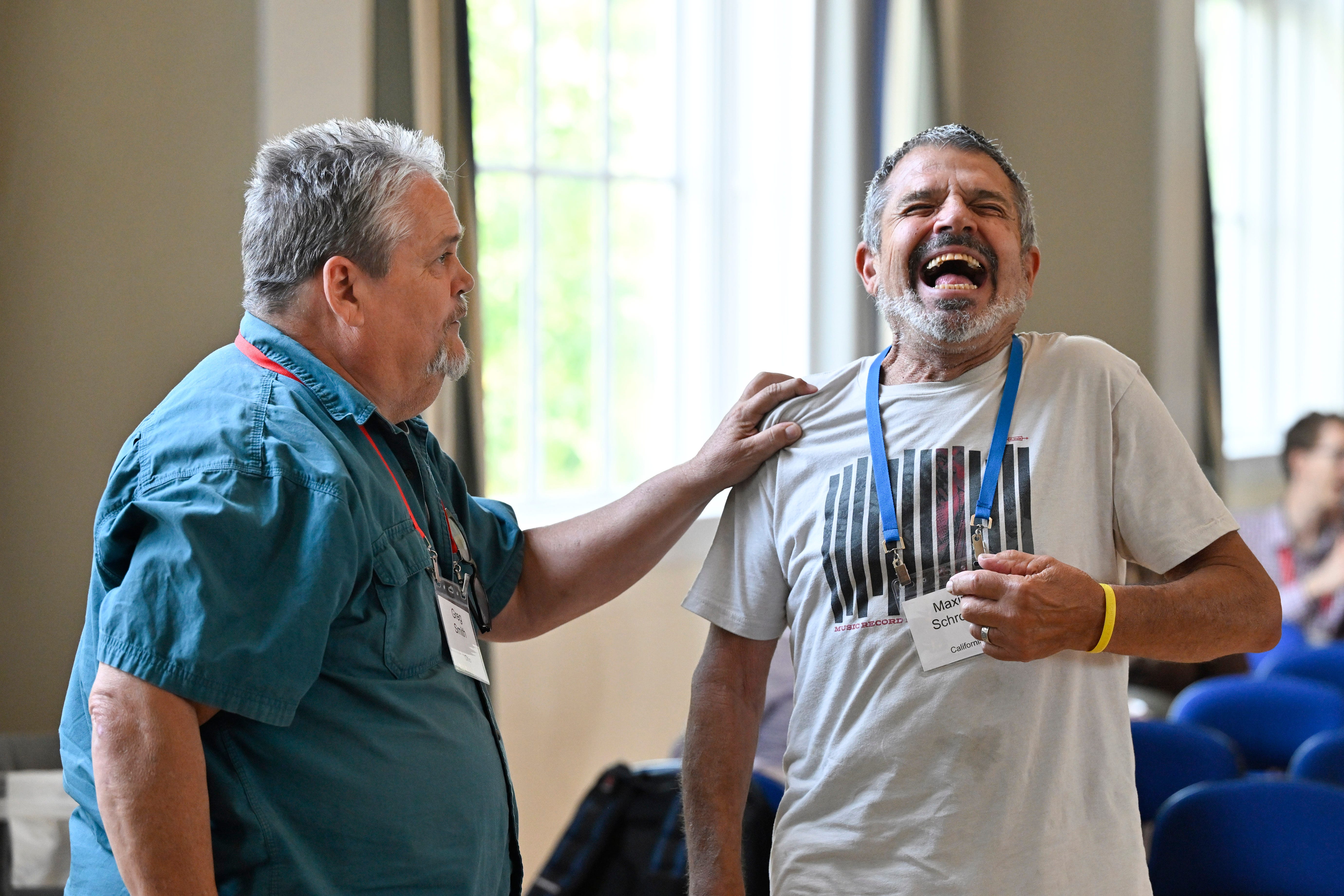
“A lot of this is not unlike an unhealthy marriage or an unhealthy relationship,” Kearns says. “In any marriage, there’s a dynamic at play. What Doherty often says is that what couples therapy does is it helps individuals see that every couple has a dance that they do — whether they’re conscious of it or not — and it helps them look at their dance, see the patterns they fall into and the steps they do over and over again.”
What this dance looks like can vary. For example, it may take the form of one person always attacking the other as the other person withdraws. In the often contentious relationship between Democrats and Republicans, this can take the form of stereotypes. Thus one of the first things Doherty’s workshop — now called the Red and Blue Workshop — has participants do is take on these broad and often incorrect labels.
For this, all the “reds” (i.e., conservatives) and “blues” (i.e., liberals) go into separate rooms.
“The blues will have a conversation – and the reds will do the same – about the stereotypes for their side. For blues that may be ‘elitist’ or ‘not religious.’ We try to go deep, so reds will often say ‘racist’ or ‘homophobic’ — anything that people throw at either side. They say what the stereotype is, then they say why it’s not true.”
For the blues, this may include refuting the stereotype that all liberals are elitist. “Frankly, there are plenty of working-class people throughout the United States that vote for Democrats,” says Kearns.
The next piece is extracting the kernel of truth from each stereotype. “Are all liberals elitist? Certainly not,” Kearns says. “But is it true that Democrat leaders or people online seemingly talk down to other people who disagree with them?”
The discussion continues until each group has a list of five to 10 commonly used labels, along with why they’re not true and what is true about them.
“Then the two sides present to each other,” says Kearns. “So the conservatives go through all of their labels and the liberals go through all of theirs. The primary goal is to take the sting out of those words so they’re not thrown at each other throughout [the rest of the workshop].”
“It’s quite a vulnerable thing for each side to do, to take accountability and to hear the other side acknowledge where their side gets it wrong,” she adds. “It’s that mutual sharing that creates camaraderie.”
Despite Doherty’s concerns, and some “really strong feelings,” the event went off without a hitch. “What they say is that they captured lightning in a bottle,” Kearns says. “It was such a special experience to get the two sides to start talking to each other.”
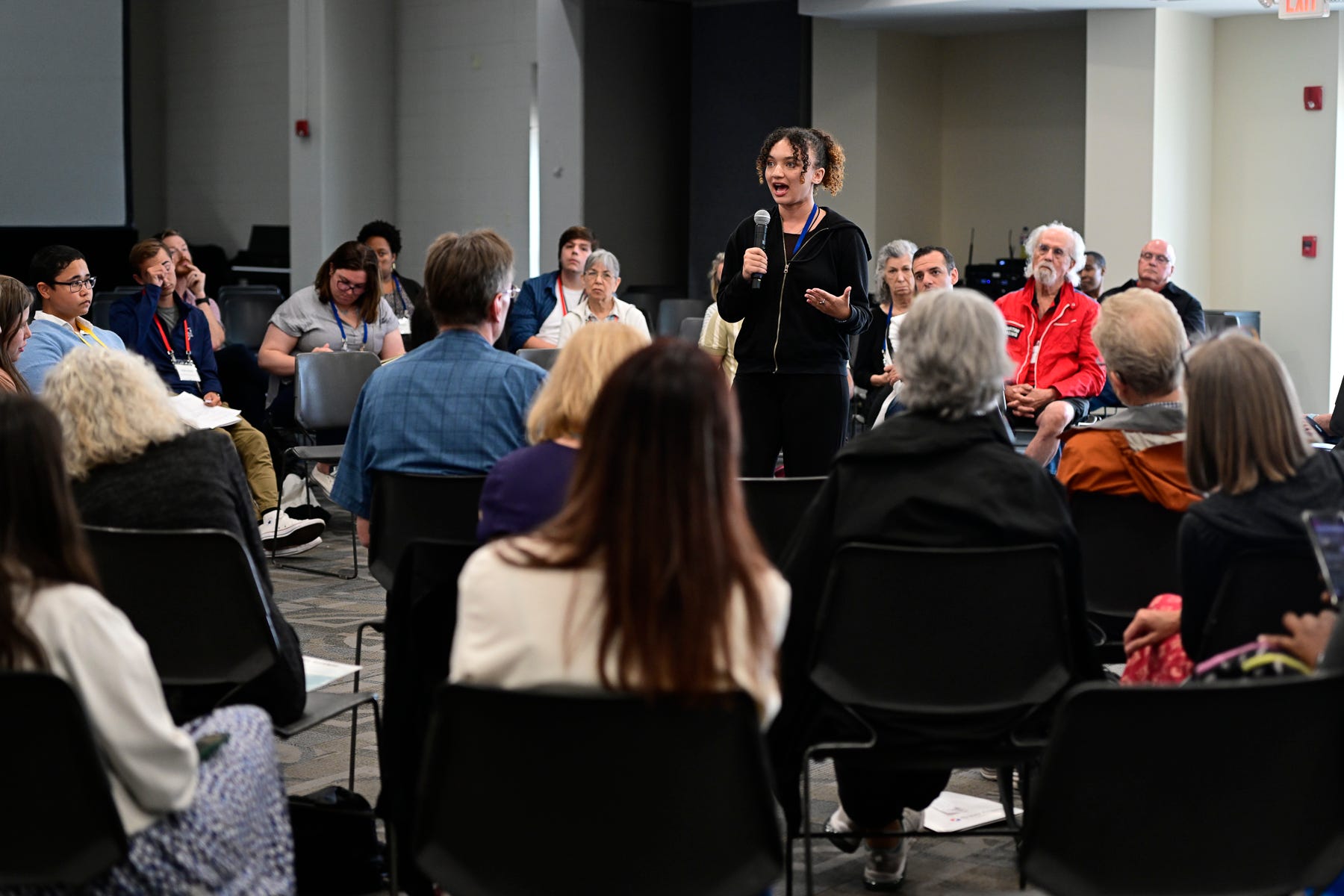
The event went so well, in fact, that they embarked on a nationwide bus tour. “They were driving all over, staying at people’s houses, just doing whatever they could to put on these workshops throughout the country,” Kearns says. “Different people would write to them and say, ‘Can you come to my community in Vermont? Can you come to South Carolina? We really need this right now.’”
The farther they went, the more they recognized the need for this brand of dialogue. Thus, Braver Angels was born.
A movement “to bridge the partisan divide and strengthen our democratic republic,” Braver Angels has expanded beyond its bread and butter, the Red and Blue Workshop, to create initiatives across disciplines – from arts and education to media, politics and faith. In addition to in-person workshops focused on specific issues or relationships (like its Family and Politics Workshop), the organization now has a podcast, offers online courses, hosts debates, facilitates one-on-one conversations, distributes informational materials and much more. Braver Angels now has 125 alliances (AKA chapters) nationwide and 15,000-plus members, and has hosted nearly 6,000 events with over 68,000 participants.
“When I try to explain Braver Angels to someone who has zero context, the thing I often say is we’re kind of like a mutant octopus that grows a new tentacle all the time to touch some new aspect of society,” Kearns says. “We do so much across music, faith, college campuses, et cetera.”
Much of the organization’s growth has been organic, with ambassadors suggesting and leading new efforts in towns and cities across the country. A fact that speaks to just how essential this work is. “Polarization is … pervasive,” Kearns notes. “It’s on college campuses, it’s at the potluck; it’s everywhere.”
An openness to being vulnerable
Early in her involvement with Braver Angels, Kearns participated in the organization’s Red and Blue Workshop — an experience that both made her uncomfortable and surprised her.
“Healing may be a corny word, but I do feel like that’s one of the experiences of it,” she says. “I remember feeling vulnerable in a way, but everyone in that situation was open to being vulnerable.”
That’s the beauty of a Braver Angels workshop. Not only does it allow participants to better understand the views of their opponents, but it also forces people to examine their own beliefs.
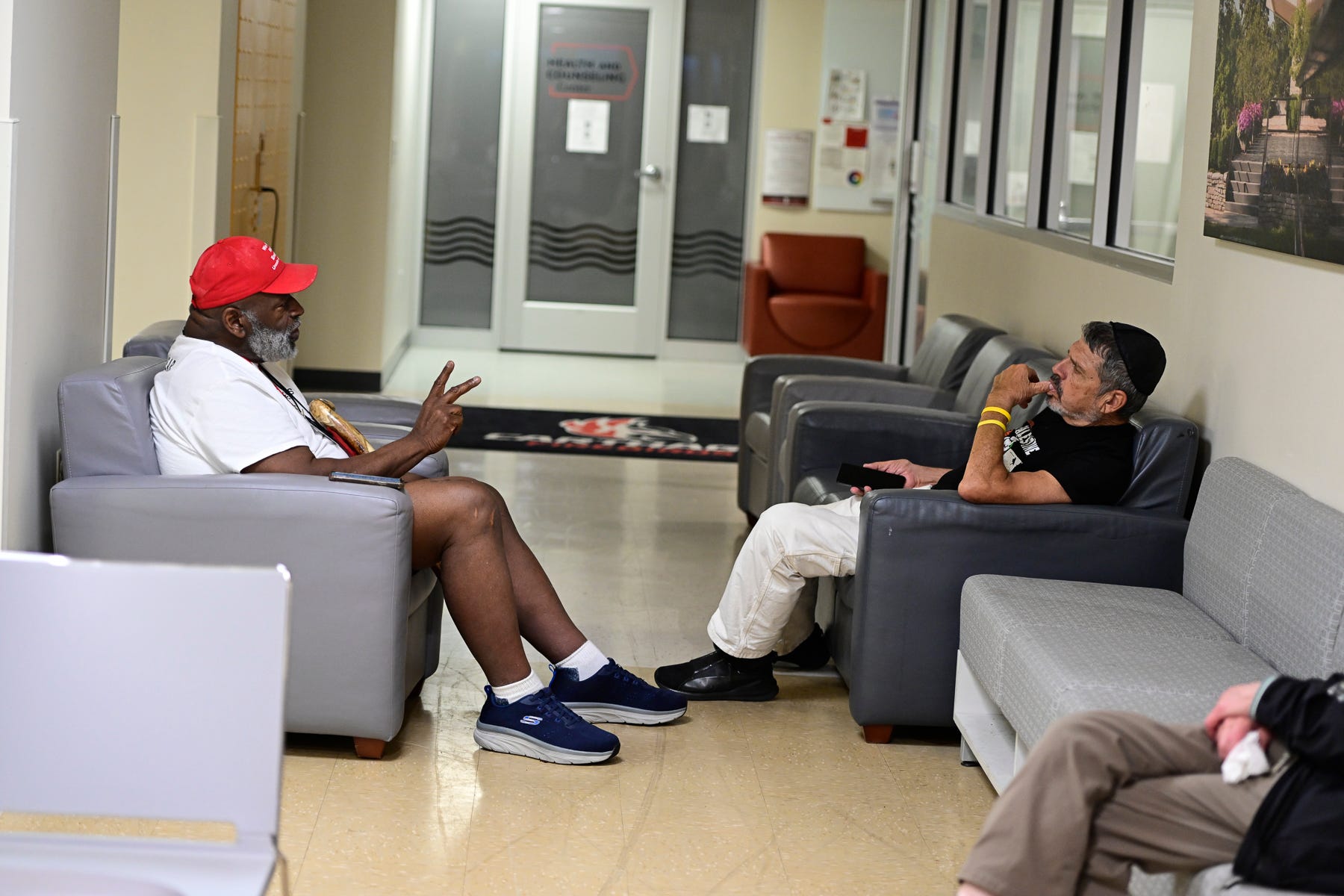
During an activity called The Fishbowl, participants sit in a circle, as conservatives and liberals take turns discussing where they agree with their side and where they disagree. “What’s baked into it is asking questions that often don’t come up in political conversations,” Kearns says, “probing us to be a little more self-reflective about our own side.”
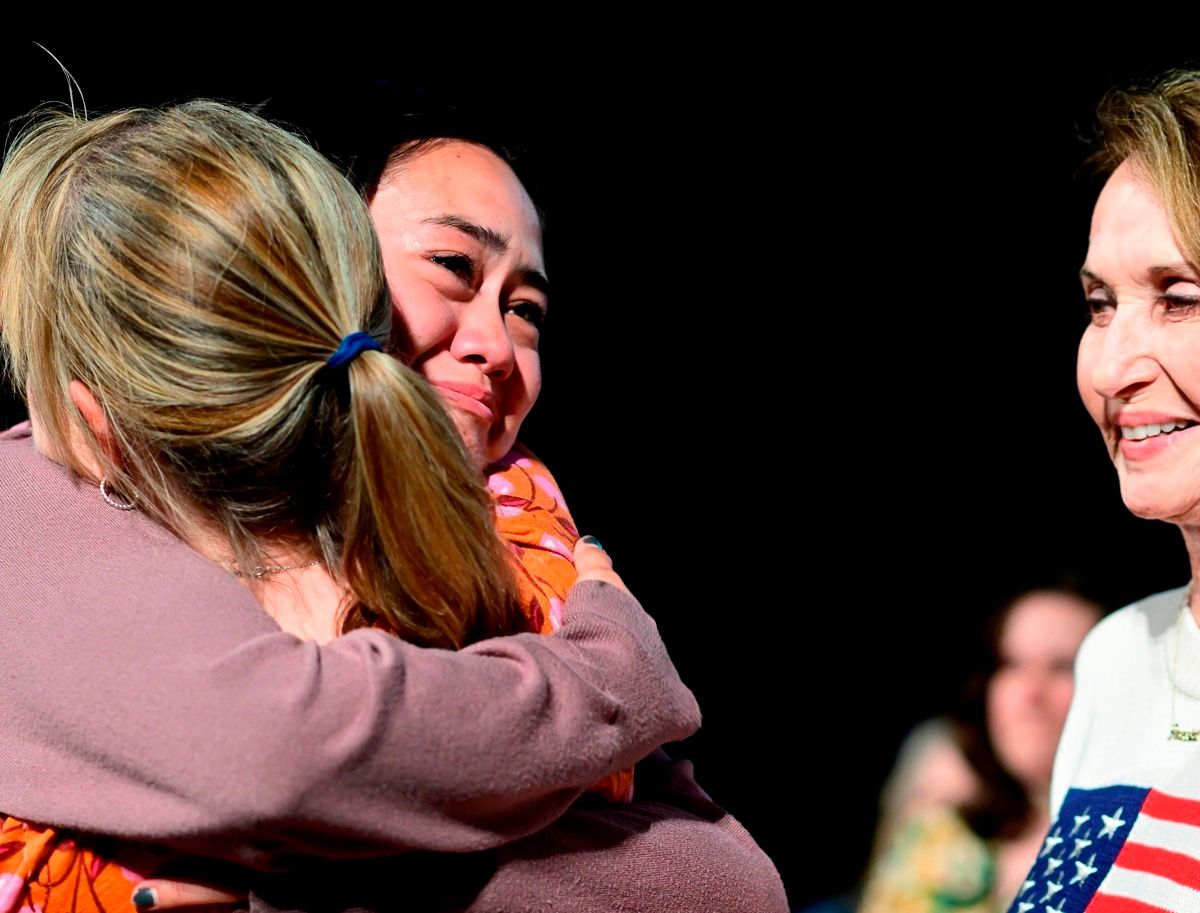
She emphasizes that the point of these conversations is not to change the other person’s mind, but “to learn about what they think.” To do so, Braver Angels encourages participants to be discerning and thoughtful, and to engage in what it refers to as “accurate disagreement.”
“If I start off a conversation by saying, ‘Republicans are blah, blah, blah,’ I’m already starting off on a wrong premise. So, one thing we talk about is having accurate disagreement,” she says. “So, if I were to say, ‘I feel like Trump doesn’t have our best interest in mind,’ that’s me stating something I believe, and it’s about one person. There are ways you can express your frustrations with things in a way that’s less generalizing.”

The crux of the disagreement between liberals and conservatives isn’t that they have different values, Kearns notes; it’s that they “stack” them differently. A Republican, for instance, may have been against the Covid pandemic lockdowns because he prioritizes freedom, while a Democrat may have supported them because she prioritizes health and safety.
Like in a marriage, all of these things are essential to understanding the relationship dynamic between reds and blues. That is, the role that both parties play in exacerbating an already toxic relationship.
But, as Kearns points out, unlike in a marriage, liberals and conservatives didn’t pick each other. “You don’t get to choose who your fellow citizens are; we just have to live with each other,” she says. “And we don’t have the option of divorce.”
The initial discomfort that Kearns had felt opening up to people she so strongly disagreed with, by the end of the workshop was replaced with feelings of optimism. The difficulty was in knowing how to move forward.
“You’re like, ‘OK, so what do I do when I go back into this polarized world? I had this beautiful experience, but what can I do going forward?’” Kearns says.
Challenging the cultural narrative
In the days following Charlie Kirk’s assasination, traffic to Braver Angels’ website jumped 700%, further vindicating depolarization efforts.
The event itself, and the social media reactions that followed, felt overwhelming for many, Kearns notes. “But there are things that people can do about it,” she says.
In a statement released by Braver Angels, Doherty urged Americans to do their part by toning down the “apocalyptic rhetoric.”
“When the survival of the American experiment is at stake, violence can seem justified and even heroic,” he wrote. “We must believe in ourselves that we can hold onto our democratic republic even amidst profound disagreement.”
He also advocated for some soul searching, urging Americans to challenge the cultural narrative that pits us against them.
“For years, we’ve unleashed bitter contempt on our fellow Americans who think, speak and vote differently, creating a toxic cycle to which both sides contribute. Change begins with each of us examining how we see and think about those who hold views we believe are wrong.”
The one thing he didn’t say, however, was to stop talking to one another.
“We’re trying to get productive conflict out there, because we need to hash out these issues. We need to be able to talk to one another,” Kearns says.
The language around one side being “pro-democracy” and the other side being “anti-democracy,” she notes, is antithetical to what democracy is all about. “The thing that’s so ironic is that to be pro-democracy is to be pro-relationship, is to be pro-maintaining-a-bridge-with-those-you-disagree-with. That’s how we keep our country that we love.”
Since working for Braver Angels, Kearns says she’s become more patriotic and has much more faith in the American people. “There are so many good people in our country across the political spectrum that it’s hard not to feel some hope,” she says.
And with organizations like Braver Angels, why should she not?
The organization continues to do its thing — providing couples therapy for a nation on the brink of divorce, in hopes of one day depolarizing itself out of existence. Until then, the movement will continue to attract those who refuse to conform to the current cultural narrative, who have the courage to do things differently.
“This is now counterculture,” Kearns says. “Everyone else is polarized, but you can be a part of the counterculture — it’s cool, and it’s growing.”
What do you think you get wrong about the opposite political party? What do you think they get wrong about you?
To read more from my interview with Kearns — in which we discuss the national security implications of polarization, what’s at risk if we can’t engage across the aisle and the role of people on the fringes of both parties — become a paying subscriber today.

See also:
BridgeUSA is working to empower young people to engage in constructive dialogue and disagreement. With more than 100 chapters on college campuses across the nation, the organization is showing Americans that it’s OK to disagree. Read the story.