Can local news save us?
We may have lost our faith in legacy news, but there's one news source that's continued to have our backs and our trust.

This is the third story in a three-part series exploring the history and implications of the news media on Americans and our democracy. Read the first two stories at the links below:
The commoditization of the news media
The politicization of the news media
Despite all the challenges and shortcomings of traditional news media, it continues to serve a vital purpose. Just as signal fires were critical to the survival of our distant ancestors, the news is essential to the survival of our democracy.
“If there’s not a free press,” says Johanna Dunaway, research director at the Syracuse Institute for Democracy, Journalism & Citizenship in Washington, D.C., “then all the information we get is coming directly from campaigns or office holders or candidates or interest groups. [All of them] have an interest, so they don’t have an incentive to tell the whole truth.”
For the roughly 63% of U.S. adults who follow the news only some of the time, now and then, or hardly ever, Dunaway emphasizes the need to instill the importance of keeping up with public affairs – even if the reporting is skewed. “All too often I think people are super unhappy with what’s happening in government, and they don’t know how we got here,” she says.
Instilling the significance of staying informed, however, mandates a return to the bread and butter of news reporting — that is audiences. As Picard points out, the first thing any news media outlet needs to know is who its readers, viewers or listeners are. This task, however, has been a challenge for journalists, who have traditionally cared little for their audience.
“Quite frankly, journalists historically didn’t pay very much attention to their audiences,” says Robert Picard, a specialist on media and communications economics and policy, and a senior research fellow at the Reuters Institute. “Newspapers used to do lots of audience research, but it all went to the advertising department. They didn’t really like their listeners or their readers or viewers because all they ever did was call to complain and write nasty letters.”
But through all the industry’s turbulence, there’s one medium that’s continued to maintain a close relationship with its audience. Literally.
“What we hear over and over again when we look at readership studies is people want local news,” Picard says. “They want local information. They want to know what’s going on in their schools. They want to know what’s going on in their town halls.”
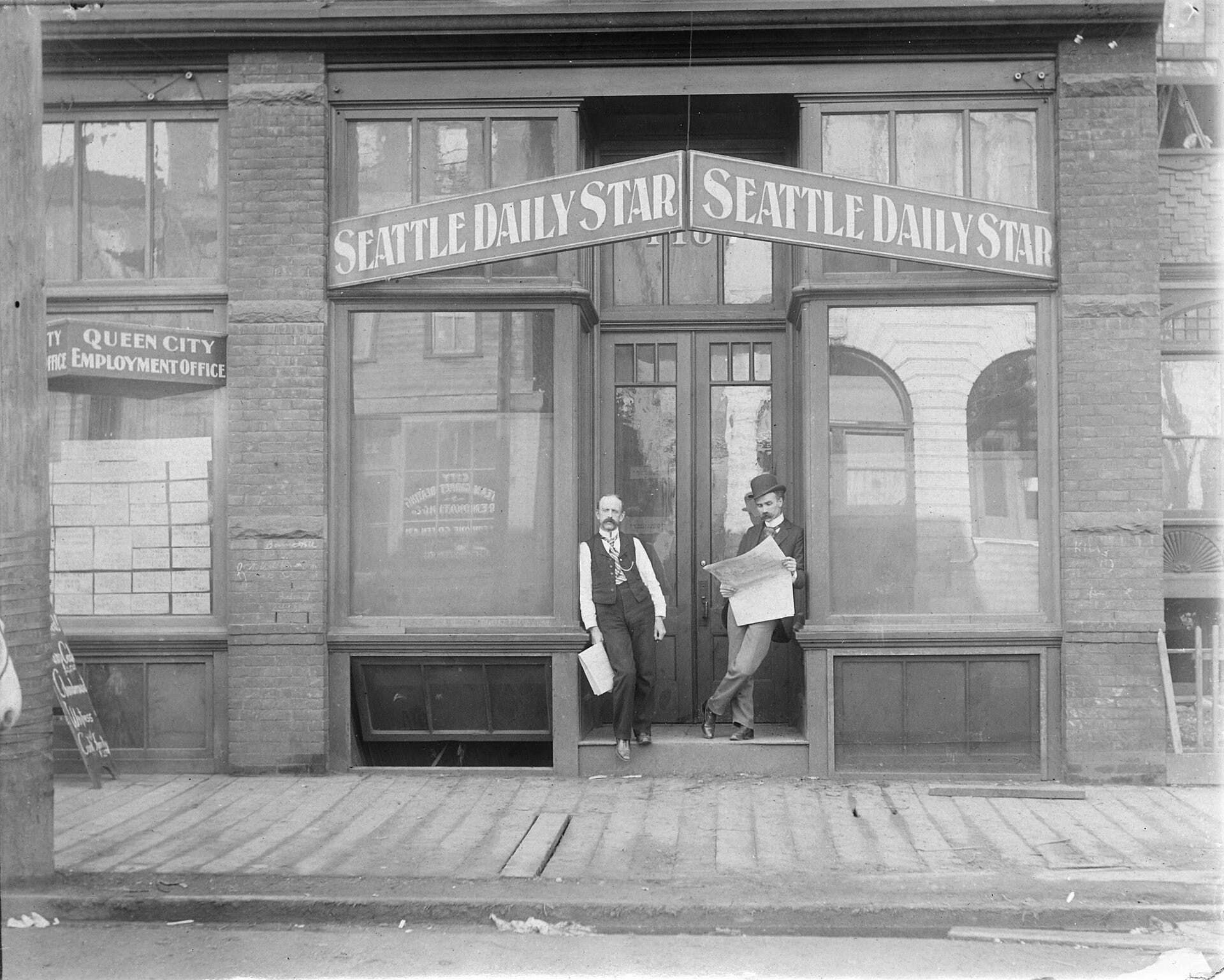
At its best, local news fosters not only trust between and among reporters and the public, but transparency and engagement as well. “One of the hallmarks is you have a sense of dialogue and connection between the news organization and the people in that community,” says Zachary Metzger, director of the State of Local News Project at Northwestern University. “There’s a lot of trust, there’s a lot of dialogue, there’s a lot of openness – and you get coverage that speaks to the issues that people care about. You get coverage that’s helping people make decisions about how to go about their lives.”
The State of Local News Project is part of the Local News Initiative at Northwestern’s Medill School of Journalism — an initiative focused on helping local news survive and thrive in today’s media landscape. “We’re interested in conducting research on local news, including what’s successful within the local news world and how the industry is changing,” Metzger says, “and then trying to apply that research to help different outlets pursue sustainability and innovation.”
In his role, Metzger tracks the history and evolution of the local news industry to understand the ramifications of different levels of access to local news — i.e., what varying levels of access means for communities and for us as a nation more broadly.
Does America need couples therapy?

How Braver Angels is using marriage and family therapy principles to bring us back together again.
Despite maintaining a high level of trust – unlike most national media outlets – local news has faced its fair share of challenges over the years that have affected access to and the quality of the news it provides.
Because local newspapers’ readership is smaller by nature, some of the problems that have plagued the industry overall have hit local newspapers hardest. The Internet’s impact on ad sales – classifieds in particular – being one.
“There’s been an effective collapse of that revenue stream over the past 20 years,” Metzger says. “So most news outlets have had to try to pivot to a subscriber-based revenue model. The problem is that a subscriber-based model can’t hope to account for what you would have been able to charge for advertisements. This has been one of the driving factors behind why we’ve seen so many news outlets disappear over the last 20 years.”
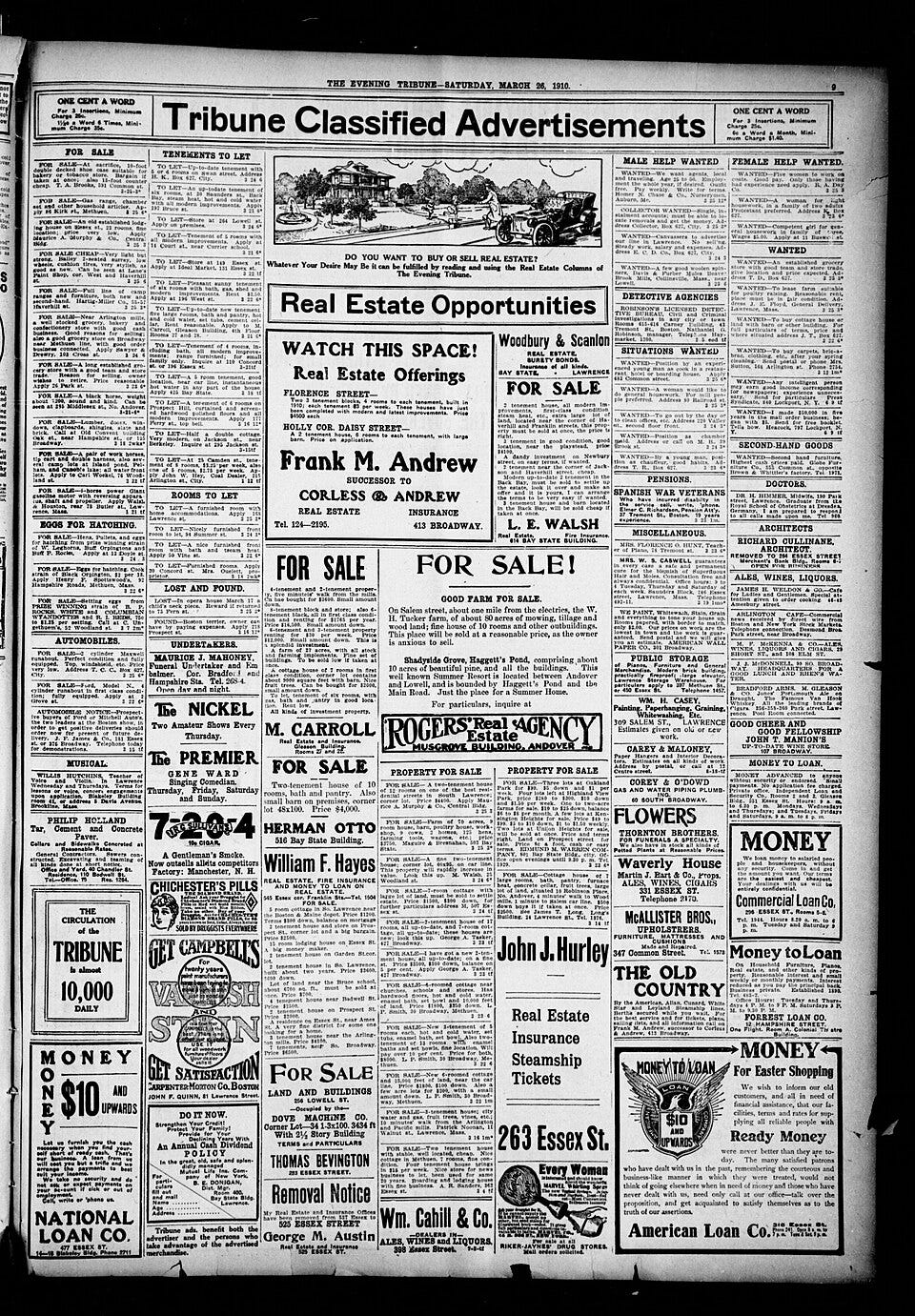
In addition to closures, Dunaway – who wrote her dissertation on local news, with a specific focus on media ownership – points to mass acquisitions and consolidation as an outgrowth of these cash-flow issues.
“The bad boys on the block are the Alden Capitals of the world (i.e., venture capital firms) that buy these outlets, strip them for their parts and sell them — and they don’t even pretend to care about news,” she says. “They’re unapologetic that the only reason they’re buying the outlets is for whatever profit it can bring them.”
All of this has led to a reality in which “something like 70% of all dailies are owned by just 10 companies,” Metzger says, and in which there are significantly fewer outlets — “thousands in the last, say, 10 years,” Dunaway notes.
She’s largely correct.
Over the last 20 years, the number of local U.S. newspapers dropped from 7,325 in 2005 to 4,490 in 2025 — a net loss of more than 3,200 papers over two decades, per the State of Local News 2025 report. “Where previously you might’ve had 15 outlets in a given place,” says Metzger, “now you’re down to three because they’ve all been combined.” Some towns have it worse, with not a single local news source to speak of.
Coinciding with the decrease in outlets is the reduction in staff. Since 2005, there’s been a 75% decrease in newspaper jobs, according to the report. “This leaves a lot of local papers in particular really understaffed, where they might only have one or two reporters on staff who are now responsible for covering an entire county’s worth of news by themselves,” Metzger says.
At the same time, more and more people are going to news aggregators like Google or Apple News for their information. This draws readers away from local news sites where they might have seen advertisements or paid for a subscription.
“Instead they’re just seeing headlines, they’re seeing AI-generated summaries, and they’re not engaged in the same way,” says Metzger. “The ability for news outlets to attract new readers and turn them into reliable subscribers goes down when you have these walls of technology that create a level of separation between the readers and the product.”
This barrier coupled with the lack of resources for reporting the news means that the quality of local news is constantly at risk. As local newspapers continue to bleed subscribers and revenue, much of the content in suburban and rural newspapers becomes either fluff or recirculated content from the nearest city newspaper, Metzger notes. Thus these vital community resources end up losing the unique, local angle that attracted readers in the first place.
This, Metzger says, has ramifications for civic life.
“Part of the challenge when you lose local news is that local politics become national politics,” he says. “Everything starts being viewed through the lens of our national political discourse. But local news helps to cut through that; it helps to say, ‘This is the partisan discussion that’s happening around these national issues, but this is what the impacts would be for our community.’
“That level of nuance and that level of localized analysis is one of the things that local news does so well. In the absence of that, you’re only getting partisan political discourse, you’re losing that nuance, which is dangerous for credible information.”
As Metzger and Dunaway note, the decline of local news has larger behavioral and societal implications.
“When local news outlets disappear from an area, the voting behavior in that area becomes more polarized,” Dunaway says. “You get more straight-ticket voting, partly because people don’t get the information they need about down-ballot elections. So even if someone wanted to vote for a different party for mayor or the House, they don’t because they know nothing about the candidates.”
“Voter participation can go down, civic engagement can go down, incumbents tend to be re-elected more often,” Metzger adds. “Corruption can increase, police misconduct can increase, taxes can increase. So there are very real, measurable impacts.”
What people are looking for in their local news, he says, is pretty basic. “Candidly, what a lot of people want is a source of information about their community, what’s happening in their community — restaurant openings, events,” says Metzger. “They want to be able to see their kid’s name in Little League results. And I think there’s a lot of attention on the role of local news in holding people in power accountable — that’s an incredibly important function.”
Local news also serves an important function in reducing polarization, Dunaway notes, as the issues it focuses on help humanize the community and its members.
“It focuses on the issues that remind us what we all have in common,” she says. “A lot of local politics is more about schools and your garbage collection. Everything is less about these big ideological, conflictual issues that the two parties fight about all the time.”

For all the problems plaguing local news, however, a willingness to pay has not traditionally been one.
“People really value their local news source,” Metzger says. “The problem, and where we see some of the willingness to pay for local news start to disappear, is when their local news becomes extremely diluted – the quality and diversity and breadth of reporting is extremely diluted. That’s when we start to see the desire to pay for what has become a lackluster product really start to go down.”
Thus local news finds itself in a quandary: “We’re kind of in that challenging middle ground where there’s actually quite a bit of demand for strong, vibrant local news, but there’s not a whole lot of supply to meet that demand,” says Metzger.
The bright-ish side? Metzger says that some news organizations, acknowledging that the old model is no longer working, are making changes. He points to a “reorientation” back toward audiences – outlets actually engaging with and asking readers what they want, and the curtailment of national news reporting by local outlets.
Some, however, are taking a completely different approach, including re-organizing as nonprofits — a move that, as Metzger says, “provides some insulation from some of the market factors.” At the same time, however, “Nonprofit is a tax code,” he says. “It’s not a business plan. So a lot of these places still need to have some sort of revenue model. But, we are seeing some really successful nonprofit newsrooms emerge in cities around the country.”
While Metzger emphasizes there’s not a one-size-fits-all solution to the challenges faced by local news, one overarching change he’s seeing is a shift back toward hyperlocal. This includes building connections and trust between reporters and members of the community — effectively acting as the “glue” that holds a community together. The smoke signals of the modern age.
At a time when trust in leaders and institutions — including national news media — is at record lows, local news still has an integral role to play in democracy’s survival.
“Local media are still more trusted than national media,” Dunaway says, “so if we think news should matter at all, if we have the one level of news that’s still trusted going away, that’s a problem.”