

The politicization of the news media
How the media's exploitation of our tribal tendencies can lead us astray — or bring us together.

This is the second in a three-part series exploring the history and implications of the news media on Americans and our democracy. Read the first story, about the commoditization of the news media, here.
“Whether people are listening to the radio, whether they’re reading stories or watching videos on a website or on TV, regardless, the model is to keep people engaged,” says Syracuse University professor Johanna Dunaway.
Research Director at the Syracuse Institute for Democracy, Journalism & Citizenship in Washington, D.C., Dunaway studies the intersection of news media and politics. Her research has focused on the impact of changing communication technologies on public opinion, political behavior, polarization and civic engagement. And what she’s learned about the news media’s revenue model has implications for each of those areas.
“For-profit news media, especially those in a super competitive environment, are going to default toward covering politics in a more sensational way,” says Dunaway. “In the world of politics, especially in the U.S. right now, the way to do that is to cover the controversies between the two parties and between politicians.”
The news media’s current obsession with politics is rooted in both psychology and history — calling to mind the “if it bleeds, it leads” mantra of the yellow journalism era of the late 19th century. Characterized by newspaper magnets William Randolph Hearst and Joseph Pulitzer’s prioritization of violent or tragic stories to boost readership, this sensational style of reporting was popularized by television news in the 1980s.
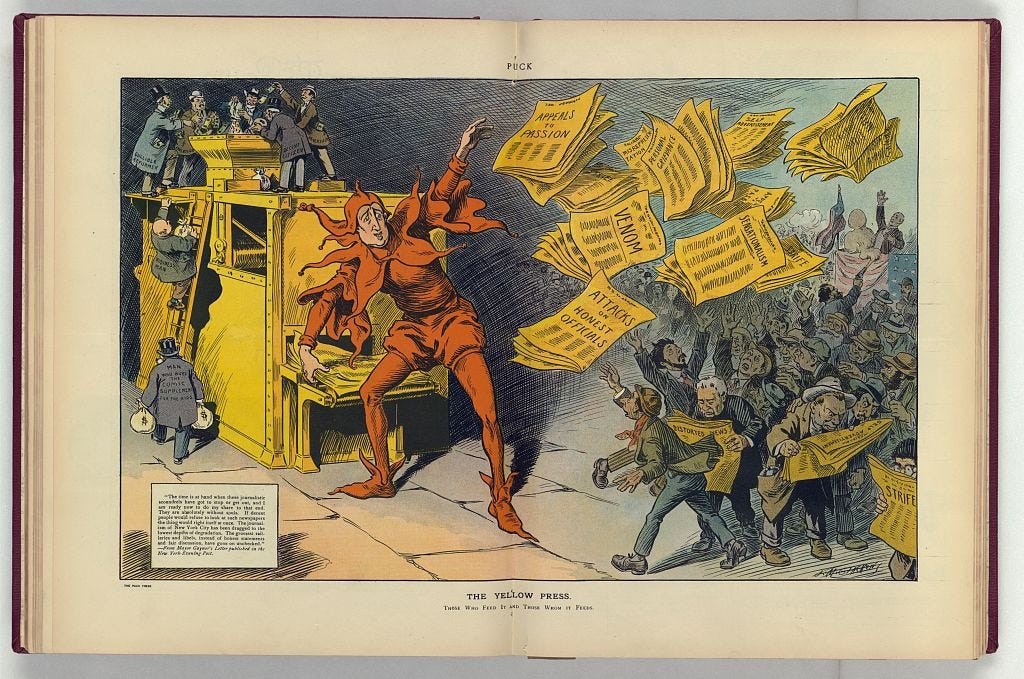
Today, however, politics has usurped violence and tragedy.
“The more vitriolic someone is, the more extreme they are, maybe even the edgier they are, the more coverage they’re going to get,” says Dunaway. The most obvious example she points to is President Donald Trump. “One reason he got so much attention from the media early on, even before the 2016 primaries, was because he’s great [for] the media because he says exactly what he thinks,” Dunaway adds. “He speaks in quotables and frequently says outrageous things, and that’s all really appealing fodder for media outlets that are dependent on attracting as many eyeballs as possible.”
In the competitive world of journalism, Trump is a microcosm of the conundrum that news outlets find themselves in. Through interviews with journalists, Dunaway has repeatedly heard the same thing: “Even when we, journalistically, don’t think we should necessarily cover something because we know he’s trying to manipulate us,” she recalls, “we can’t not [cover it] because we’ll lose those audiences.”
When journalism becomes a race to see who can report the most garish political remarks of the day the fastest, the potential for error and manipulation is high. The natural outgrowth of such sensationalistic reporting is tribalism and division, which brings its own set of problems.
“The more polarized everyone becomes, the more they are willing to believe anything the politicians on their side say,” Dunaway says. “That’s a real problem because if the people who are leading your party are not being honest or not representing all the facts, and you won’t even listen to anyone on the other side, you can really get led astray.”
But it’s not just politicians who are prone to misrepresenting or distorting the facts, it’s the news media itself. A little pressure from advertisers can go a long way.
“Because media companies are so dependent on money from advertisers, if [an advertiser] happens to represent a particular tribe, they can bring a lot of pressure to bear on the owners or operators of media companies to try to reign them in or to try to get more of the views they support into the media,” says Robert Picard, a specialist on media and communications economics and policy, and a senior research fellow at the Reuters Institute.
The way in which we consume news has implications for our politics and civic life as well.
Despite the fact that the news is consumed by politics, we rarely engage deeply with it. The medium may be at least partly to blame.
According to a 2025 Pew Research Center survey, 56% of American adults often get their news from a mobile device. Additionally, 21% often get their news from social media, while about half (53%) say they at least sometimes get news from social media. These seemingly innocuous insights have major ramifications for not just how we engage with the news, but how we view and engage with the world and people in it.
Cellphones and social media, it turns out, are terrible for attention.
“It’s a cognitive bias problem where it’s harder to focus for longer periods of time when you’re on a tiny screen compared to a larger screen,” says Dunaway. “Social media also increases the tendency to jump around and look at stuff but not engage with it deeply. That’s probably even more true if you’re on your mobile device.”
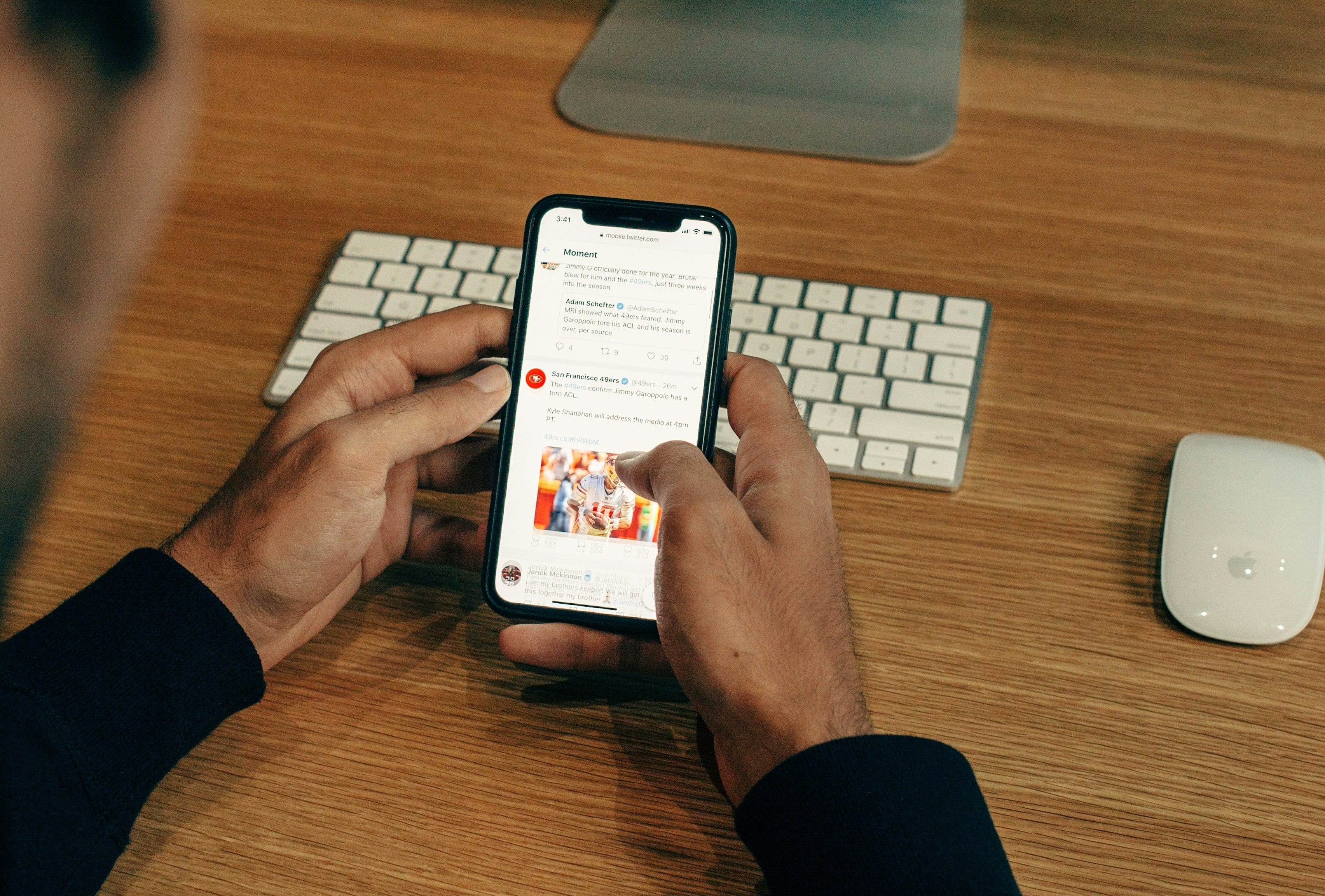
Much like the root problems faced by traditional media, however, the greatest issue with social media is the way in which “the algorithms prioritize vitriol, hostility and sensationalism,” Dunaway says, noting that most people aren’t aware of the economic model behind that. “They don’t understand that the reason that stuff is getting preference in their feed is because it’s hostile and negative and sensational. They assume it’s naturally generated.”
The reason for this is the same as with all media – this type of content is head-turning. Not to mention, cheap to produce, Picard notes.
And although there’s no easy solution — some outlets have tried paywalls, others fundraising campaigns — both Picard and Dunaway agree that media literacy is at least part of the problem and, thus, the solution.
“I think media history is more important now than ever as we get more kinds of media,” Picard says. “People need to understand how to analyze the content they’re getting, where it’s from, how to use it and how to look for good information. This is becoming more and more important as we become tribalized. But also, as we’re diving into AI – which is making it much worse – [media literacy] should probably start by middle school and continue on from there.”
Dunaway, however, believes there’s something bigger at play that needs to be addressed if we’re to solve the issue of the warped news media.
“I think it’s broader than [media literacy] in the sense that there are plenty of people out there who are media literate, but who just can’t be bothered or are uninterested or turn away from politics for whatever reason. It’s almost like civic literacy is the issue. We need to be able to train and educate people to be more equipped to make these hard decisions about what’s truthful, or credible, and what isn’t.”
But there may be a silver lining to this dilemma. Independent journalists, as well as self-made ones, have been turning en masse to online platforms, such as YouTube, Substack, Patreon and Rumble, to share news and information – via articles, videos and podcasts – with audiences fleeing mainstream media.
“We’re seeing an awful lot of journalists, many of whom have been laid off from various media [outlets], who are doing exactly that,” says Picard. “They’re moving to where they can cover niche stories and do things that they want. So we’re getting a lot of specialties out there that are meeting the needs of smaller groups of people or people who are interested enough to pay for it — and I think that is a very healthy thing. … Those are replacing some of [what’s] been lost in legacy media.”
That’s not to say these new forms of media don’t also face challenges or pitfalls. They, too, can fall prey to the sensationalism, tribalism and conflicts of interest faced by more traditional news outlets.
When trust is low and polarization high, opinions and conspiracy theories run rampant. And these online platforms offer an ideal breeding ground.
“The bad side of it is … you’ve got people who don’t know as much about news or public affairs, who can’t tell the difference between an opinion-based podcast versus one that’s trying to retain some of the values of journalism – where they’re trying to be objective or look at things from all sides,” Dunaway says. “And your average citizen doesn’t have a very refined ability to distinguish between opinion and news, and that extends to these formats as well.”
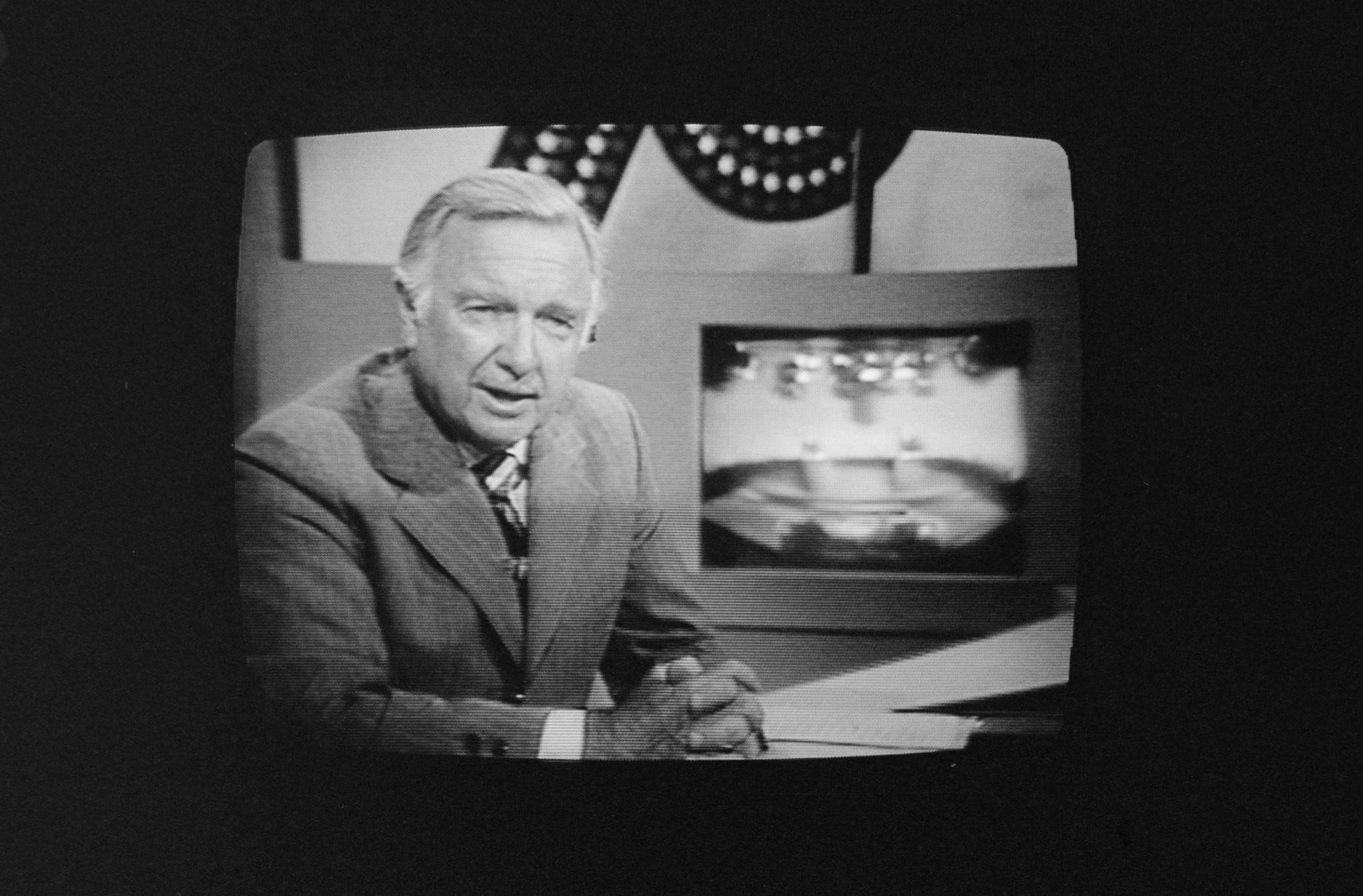
The emergence of these outlets, however, points to the public’s desire for a return to more human-centered news.
Beyond their core content, many of these independent journalists, writers and creators offer robust online subscriber communities, which often include chats, livestreams and roundtables, but also in-person events. This type of connection, Dunaway points out, harkens back to the defining era of television news characterized by trusted reporters like Edward R. Murrow and Walter Cronkite. And it may be one way to regain public confidence in this modern, monolithic media age.
“It’s almost like we’re cycling back to a model that looks more like [when] people used to follow the evening news,” Dunaway says. “If you always read this Substack or you always listen to this podcast, then you’re getting to where you trust the person doing the podcast or the person writing the Substack – and that’s [where you get] that brand loyalty.”
Check back next week for the third and final installment in this series about the demise of local news and the implications for communities.

The speed at which “news” travels is unbelievable. And the algorithms that feed the political vitriol is, let’s just say, tiring. Nice article!