“We are, as a species, addicted to story. Even when the body goes to sleep, the mind stays up all night, telling itself stories.”
—Jonathan Gottschall
In October 2020, my family and I moved to a new house at the fringes of the suburbs, but it would be many more months before I would meet my neighbor’s wife. I met him once or twice, only briefly, but I never got so much as a passing glance at her.
It didn’t take long, though, for my brain to begin creating all kinds of explanations as to why.
At dinner, I’d see the lights from their house through the tree line and wonder where she was — or what happened to her. Like any true crime lover, my mind naturally narrowed in on the husband. Bill must have murdered her and buried her in the backyard, I thought. (Morbid, I know.) How else could you explain us never having seen or heard her – not even so much as a glimpse or a whisper?
Of course I hoped this wasn’t the case. My mind, however, in the absence of information, created an explanation – albeit an irrational one – to fill the void. Unable to deal with uncertainty, my mind began telling itself stories.
Thankfully, my neighbor – Judy is her name – is very much alive (we met a few months later), and she makes some of the best sourdough biscuits you’ll ever eat.
Chaos or community?

What the largely unknown story of Robert Smalls — an enslaved man who commandeered a Confederate ship and delivered it to the Union army — says about America.
Joan Didion once said, “We tell ourselves stories in order to live.”
She was right in more ways than I think even she realized.
Storytelling, of course, is a survival skill — filling in critical gaps in information that might prevent us from becoming some bear’s next meal or a serial killer’s next victim. But it’s also a useful tool for making sense of the world and our place in it.
Stories help us understand how certain actions produce certain outcomes and can thus influence future events. It’s no secret that, as humans, we’re not the best at handling uncertainty; a lack of information fuels a sense of disorder and chaos that’s too much for our hungry minds to manage. Whereas stories – even made-up ones – allow us to retain a sense of control, as well as meaning, over our lives.
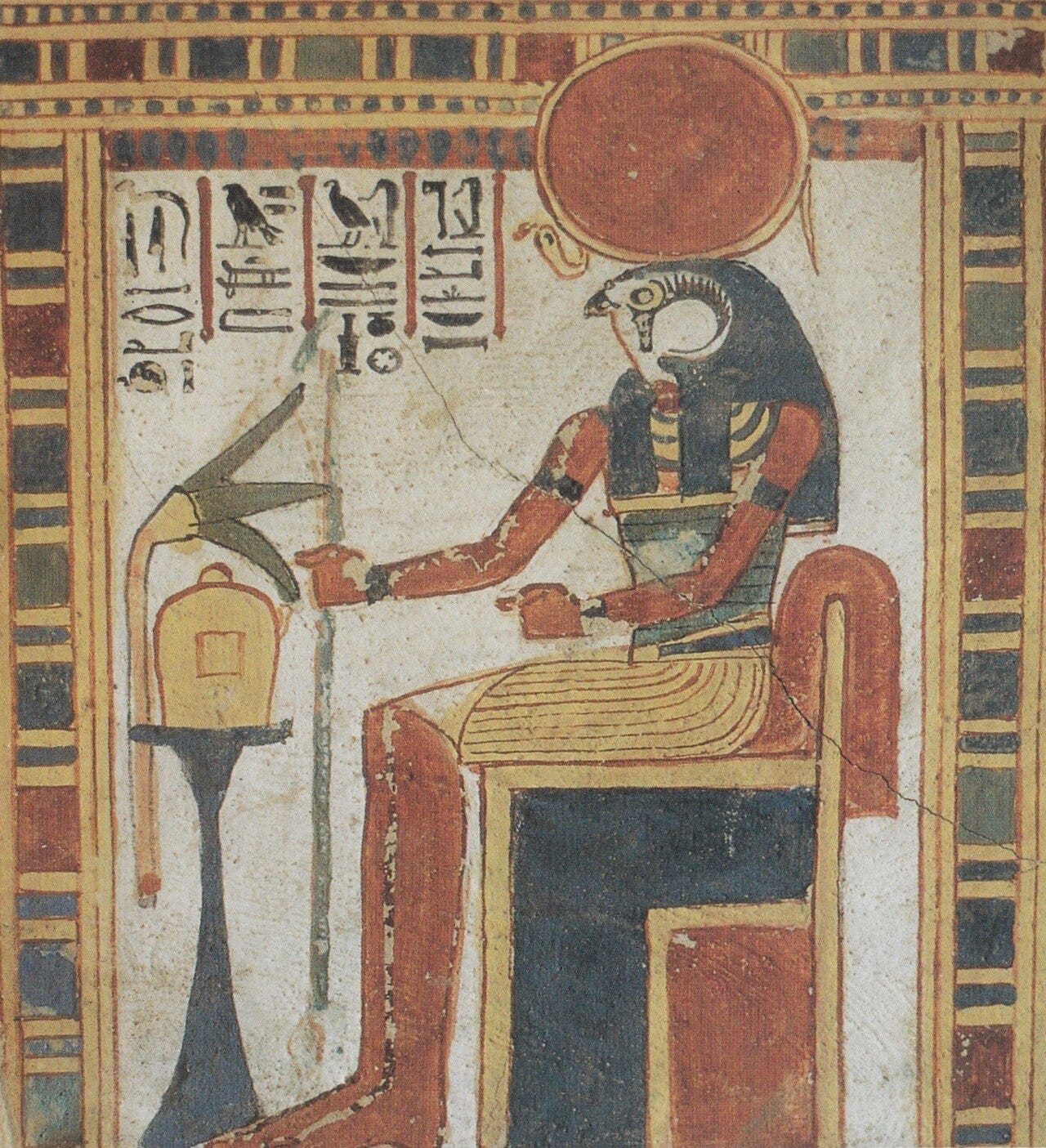
In ancient Egypt, it was believed that Ra, the sun god, sailed across the sky every day, from east to west, from morning till night. At night, he descended into the perilous underworld, where he fought enemies of creation. One of these, his greatest foe, was the giant serpent Apophis (or Apep). The Egyptian deity of darkness, chaos and destruction, Apophis sought to destroy Ra and bring darkness to the Earth.
Of course, what was really happening was the rising and setting of the sun — something we today accept as a basic and essential celestial phenomenon. In 2300 BCE, however, science was, in a word, rudimentary.
The ancient Egyptians thus filled their gap in knowledge with a story — an explanation for why this bright ball rose in the heavens every morning and disappeared every night. It was their way of making sense of, and finding meaning in, what we today know to be a natural rhythm. Every rising of the sun represented Ra’s triumph and rebirth.
But it wasn’t just the ancient Egyptians who did this.
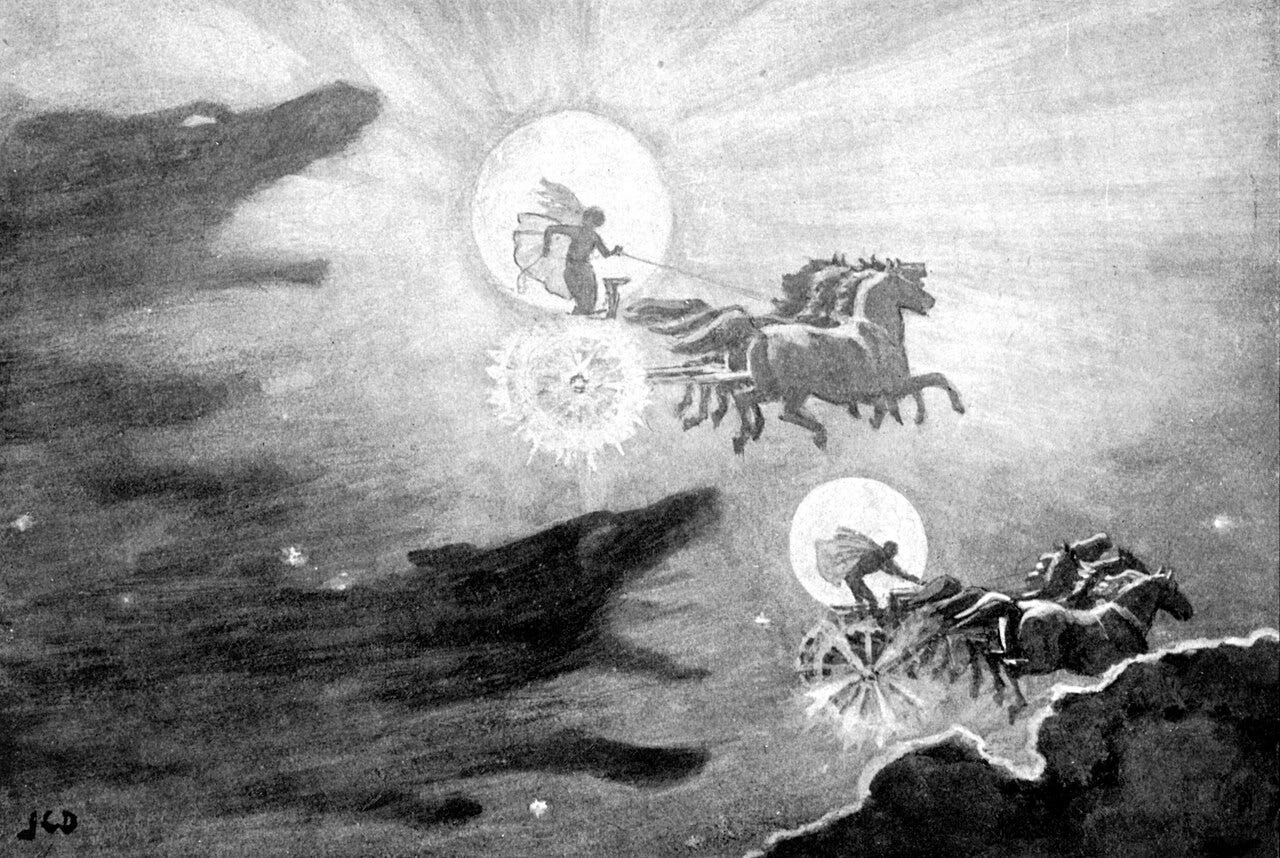
Ancient Greeks believed in Helios, the Titan god of the sun, who drove his chariot across the heavens every day and returned by night by sailing underground via a golden cup or boat. In Norse mythology, Sól symbolized the sun, racing her chariot across the sky with the wolf Hati in hot pursuit.
The details varied, but the idea was the same — some godly being was responsible for the daily comings and goings of the large, light-giving object in the heavens. These stories were ancient peoples’ sensible attempts at answering looming questions using what little information they had.
The stories we tell ourselves can be good or bad, benign or dangerous, thoughtful or reckless, built on false assumptions or correct ones (sorry, Bill!). But they’re almost always based on something we’ve experienced in our own lives. Something that comes up short, that lacks an explanation, that seems unusual or illogical. That our mind demands an answer to.
Stories are thus similar to scientific inquiry in that they arise from the same human impulse – a desire to understand what we do not know. But unlike with science, these explanations go no further than the initial question of “why?” or “how?”
Thus it isn’t enough to be aware of our mind’s penchant for creating stories.
Combine this proclivity with another, such as tribalism or desperation, and the result can often be more reprehensible than an allegory of the battle between good (i.e., the sun) and evil (i.e., darkness and destruction). This can lead to phenomena the likes of Nazi Germany, snake oil salesmen, the Salem Witch Trials, Dust Bowl “rainmakers” and McCarthyism.
Though incorrect, the sun origin stories of ancient cultures were harmless. But for the person who remains loyal to one group at any cost or the person all out of options and feeling hopeless, the stories created in the absence of facts can be hurtful and destructive.
The solution, however, is simple.
And it requires a story of its own, the story we tell about ourselves – one in which we remain curious and inquisitive in the absence of facts.