Chaos or community?
How the stories we tell ourselves will shape the nation we become.

This story was first published May 15 on Prohuman Pathways, the Substack of the Prohuman Foundation.
“The best way to predict your future is to create it.”
—Abraham Lincoln
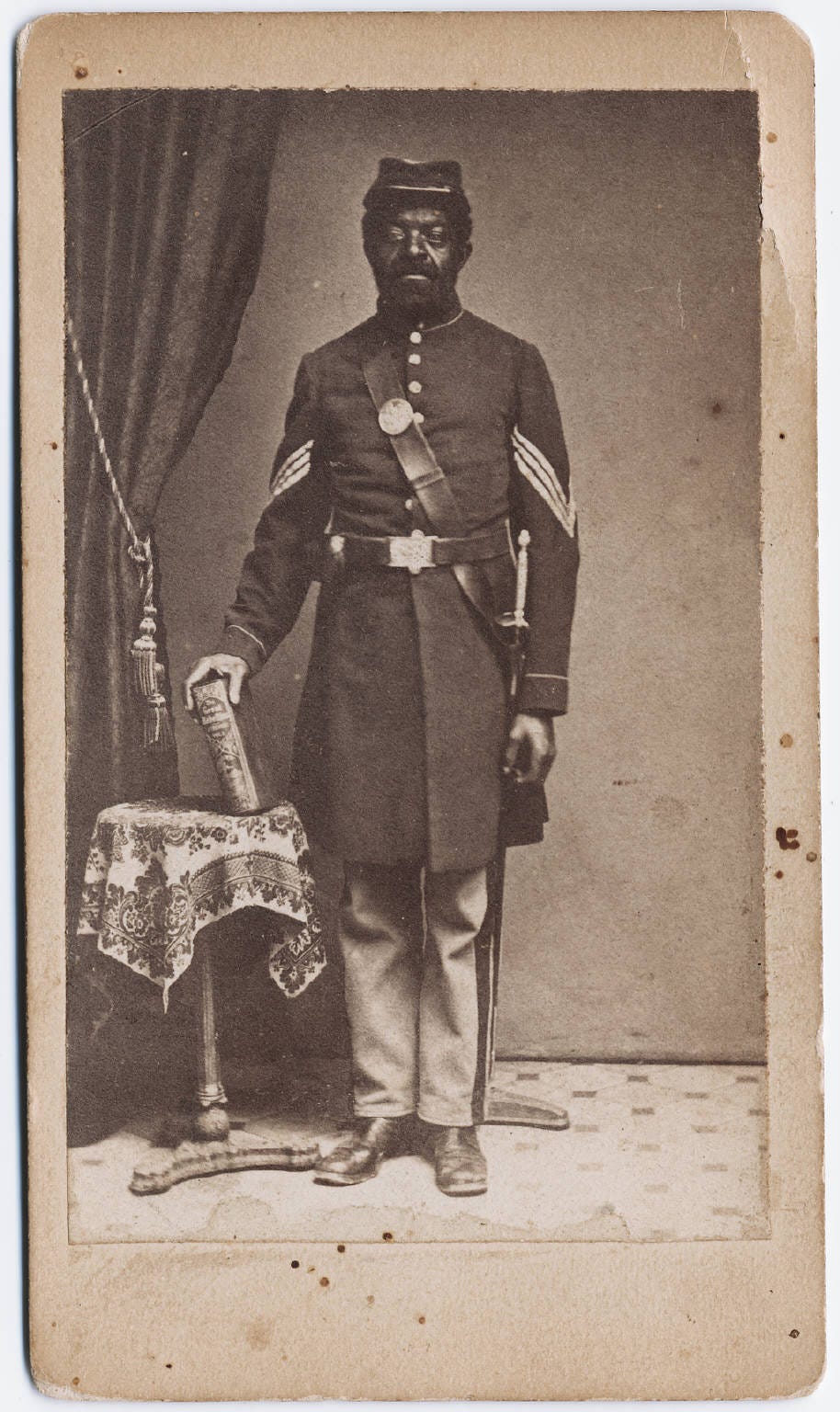
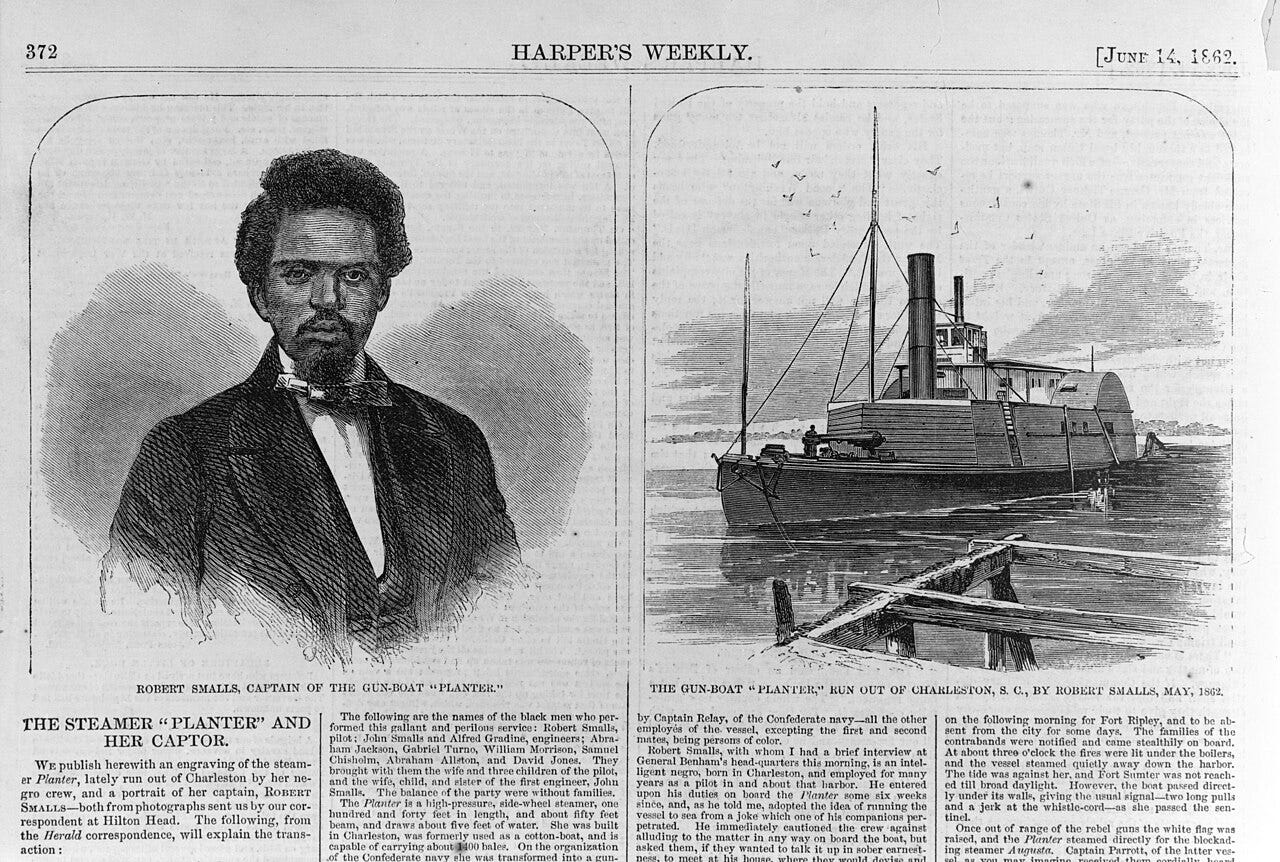
On May 13, 1862, Robert Smalls commandeered a Confederate military cargo ship, sailing it out of Beaufort, South Carolina, and delivering it to the Union Navy. An enslaved man, Smalls’ act, along with the intelligence he shared, helped the Union capture Cole Island and directly influenced Lincoln’s decision to enlist black soldiers in the Union Army.
Smalls himself was appointed Navy pilot of the USS Crusader and eventually became the first black man to be promoted to captain.
“He fought heroically in the war and afterwards became a wealthy landowner and purchased the plantation on which he had been a slave,” says Robert “Bob” Woodson, a civil rights activist and founder of the Woodson Center, known for empowering leaders in low-income communities to confront crime, addiction, and family breakdown.
But as Woodson points out, Smalls’ exploits are largely unknown, often passed over for stories that highlight the victimization of black Americans while failing to also honor the sustained hope, courage, and humanity that led to real change.
“We should talk about the abuse and how horrible the system was, but we should also talk about the renewal,” he says. “We believe America should never be defined by the worst of what it used to be, but as a country of second chances — a story of redemption.”
Following the release of Nikole Hannah-Jones’ The 1619 Project — which posits that the country’s real founding occurred in 1619, when the first slaves arrived on America’s shores — the Woodson Center launched its own project. 1776 Unites exists to inspire black Americans “to become agents of their own uplift and transformation, by embracing the true founding values of our country,” per the project’s website.
1776 Unites brought together a group of writers, thinkers and activists to author their own series of essays offering a more honest retrospective of black history in America.
Titled Red, White and Black: Rescuing American History from Revisionists and Race Hustlers, the book tells the stories of black Americans who “were able to achieve in the face of oppression,” Woodson notes. For him, it’s about giving black Americans a sense of agency.
The idea of agency is something that’s come up in Daniel Yudkin’s research as well.
Yudkin is founding director of the Beacon Project, an initiative of More in Common, an organization focused on developing evidence-based solutions to bring Americans together. He’s found that, for the most part, people fall into one of two categories: You either think people’s lives are shaped primarily by forces outside their control, or you think people’s lives are shaped by the decisions they make. These contrasting views ultimately translate to different styles of civic engagement. But, despite that major difference, Yudkin says there’s one notable commonality.
“People don’t want to just be passive recipients of experiences; they want to actually be involved, they want to contribute, they want to feel a sense of meaning and value and purpose,” says Yudkin. “And the way that people get a sense of meaning and value and purpose is by feeling as though they have something to offer, to engage in.”
As polarized as we are, as powerless as we may feel, we still want to contribute in some way. The popularity of Woodson’s book seems to support this idea.
Selling out in its first three weeks, Red, White and Black appeared to resonate with people. It did so well that the Woodson Foundation developed a curriculum from the essays, which are available to public schools; these have since been downloaded over 300,000 times. The organization also created an animated Youtube series and published a sequel.
“People are motivated to change and improve when you show them victories that are possible, not by always reminding them of injuries to be avoided,” Woodson says. “It’s healthy for us to receive information that reinforces the notion that we have the capacity to change ourselves, that we have agency.”
In our nation today, it’s not just black Americans who feel unheard, unrepresented and unempowered. In a 2023 Pew Research Center survey, more than 80% of respondents said they believe elected officials “don’t care what people like me think.” Findings were consistent across race/ethnicity, sex, age, education level and political party.
“This is the core problem,” Yudkin says. “If people don’t feel as though politicians reflect their concerns, they’re going to tune out from the political process.”

By going back to the “basic building blocks of a flourishing society,” The Beacon Project aims to build a new political philosophy, one that bridges personal and institutional responsibility.
“You need to ensure the government and civic institutions are providing people opportunities to flourish and thrive,” Yudkin says. “But you also need cultural reform to help people to see themselves as active participants in civic life.”
Yudkin refers to this idea as Potentialism.
“Potentialism starts with a basic assumption about human nature, which is that everybody has something to contribute,” says Yudkin.
He and his team are in the process of refining the prototype of a new civic vision via research and conversations with everyday Americans, as well as experts in academia and civil society. Once finalized, they plan to publish it and engage with who Yudkin believes will be early adopters: the exhausted majority (i.e., those “who don’t feel like their views are reflected in political discourse,” he says).
“Our ultimate aim is to create a new story for the country that can speak to the exhausted majority and address some of the major challenges we’re confronting as a country and as a society,” says Yudkin.
At present, disagreement and polarization are keeping us from doing just that. As Woodson notes, we have a choice to make: “America is at a turning point. It’s chaos or community.”
America’s story, after all, is one of not just redemption but of compassion for our fellow citizens.
When Smalls returned to Beaufort after the war and purchased the home of his former master, it was not just a symbol of his rectification but of his mercy. “He took in the destitute wife of his former owner who was suffering from dementia and allowed her to stay,” Woodson says.
“To me this is an act of radical grace that can only happen in the American context.”