

Survival of the synergistic
Despite our intelligence, humans’ capacity for collaboration is often outmatched by that of the animal kingdom.

“Nature is indifferent to the survival of the human species, including Americans.”
—Adlai Stevenson
Reaching speeds of upwards of 40 mph, coyotes excel at pursuing and catching prey that attempt to elude it through speed alone. Thus an animal’s best defense against the predator isn’t to try to outpace it, but to escape it – by going underground, for instance.
Badgers on the other hand are adept diggers, able to rapidly excavate burrows and chase prey below ground.
The two animals’ varying but complementary skills are what make them quite the powerful, yet unlikely, pair.
In this symbiotic relationship, the coyote works above ground, while the badger leads efforts below. If a coyote chases a rabbit into a burrow, the badger will pursue it, while the coyote waits patiently above. Should the rabbit emerge, the coyote is ready.
This mutually beneficial relationship (albeit not for the rabbit) increases the chances of either party satiating its hunger. And although coyotes and badgers don’t typically share their prey — whichever animal is lucky enough to snag it is the one who gets to enjoy it — their unlikely partnership means both animals improve their chances of survival.
And isn’t that the point?
Despite competing for the same resources, they often instinctively work together. They don’t concern themselves with who got the last rabbit or prairie dog, or who exerted the most effort in the chase, or whose stomach is empty. They simply do what nature demands of them.
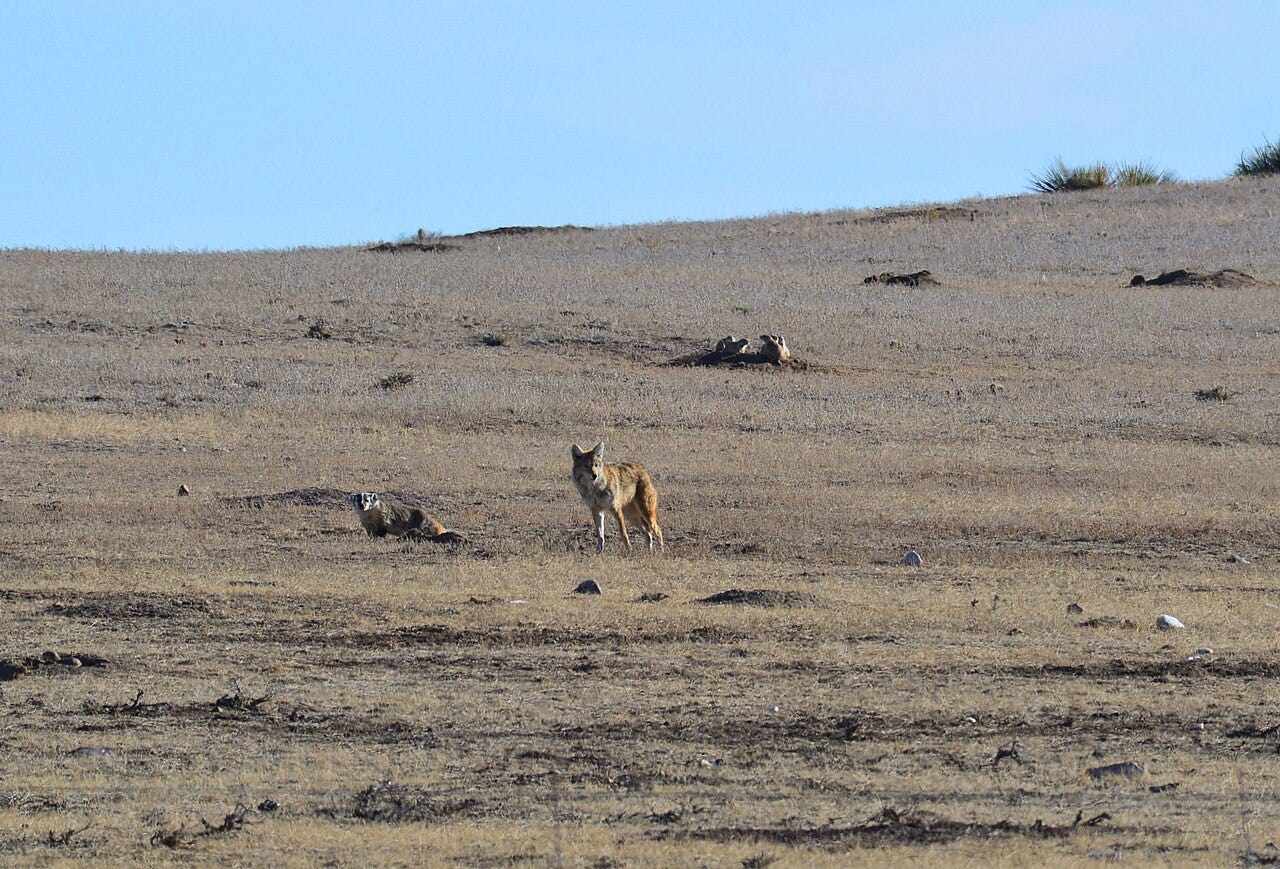
I suppose that’s the beauty of being a wild animal.
Living unburdened by the emotional baggage that often hinders objective decision making. In fact there’s no decision making to speak of. The coyote and the badger are directed by biology, evolution and the will to survive.
Much like pistol shrimps and gobies.
In this underwater partnership, the shrimp digs a burrow, which it often shares with the goby fish. The goby then acts as the eyes for the nearly blind crustacean, keeping watch for predators and using “chemical cues” to alert the shrimp when it’s unsafe to venture out.
I could cite even more examples of the sort from the animal kingdom.

But these collaborations are not unlike those of humans and our ancestors … once upon a time. Take early members of the hominini species, for example.
Facing constant threats to their survival, these contemporary primates banded together much like these disparate animal species. Hunting large game together meant increased safety and success, sharing food reduced starvation, living together made child rearing easier and life safer. These advantages were the remedy to both real, physical threats and the emotions they invoked: fear, shame, anger, disgust.
Their collaboration didn’t occur because of a lack of competition. In fact, these early beings sought all the same things: natural resources, status, mates, influence. But cooperation often produced advantages that no individual could realize alone. Their success emerged not from the absence of rivalry, but from an unusual ability to balance competition with collaboration.
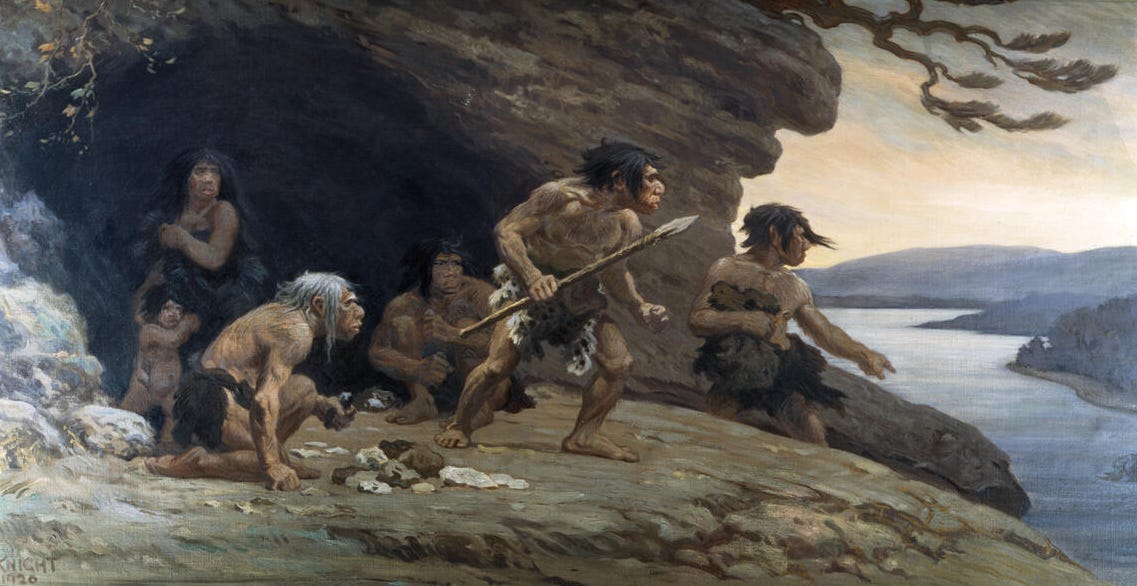
These tribes were proof that trust was an essential ingredient for survival. Those who lacked a sense of social cohesion fared far worse.
Today’s society looks much different even if our emotions remain the same. Survival isn’t a cloud hanging over us; it doesn’t infuse every decision we make or interaction we have. Yet we haven’t learned how to redirect these feelings in ways that make sense in our modern world. Thus today, the emotions and tribalism that once worked to our advantage often work against us, fueling polarization, hostility and conflict.
Cooperation — one might conclude from listening to politicians and watching the news and scrolling on social media — is no longer a requisite for our survival. Perhaps that’s a sign we have it too good nowadays.
Despite all of our disagreement and tribalism and infighting and undermining, we may be able to survive, but will we thrive?
Unlike coyotes and badgers or pistol shrimps and gobies, we humans are all part of the same species: homo sapiens — a Latin phrase meaning “wise man.”
Only time will tell, however, if we live up to the name.

Love the Stevenson quote ! People forget ( or never knew) how on point & insightful he was.