

Regaining the American pioneer spirit
How Project Appleseed is working to rebuild the values of our forefathers one shot at a time.

“A free people ought not only be armed and disciplined, but they should have sufficient arms and ammunition to maintain a status of independence from any who might attempt to abuse them, which would include their own government.” –George Washington
For colonists living in pre-Revolutionary War America, every day was centered on subsistence and security. A poor harvest, a foolish mistake, a lax guard could mean the difference between life and death.
Afterall, the colonists were responsible for cultivating and harvesting nearly all of their own food, which included raising livestock and hunting. With no organized police force, and run-ins with bandits and indigenous people common, they had to ensure their own security; the constant British military presence offered some relief, but was also a source of tension. Faced with such demanding work and rampant illness, health and safety were both integral to the colonists' survival and impossible to guarantee.
The guarantor of freedom

In the colonies, independence was not a radical idea, but a way of life — made possible by one specific tool.
One man, Jacob Housser, captured the precariousness of American colonists’ existence and the constant pressure that created: “We left our harvest standing in the field, our cattle wandering in the woods, and ran for the fort, not knowing if we should be alive the next day.”
This level of awareness and persistence – prerequisites to survival in the American colonies – is understandably difficult for many modern-day Americans to comprehend.
“In 1775, you’d walk a few miles outside of Boston and you were essentially in the wilderness,” says Tom Kehoe, chairman of the board of directors for Project Appleseed, an organization focused on keeping the values of our nation’s founders alive. “People living in the suburbs – if we can call them that – had to deal with dangerous animals, and there was a lot of conflict between the colonists and the various indigenous tribes of that area.”
Yet the enduring spirit and tenacity that served colonists well in the field and fort also enabled their success in more existential matters — specifically, in securing their independence. As Kehoe aptly notes, “adversity breeds strength,” and for the first Americans, the years of practicing self-reliance had cultivated in them qualities and abilities far beyond husbandry and basic self-defense.
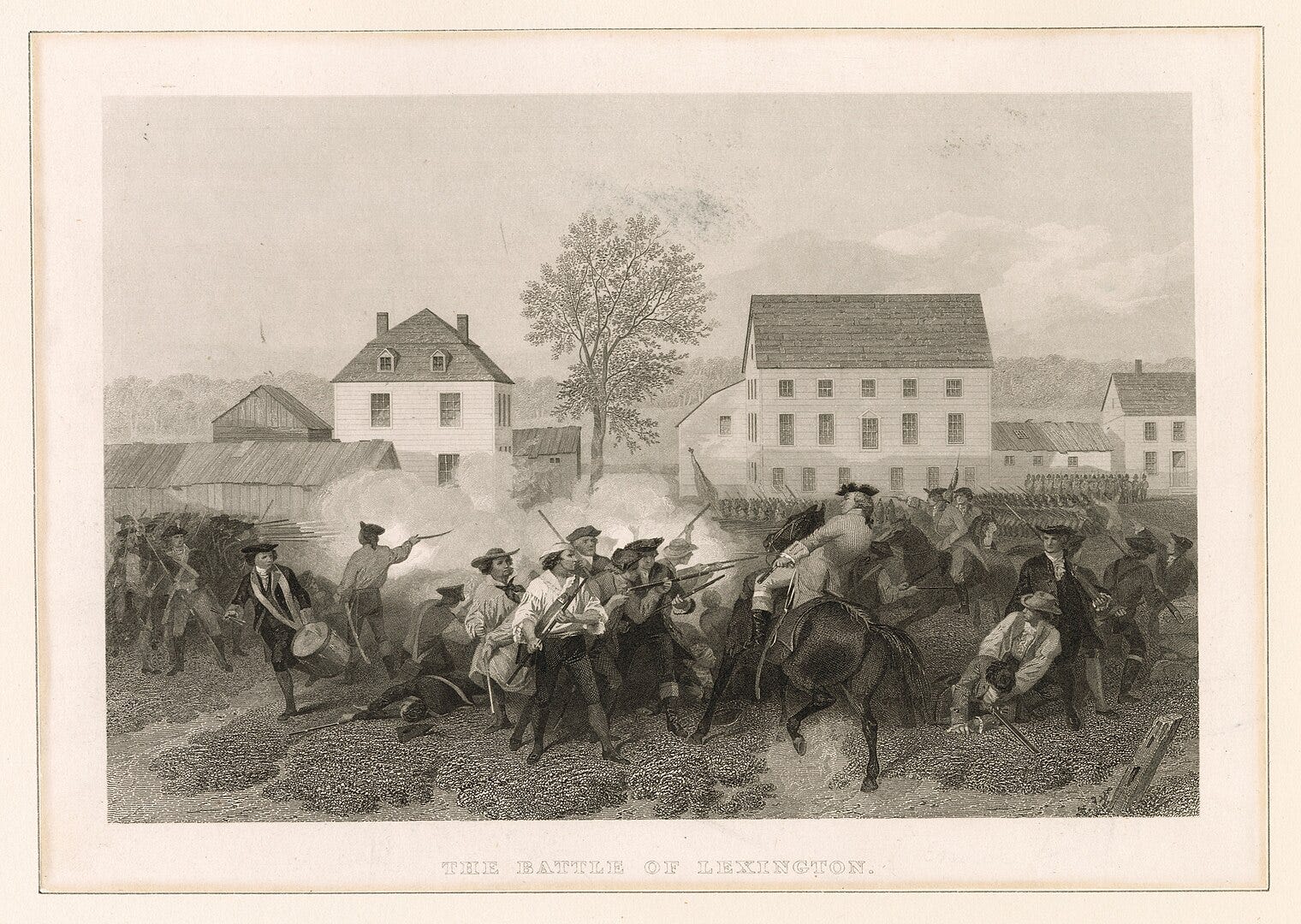
“It was a death sentence to have participated in such a thing,” Kehoe says of Americans’ plan to revolt against the British. “It was treason, it was revolt against the king, and yet tens of thousands of people turned out to fight against the British knowing their lives were on the line. But they weren't just standing up for themselves, they were standing up for their community and for their neighbors. That spirit is something that, unfortunately, has really fallen away from us today in America.”
“So much of our lives has become automated that we've lost a lot of that pioneer spirit that our ancestors had,” he adds, “and I think we would be a better nation if we would return to that.”
The stories we tell ourselves matter

My passion and fascination with writing began with a love of history. It’s not surprising when you consider the fact that all nonfiction writing, or all writing for that matter, has its roots in history. The challenges we’ve faced, the feats we’ve accomplished, the experiences we’ve had, the stories we pass down are all part of our history.
Restoring that focus is the mission of Project Appleseed, and the way it works to achieve that mission is through cultivating what is a disappearing skill — one that nearly all of the first Americans possessed: marksmanship.
“We want to turn America back into a nation of riflemen and women; that is someone who knows their rifle, who can use it like an extension of their body,” says Kehoe. “This requires a degree of personal persistence. It requires focus and commitment, and it requires respect for values that are fading.”
Through its focus on marksmanship, Project Appleseed aims to connect people “with the attitudes of the people who founded this country,” Kehoe explains, “because guns were an essential part of their lives.”
“We want people to regain that feeling of this being a country worth fighting for — and how do you get that back?” he asks. “You change your community one person at a time.”
In colonial days, clean drinking water was hard to come by.
Aware of the risks of drinking such bacteria-ridden water and without a means of filtering it, the colonists largely consumed alcoholic beverages such as beer and cider, which were made safer for consumption through the brewing and distilling processes. It was amidst these circumstances that a young man, named John Chapman, began traveling west from Massachusetts planting apple seeds as he went. Better known today by the nickname Johnny Appleseed, Chapman exemplified the American pioneering spirit of that time period.
“Johnny Appleseed went around planting apple orchards in various places where he could find land cheaply, then he would harvest the apples, get an apple press going and make cider,” Kehoe explains. “He spread cider all over the colonies by doing this. It was an idea that took hold, and he was able to spread it from place to place.”
It was with a similar vision that Jack Daily founded Project Appleseed in 2006. “That was Jack's original vision — something that we could spread around the country to get people involved and inspire them both to become marksmen and to become more civically involved,” says Kehoe. “Part of Jack's idea was to inspire people to emulate the kind of sacrifices and commitments that our forefathers had made to liberty.”
The problem with freedom

“They who can give up essential liberty to obtain a little temporary safety, deserve neither liberty nor safety.”
A national nonpartisan, apolitical organization, Project Appleseed is committed to spreading the values of our forefathers, those that made securing our independence possible, through storytelling and marksmanship. To do this, the organization offers a series of nationwide clinics led by 700 all-volunteer instructors, who are all expert marksmen. With programs focused on 25 meters, 200 yards and 400 yards, the organization teaches participants marksmanship fundamentals, including “the precision and accuracy needed to hit their targets consistently,” per its website.
The first level program, and one of Project Appleseed’s most popular, is the 25M Marksmanship Clinic, an intensive two-day program where participants learn basics such as the six steps to ring a shot, natural point of aim, steady hold factors and more. Shot from three positions at 25 meters, the clinic includes targets scaled to simulated shooting at 100, 200, 300 and 400 yards.
In addition to being expert marksmen and women, Project Appleseed instructors are Revolutionary War buffs. During the clinics, they share the real-life stories of people who fought for and helped America secure its independence. “They're not only expert shots; they're expert instructors and they're great storytellers,” says Kehoe. “And when you come to an Appleseed event, we give you the finest instruction in field marksmanship that you'll find anywhere in the country, but you'll also hopefully realize why marksmanship is a part of our heritage as Americans.”
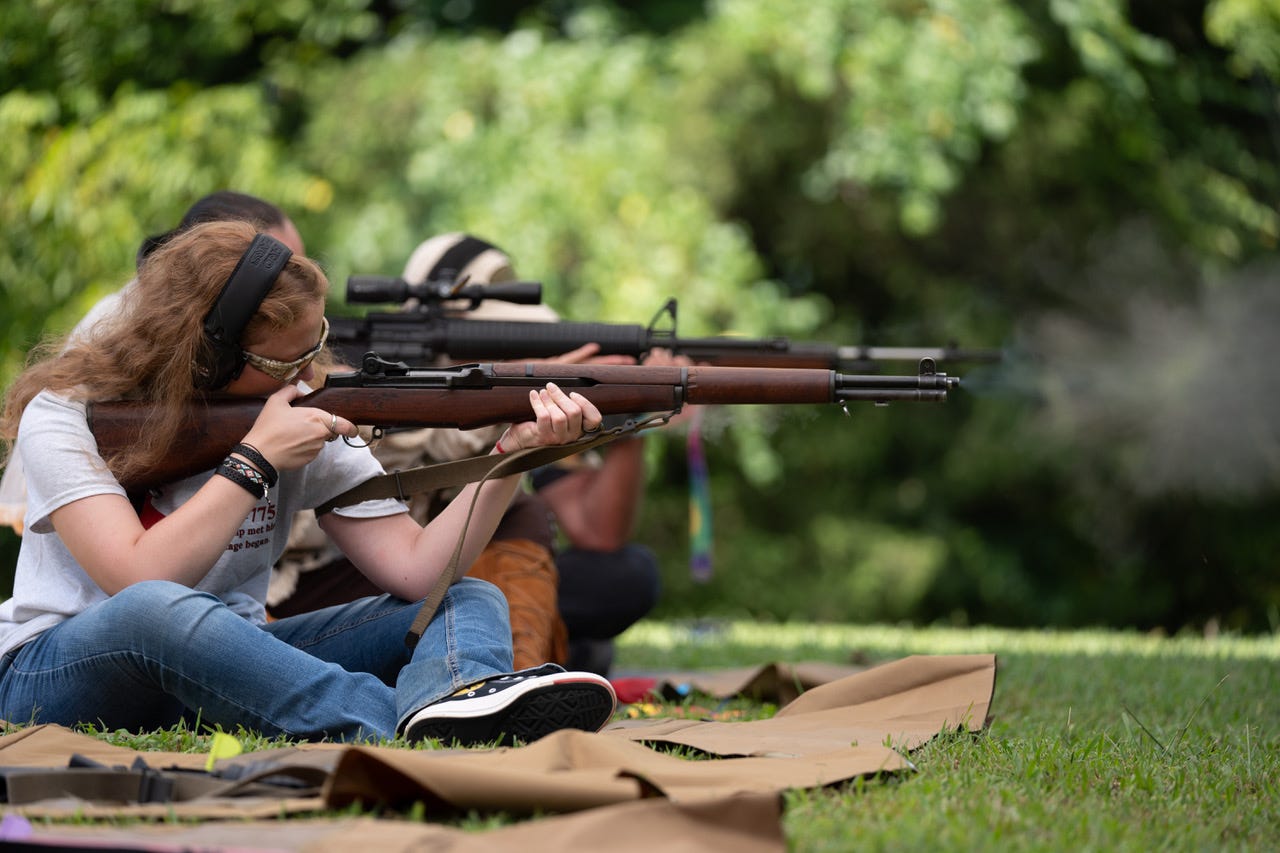
Participants scoring 210 or better out of 250 on the Appleseed Qualification Test earn a Rifleman’s patch. The ultimate goal of Project Appleseed’s programs is for participants “to be accurate out to 500 yards — the distance known as the traditional Rifleman’s Quarter Mile, which, according to the organization’s website, “has been part of America’s marksmanship repertoire since our country’s earliest days.”
While participants are welcome to come to just one clinic, the hope is that they’ll return over and over again, refining their skills and increasing their knowledge. As Kehoe notes, “Coming to one class, even a weekend bootcamp, is not going to make you an expert. It's going to give you a lot of solid fundamentals, but you have to take that and develop it yourself.”
For most first-timer shooters, and those who’ve never been around guns, the level of know-how that’s required to shoot a rifle successfully — not just once, but over and over again — is difficult to comprehend.
“Most people have no idea of the degree of skill that's required to actually shoot a rifle quickly and accurately,” he notes. “To be able to do that, you have to do more than be able to line up your sight. You need to be able to get into position quickly; you need to understand how to form a good shooting position in prone or even in an offhand position. You need to learn how to control your breath. You need to learn how to focus your mind. It's a much more difficult endeavor than most people think it is.”
When a person’s capable of doing all of these things at once, they enter into what Kehoe refers to as the “rifleman’s bubble” — a kind of “zen-like state where nothing really exists except you, the rifle and the target,” he says. “Everything else fades into the background.”
As Kehoe is personally aware, the benefit of being able to achieve this state is much greater than just being able to hit your target. “You gain self-confidence, but you also gain focus. You learn to deal with discomfort because getting into some of those positions is not particularly comfortable. You learn all about controlling your breath and mind,” Kehoe says. “There's a great deal that you can gain from seriously undertaking the study of marksmanship.”
For some Americans today,
the idea of “bearing arms” seems superfluous and antiquated – an excessive and outdated idea passed down from individuals who have no connection to our modern lives and the conveniences it affords. To that Kehoe reminds us that, while marksmanship is an honorable, useful and worthy pursuit in itself, it’s what it represents that is most important and relevant to our daily lives.
“When you make a decision to own firearms and learn how to use them, you're taking responsibility for your own safety — and the truth is, no matter how many police there are, no matter how big the National Guard is, everyone is fundamentally responsible for their own safety,” he says. “No one else can take responsibility for it. The old joke is, ‘I carry a gun because a cop is too heavy.’ Police are not in the business of protecting people; they're in the business of responding to crimes.”
“There's a different type of responsibility that comes with owning firearms and using them safely and responsibly,” Kehoe adds. “You get a different respect for life.”
But there’s also another, seemingly theoretical reason for owning and knowing how to use firearms — one that our predecessors know something about. “There's the famous line, ‘If you don’t know your history, you're doomed to repeat it,’” Kehoe says. “That's something we would really like to avoid.” Through its focus on history and storytelling, Project Appleseed is attempting to do just that: prevent what has happened in the past by reminding people of it.
“The marksmanship instruction is kind of a hook that we use to draw people in so that we can tell them these stories and try to inspire them — to explain that love of liberty is what this country is really about and how much people sacrificed 250 years ago to win it,” explains Kehoe. “So, yeah, we're a marksmanship program, but we're a very unique marksmanship program. We're focused on building the American character — rebuilding it, so to speak.”
The right to guarantee all other rights,
as Kehoe describes it, the Second Amendment acts as a deterrent to overzealous governments. But, as Project Appleseed reminds us, without constant vigilance, we’re doomed to see our liberties eroded once again. Something that Kehoe says is already happening in other countries.
“I look around and see rights being eroded in free countries all over the world, like what's happening with speech in Britain,” he says. “You may read the stories and say, ‘That couldn't really happen. Someone couldn't go to jail because they played a song that was deemed hate speech.’ Well, it does happen. We see that in our country today, too. The left wants to limit free speech in one way; the right wants to limit free speech in another way, and people need to wake up to that.”
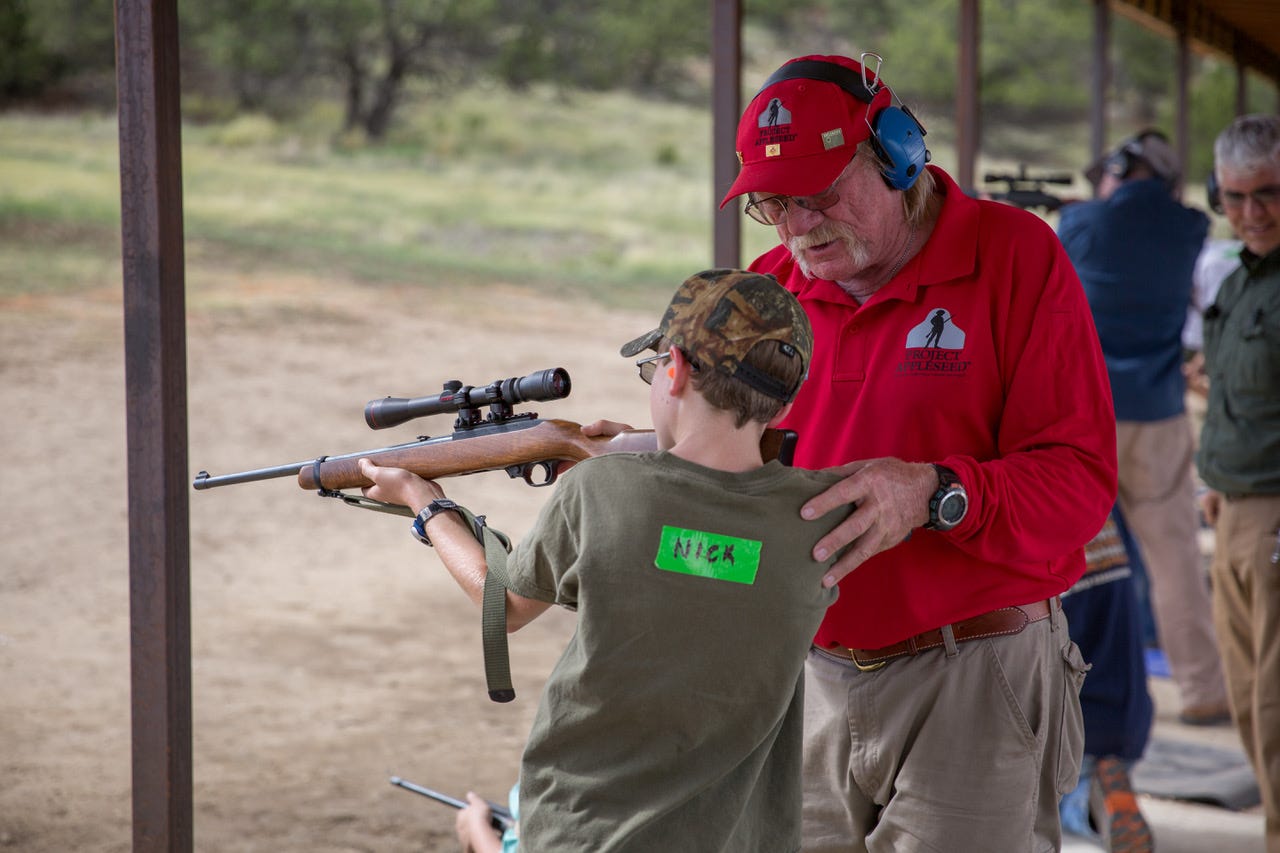
Vigilance then, for the men and women (and children) who participate in Project Appleseed’s clinics, means becoming civically engaged in their communities. And the discipline and persistence that come from being a good marksman make them ideal candidates. This isn’t some arbitrary outgrowth of Project Appleseed, rather an intentional part of its mission. Inspiring Americans “to study and understand and apply the founding principles of liberty and freedom” and reigniting the “spirit of the American Revolution” are stated goals of the project — and are designed to “wake up sleeping Americans,” Kehoe notes.
“We want people to get involved in their communities, to make a difference, because everything starts with getting good people involved and getting people off the couch,” he says, noting that they’ve had some “Appleseeders” who’ve run for Congress, others who are Congressional aids and some who’ve joined their local school boards. “That's what we're looking for. We want to make participants into community leaders.”
And like the liberties we enjoy, Project Appleseed’s mission applies to all Americans.
“We want the folks who come to our shoots to become inspired and to become better Americans — we don't care whether they're republican, democrat or independent. We don't care what color their skin is,” says Kehoe. “We think the things that unite us as Americans, our shared heritage, are much more binding than the petty squabbles that divide us.”
Recruiting Americans of all backgrounds and demographics, however, is a constant challenge for Project Appleseed; that’s not to say it hasn’t made progress. In the nearly 13 years that Kehoe’s been with the organization, a lot has changed. “We jokingly referred to the period when I joined as the Hairy Legged Men Days,” he says. “Those days, mostly what you saw were old Army vets with hairy legs shooting centerfire rifles.”
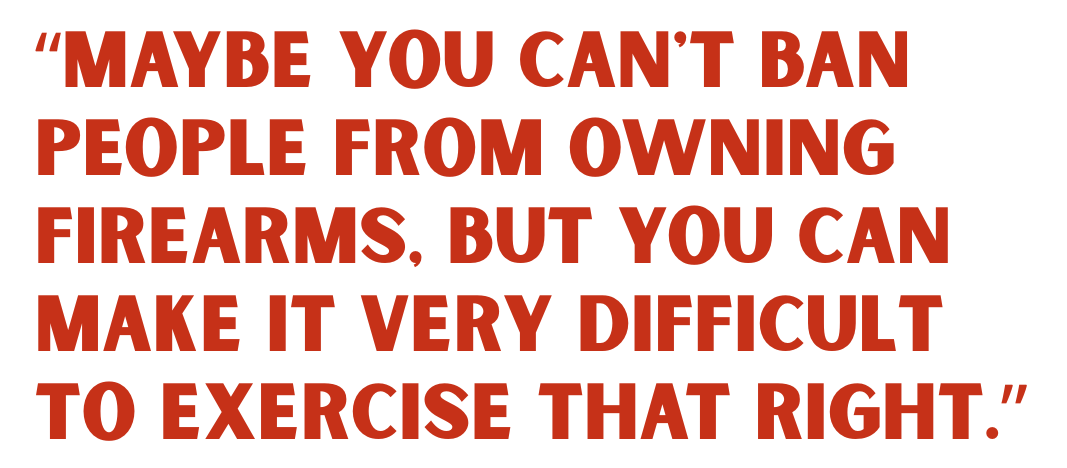
Since that time, Kehoe has helped the project reach a much wider audience, now with more women, younger people and families coming in. Today, depending on the location, women account for 30-40% of all shooters in clinics. “We get teenagers and soccer moms and spandex on the line, and that's a good thing,” he says. Reaching Hispanic and black communities, as well as the LGBTQ community, has been another priority, and while success often eludes them, Kehoe and his colleagues continue to work at it, knowing how important everyone’s engagement is.
“When we say all are welcome, we mean everyone is welcome, and we strive to create an environment that is welcoming in itself,” he says. “So have we become much more diverse than we were in the earlier days? Absolutely. Are we looking to continue that? Absolutely.”
This is one reason that in the last several years, Project Appleseed added a pistol clinic – to serve a distinct and growing group of people. “People buy rifles and pistols for very different reasons,” explains Kehoe. “We've seen a huge surge in firearms ownership over the last six or seven years, but most of those folks are not buying rifles; they're buying handguns, and they're buying handguns because they're concerned about their personal safety. Millions upon millions of people, lots of women, are buying handguns, but they don't have any training, and they don't have any interest in buying a rifle. So, we draw them in by teaching them about safety.”
While Kehoe says Project Appleseed is “holding its own,” with between 7,000 and 10,000 shooters participating in events every year, it continues to face challenges with recruiting participants and instructors, with some aging out every year; finding ranges to host events at; and, of course, regional politics.
“There are places in the country, like my home state of New Jersey, where we basically don't do shoots anymore because the pressure from police and public officials around owning firearms is such that our instructors don't want to be driving around with firearms in their car,” Kehoe explains. “It's a struggle, no doubt. We're constantly trying to rebuild shooting programs in some states.”
California, which used to be an “Appleseed stronghold,” Kehoe says, is one such state. “Over the years, there have been so many restrictions on who could own firearms and who can use firearms in California that a lot of people have shied away from either owning them or being public about it — and, frankly, that's part of the reason they passed all of those regulations,” he says. “Maybe you can't ban people from owning firearms, but you can make it very difficult to exercise that right.”
The division we currently face as a nation, Kehoe believes, makes it much easier for those rights to be taken away. “When we can't agree on fundamental basics, when we can't agree on the value of civil liberty, it's very easy for groups to come and take those liberties away,” he says.
Kehoe and Project Appleseed believe, however, that the things that unite us as Americans – including our shared history and heritage – are more enduring than the things that divide us. If we fail to recognize those things, however, we may find ourselves in a far less advantageous position than our predecessors did 250 years ago.
“We tell people there are four boxes that guarantee your liberty: There's the jury box, there's the soap box, there's the voting box, and ultimately, there's the cartridge box. If we ever get to the point where we need the [latter] again, it will be a terrible thing,” Kehoe says. “It's important for Americans to make their voices heard, to stand up for what they believe in.”
“The things we've lost,” he adds, “we can regain.”
“As to the species of exercise, the gun is advised. While this gives moderate exercise to the body, it gives boldness, enterprise, and independence to the mind ... Let your gun therefore be the constant companion of your walks.”
—Thomas Jefferson

Great read.
I am uncomfortable with this organization’s philosophy. I do not believe guns are the answer to our country’s problems.