Why we need more rebels
In the latest essay in our "I believe" series, I share why I believe defying conventional wisdom can make the world a better place.

“Whenever you find yourself on the side of the majority, it is
time to pause and reflect.”
— Mark Twain
I’ve never understood the idea of following the crowd.
In a world with so many people and an unlimited number of choices, how is it that the majority of people in a given situation would all make the same decision?
Moreover, how can we be sure of the validity of our own decisions if they always align with everyone else’s? How will we ever know if a decision was really our own or if it was simply the easiest or most widely accepted choice at the time?
But imagine if more than a few people — if everyone — bucked conventional wisdom? What if instead of toeing the line or following the crowd, we followed our unique instinct?
What if, instead of being sheep, we were our own shepherd?
I believe that would be a good thing, because I believe that rebelliousness — when genuine — leads to innovation, scientific advancement, justice and even healthier communities. And I believe that, even though charting your own course comes with risks, it’s often better to discover what works for yourself.
I’ve come to this conclusion through both nature and nurture, instinct and experience.
One night at the dinner table, as my daughter sat, cuddled in a white blanket, before her plate of spaghetti, I told her to set the blanket aside while we ate — that she was likely to get sauce on it. She resisted, of course: “I won’t, I promise,” she wailed. “I’ll be careful.”
One minute into our dinner, I was throwing the blanket in the wash. And the concept that white blankets and red sauce don’t mix was settling in her mind.
Was I surprised by her resistance? Of course not.
I am, by nature, a stubborn person. Born to not listen, to question authority, to do things my own way on my own time. My profession itself is a testament to this.
When I was a senior in high school and people would ask what I planned to study in college, their reaction was always the same: “Journalism, oh? So you’re going to Mizzou?”
Mizzou, or the University of Missouri-Columbia, is known for its world-renowned journalism school, as I was well aware and would continue to be reminded of.
But my decision to not go to Mizzou was an intentional one.
I didn’t choose Mizzou for the very reason that everyone assumed that, as an aspiring journalist, that’s where I would go.
Afterall, my interest in journalism was itself, in part, in rebellion against norms. It wasn’t tied to traditional notions of what a journalist is — or what I imagined people envisioned: a broke, unkempt writer with an alcohol problem and a penchant for keeping the bastards honest (although, at the time, aspects of that did seem compelling).

An aspiring writer with a desire to pursue truth — not the truth that was served to me by my parents, my teachers or the news media — I wanted to examine the world up close and give it back to readers in the most honest way possible.
But even journalism was too narrow for me.
So, I created my own path — a major in media communications and minors in journalism and psychology.
And I’ve never looked back. The experience and the opportunities that have come from that have led me here — to a tried, tested and truer version of myself.
Could I have been happy going the obvious route, the traditional route? It’s possible.
But the path to true fulfillment isn’t paved with the decisions of others, but with our own faulty choices and mistakes and achievements.
That’s the power of rebelliousness: It can lead us to a fuller version of ourselves — individually and collectively.
I believe we need more rebels.
I’m not talking about performative rebelliousness — pushing back against an idea, a path or a system, simply for the spectacle of nonconformity rather than to find the right path for yourself or achieve change. (Many modern protest movements come to mind.)
Rather I’m referring to those who often stand completely alone in their pursuit of knowledge, ideas or justice — often at great risk to themselves. These are the people who change themselves and society for the better.
Consider some of humanity’s most notable rebels …
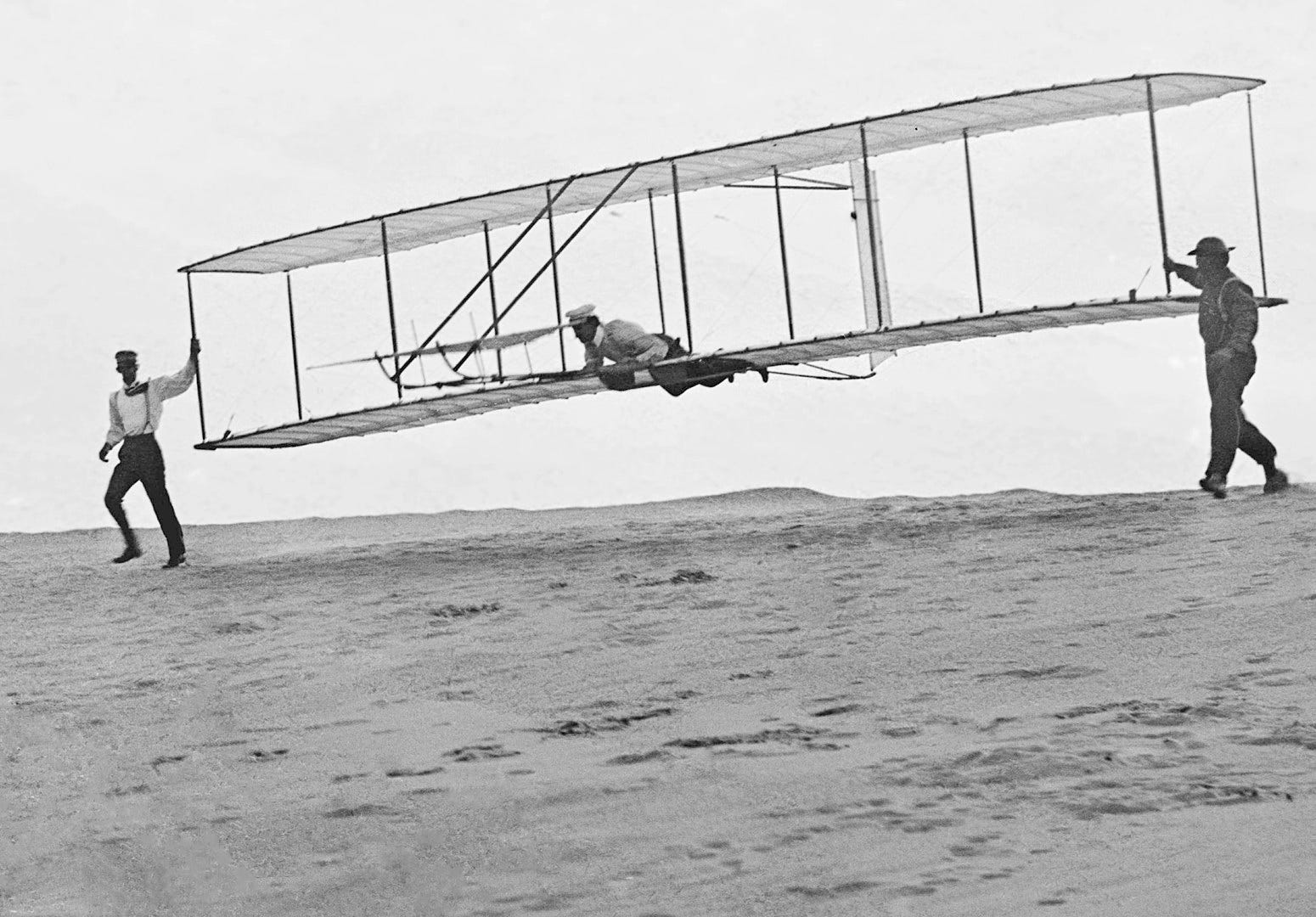
Imagine if Galileo had never challenged the geocentric view of the universe that was backed by the Catholic Church and had been accepted as truth for millenia, or if the Wright brothers had never defied conventional wisdom that powered flight was impossible, or if Martin Luther King Jr. had not stood up to injustice and fought for civil rights, or if Dr. Harvey Washington Wiley – known as the “Father of the Pure Food and Drugs Act” — had never advocated for federal food and drug oversight.
The world would be a much different place without them.
Who do you think are some of the most notable modern-day rebels? What can we learn from them?