

Violinmaker Geoffrey Seitz on the unmatched quality of handmade
In our automated and increasingly artificial world, Seitz's passion and commitment to his craft remind us of the importance of creating for its own sake.

“No work is insignificant. All labor that uplifts humanity has dignity and importance and should be undertaken with painstaking excellence.”
—Martin Luther King Jr.
This week, I hit a wall. Perhaps it was the change in the weather, but no matter, I found myself completely unmotivated and uninspired.
Anyone who knows me well knows that I rarely stop working. I’m always immersed in some activity, whether it’s brainstorming, strategizing, planning, interviewing, writing, editing or, yes, even housework (i.e., keeping my family functioning and on schedule). I don’t often take time to relax, so — feeling a bit overwhelmed by life and questioning where to go with mine — I allowed myself the time and space to just be. To let go of the pressure that I alone put on myself.
I found myself seeking out past sources of inspiration — John Steinbeck, Hermann Hesse, documentaries and even my own writings.
While my abilities have certainly evolved over the years, many of my old works are no less intriguing. They represent a younger me, at a point in time when, even then, I was trying to figure my life out.
One piece in particular spoke to me, and I wanted to share it with you today.
I had driven by Geoffrey Seitz’s violin shop for years, always curious about his craft and what kind of person he must be, before I finally contacted him for an interview, in 2012. There is something innately fascinating about people who work with their hands, and Geoff was happy to welcome me into his shop to share his story and craft with me. (I’m happy to report that his shop is still operating to this day.)
I hope you enjoy it — and don’t judge my younger self too harshly.
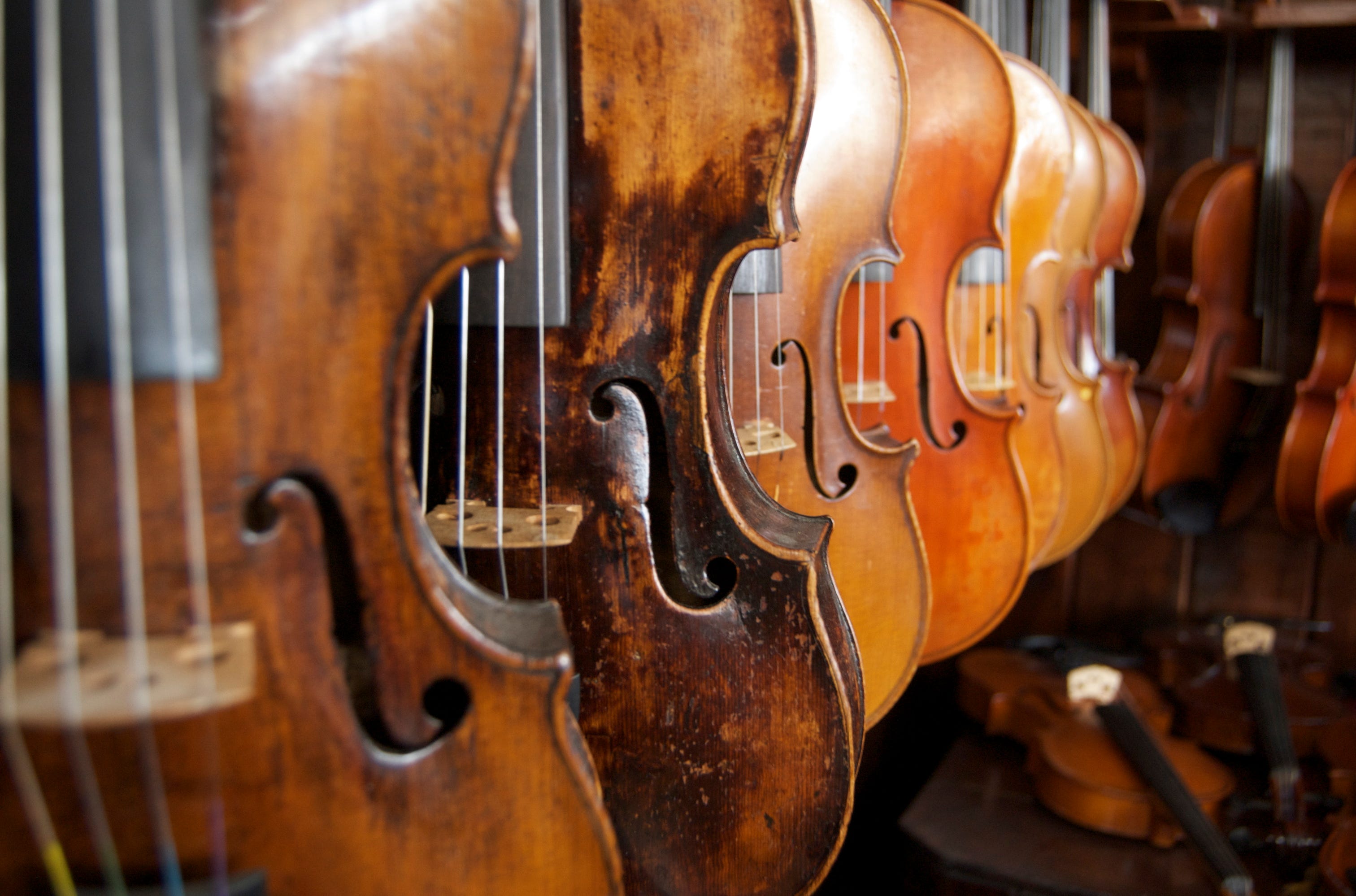
Geoffrey Seitz isn’t just a violinmaker. He’s a “violin nut.”
There’s not much space in his 3,000-square-foot St. Louis shop, that isn’t dedicated to violins. They’re on tables, in cabinets, in boxes, in closets, in safes, on shelves, in frames; hanging from the walls; painted along the tops of the walls; featured in stained glass and paintings; displayed as porcelain objects; and even recreated as a pillow.
This is his paradise.
“Some businesses are strictly focused on profit … whereas we’re kind of violin nuts,” Seitz said. “We’re actually kind of crazy about the instruments. We have to make a profit to stay alive, but we’re really into the instruments.”
Seitz opened his shop, Geoffrey J. Seitz Violinmaker, in 1987. The shop buys, sells, appraises, repairs and builds primarily violins, violas, cellos and basses, but occasionally buys and sells guitars, banjos and mandolins.
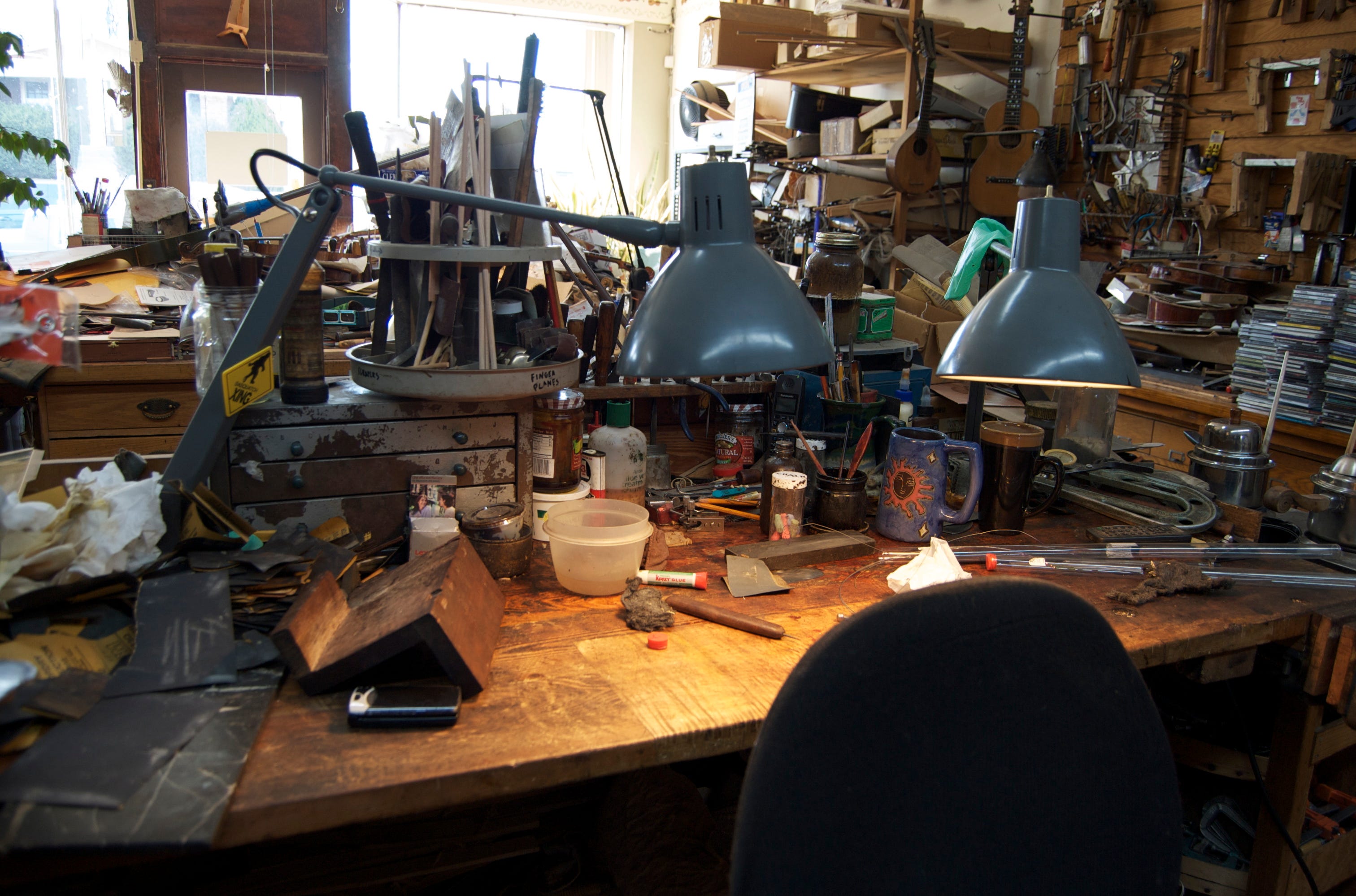
While the shop mostly does repairs, Seitz also hand makes violins, a craft he learned at a young age. Having apprenticed with a violinmaker in Spokane, Washington, for nearly five years, Seitz appreciates the undeniable quality of handmade over machine-made.
“The ultimate product is handmade,” Seitz said. “That’s the best thing. They make violins in a factory, but they’re never as good as a totally handmade violin. I make these instruments mostly by hand — very few power tools. I use a band saw and a drill press, and that’s it. Everything else is all hand-chiseled and hand done. So when you do it by hand like that, you get closer to the way the perfected product is.”
And the perfected product, which most violinmakers have since tried to replicate, is a Stradivarius — a violin made by Italian violinmaker Antonio Stradivari in the late 1600s. Because of their value and low numbers, Stradivariuses are difficult to come by.
“His instruments are rare and they sell for millions of dollars now,” Seitz said. “I’ve seen many of them. We’ve had some instruments in here that were actually made by guys that worked with him, but they’re so rare that they don’t really come around very often.”
Seitz, who currently has two commissioned violins, designs all his instruments from scratch, it taking him nearly 200 total hours to complete a single instrument. Like most violinmakers, Seitz uses only the best wood: Maple for the back, sides and neck of the instrument and Spruce for the top.
“Those are woods that have been used for hundreds of years, and you still use the same wood,” Seitz said. “Those seem to work the best.”
While he may not get the opportunity to build violins as often as some of the other aspects of his job, he prefers building — which he said is an easier process—to repairing.
“To do a repair correctly, you have to — whoever made the thing to begin with, you have to keep what they were trying to do in mind, and try to bring it back to where that is, which is challenging because each one’s a little different,” Seitz said. “Whereas making frees you to kind of do what you want to do.”
Besides working with violins all day, six days a week, he naturally plays the instrument as well. Seitz ‘passion for the violin was passed down from his father, who not only played the violin but also was a sort of craftsman himself.
Seitz remembers his father — a machinist and mechanic — always working with his hands.
“He was always making stuff, all the time,” Seitz said. “So I got into working with my hands. I used to do other things. I worked on cars, just did all kinds of stuff, but then I discovered the violin.”
Originally into drums as a kid, Seitz eventually picked up his father’s violin, which he often left “laying around the house.” But having grown up during the 60s, Seitz was fascinated not by the music he heard his father play with the violin, but by The Beatles and Elvis.
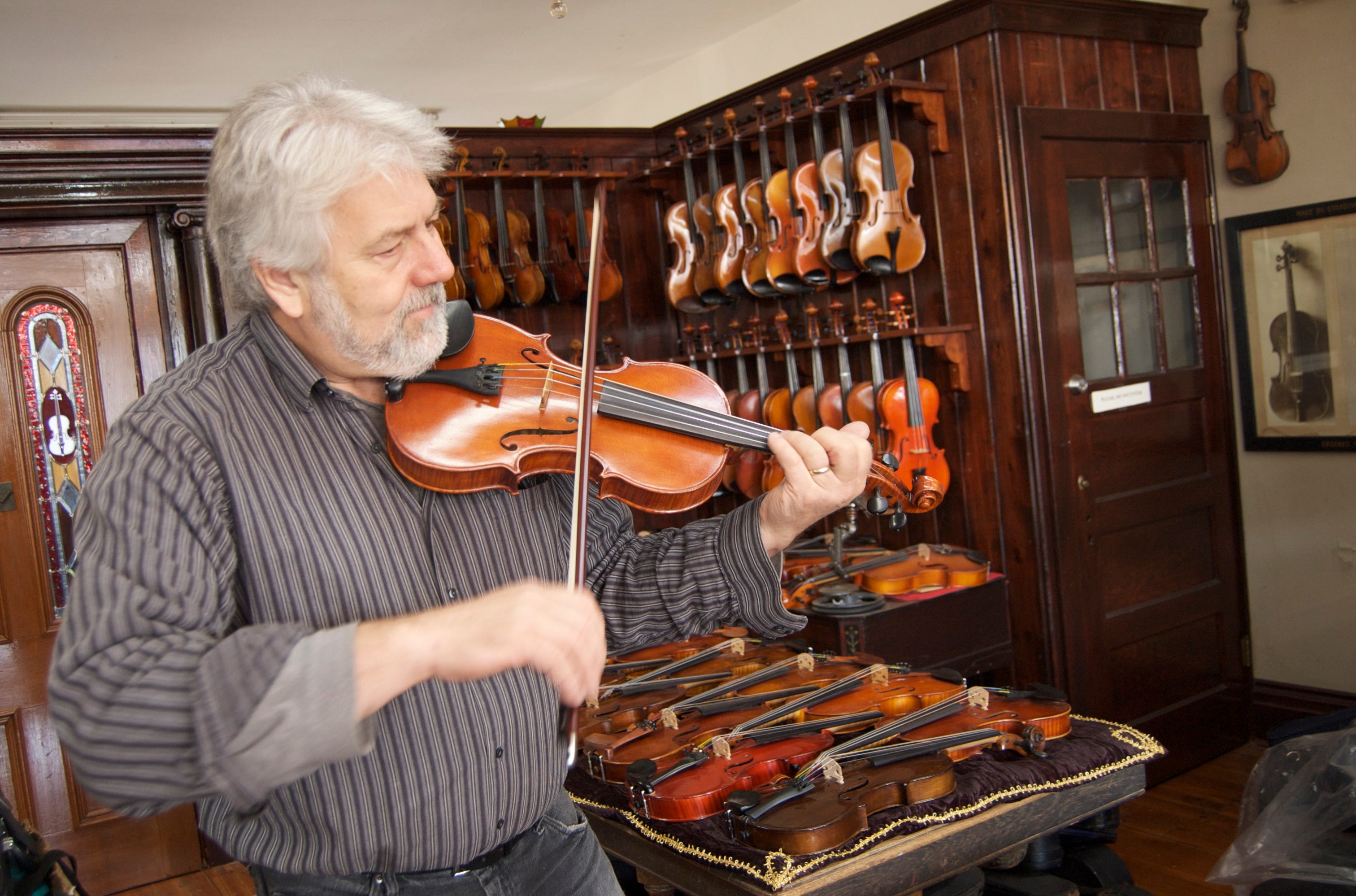
“My dad played a kind of country music,” Seitz said. “I had no interest in that at all. But then, when I got older and went to college, I got back to my country roots and got back into that kind of music, and discovered that the stuff my dad was playing was kind of cool.”
With only a limited amount of classical training on the violin, Seitz prefers to play “fiddle music,” playing with several bands in the St. Louis area.
“Fiddle is just a nickname for the violin, so it’s like ‘cat’ and ‘kitty,’” Seitz said. “Fiddle music tends to mean square-dancing music or Irish or bluegrass or country music or something like that. I play that. Although, I’ve had a little bit of classical training, too.”
But what most people consider classical music today is actually much different than when it first originated. Classical music hundreds of years ago was much closer to the folk, or fiddle, music it has evolved to, Seitz said.
“So 100 years ago, a classical violinist would actually do stuff, like they would do tricks with the violin,” he said. “They would throw the bow up and catch it and do all this really weird stuff, and that was acceptable. They also used to improvise a lot. They would just make up stuff in the middle of a Mozart piece. People don’t really do that anymore. They’re much more strict about the interpretation of the music.”
Violins, Seitz said, are made to imitate the human voice — a reason why they have a tendency to incite intense emotions in listeners.
“They almost sound like they’re magic,” he said. “They almost sound like they’re alive. People hang a lot of romantic notions on the violin because of that.”
And Seitz’s shop attracts these people, those who may not play but are simply fascinated by the instrument and the sound it creates.
The playing, and paying, clientele vary in the types of music they play and their walks of life. The shop attracts mostly students and the average player, but also symphony players from St. Louis and beyond, Seitz said.
“It’s a very interesting business to be in because of the people that — you know, musicians that play, violinists, cello players and stuff,” he said. “Some are just incredibly interesting.”
Seitz’s shop also sells some very rare and collectible instruments. One such item is a bow made by Francois Tourte — the Stradivari of bows.
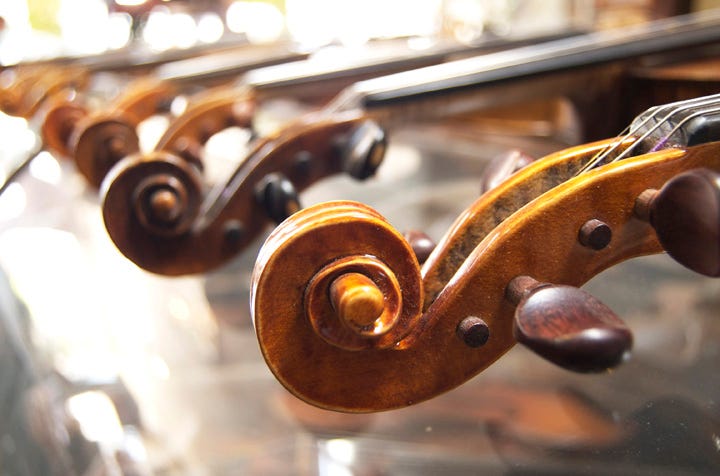
“The bow was perfected in the late 1700s by this guy named Francois Tourte in France,” Seitz said. “We actually own a Francois Tourte. Those are extremely rare. We have it for sale at $75,000.”
His shop, although it is a business, is more about the instruments, being knowledgeable and providing a service — with passion that customers won’t find elsewhere.
“We really focus on getting people instruments that they like as opposed to just selling them a product,” Seitz said. “We want something that they can have fun with.”
What’s one passion, hobby or interest that never fails to bring you back to yourself?

Sounds like happiness. This is a life worth living.