

Using the 'wisdom of faith traditions' to bring Americans together
The One America Movement is showing that rather than being part of the problem of polarization, religion can be the answer to it.

“If you lose money, you lose much; if you lose friends, you lose more; if you lose faith, you lose all.”
—Eleanor Roosevelt
Early in 2025, when government cuts resulted in the loss of funding for refugee resettlement, a group of faith leaders in Northwest Arkansas worked together to raise money for a local refugee resettlement organization. By hosting a benefit concert, they were able to raise more than $10,000 to help the organization stay open.
Composed of people from various faith traditions and political ideologies, this group is a testament to the good that can come when we stop fixating on our differences and, instead, focus on what we have in common — and it’s part of a larger movement: the One America Movement.
An organization committed to reducing toxic polarization by working with faith leaders and faith communities, One America Movement is using the “wisdom of the faith traditions” to achieve its mission, says Chandra Whetstine, the organization’s chief operating officer (COO).
“We’re building a network of people of faith who speak and act against toxic polarization in accordance with their own faith traditions,” she says. “Our approach is that if we can support those Americans, to help them have healthy group dynamics inside and between their groups, then that becomes kind of a stabilizing force for the broader society.”
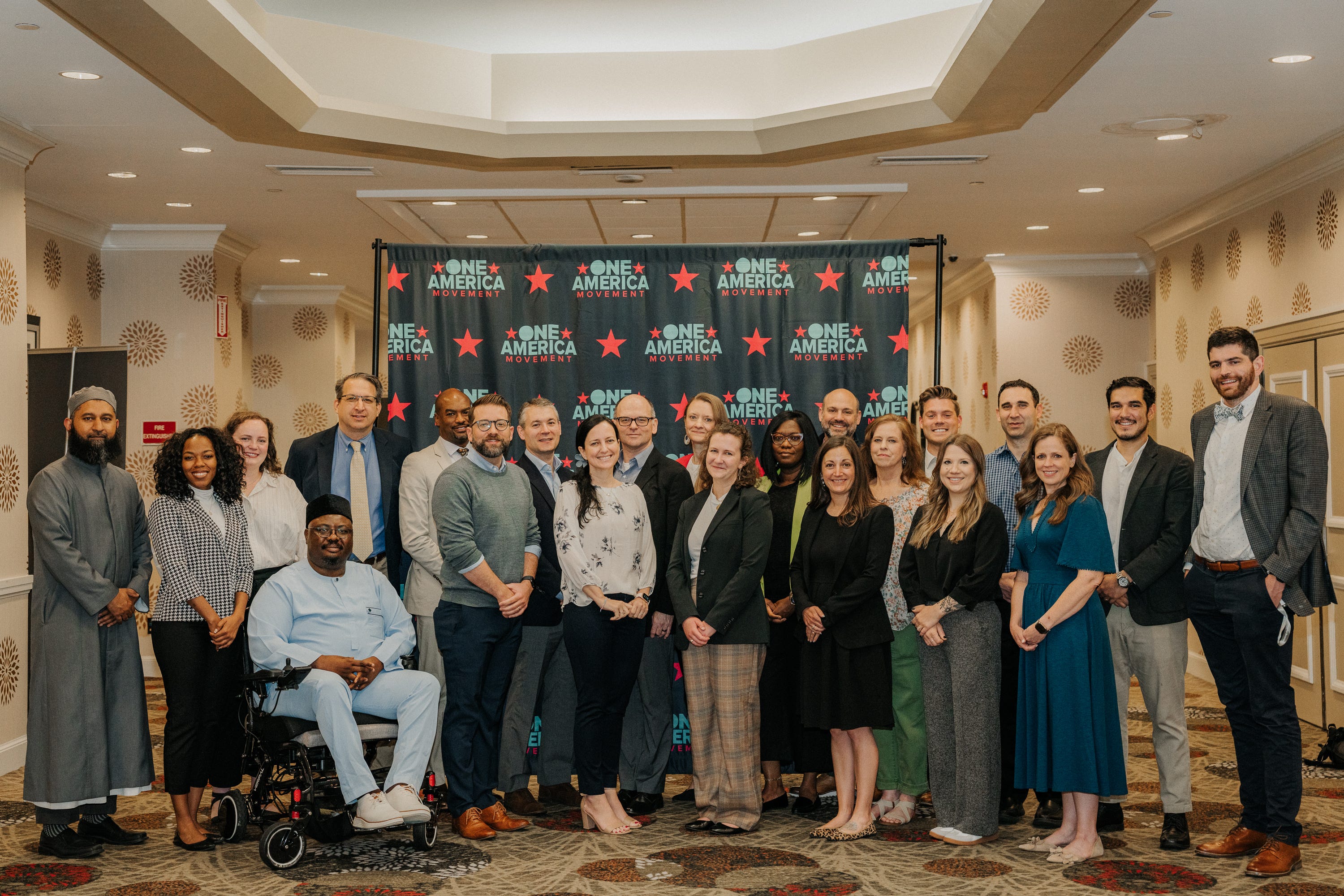
One America’s vision is “a resilient, strong and united country working together to solve our common challenges.” With nearly 110 million Americans (almost one-third of the country) who attend worship services regularly, the organization sees a tremendous opportunity to have greater impact — as its partnership in Northwest Arkansas illustrates.
“That’s an example of something that individually they would not have been able to do,” Whetstine says, “but because they were working together and crossing divides, they were able to have a bigger impact in their community than they otherwise would have.”
The movement’s approach – and the best tool against fear, anger and division, Whetstine says – is decidedly simple: building relationships. “There’s an old saying that it’s hard to hate up close,” she says, “so the more we can get people into real relationships with people who are different from them, the better off we’re going to be.”

Fortunately, despite all the differences between faith communities, there’s a core conviction that unites them: a belief in something greater than themselves, Whetstine notes.
But in a world that increasingly venerates Earthly power over a higher power, politics has displaced religion in the modern zeitgeist. As Whetstine says, “Our religious identity has been co-opted.”
“One thing we hear again and again from the faith leaders we work with is things like, ‘I have my congregation for an hour a week, and they are being’ — to use a Christian term — ‘discipled by cable news the rest of the time,’” she adds. “Politics is trying to make itself the highest good, but in faith traditions, we recognize that politics is not the highest good. That releases some of the pressure for us to be perfect and, instead, really lean on the highest good, which is God.”
As One America sees it, toxic polarization runs deeper than blue or red, liberal or conservative, Democrat or Republican. Rather it’s a spiritual dilemma — and one that can be solved by seeing religion not as part of the problem, but as the answer to it.
“We’re thinking about it as a spiritual crisis because it’s not just a question of what kind of society we’re going to have or what kind of government we’re going to have, but what kind of people we’re going to be,” Whetstine says. “Toxic polarization is convincing us that the people across our divides are evil, that they’re hateful, that we have to stop them at all costs — and that has an impact on who we are inside.”
Through its work, One America is building a network of faith leaders who can speak and work against polarization in alignment with their faith traditions. In no small part, the organization is helping faith communities “put their identity as a person of faith above their political identity,” Whetstine says, while respecting each faith.
“We leave a lot of room for the uniqueness of each faith tradition, and we recognize that those values are often at the heart of this,” she says. “For us, faith is the answer to the spiritual crisis of toxic polarization.”
More than politics or religion
In addition to being COO of the One America Movement, Whetstine is a mother of three, a trained doula, a Peace Corps volunteer, a seminarian at Wesley Theological Seminary and a member in discernment in the United Church of Christ. And while each of these are integral components of her identity, these personal dynamics are often what’s left out of conversations around religion or politics.
“In a healthy society, we all have many different identities, and depending on who we’re with, different aspects of who we are surface in the way we’re relating to [those people],” says Whetstine. “But right now, our political identity is kind of subsuming everything else.”
Thus, she believes the first step toward building relationships is acknowledging and appreciating nuance — even among people in one’s own faith community. That’s why One America focuses both on in-faith and cross-divides work.
The organization’s in-faith work — that is, efforts among people of the same faith — considers the question, “How do we shape the dynamics inside of our own faith tradition when toxic polarization is putting our congregations into a pressure cooker?” Whetstine says.
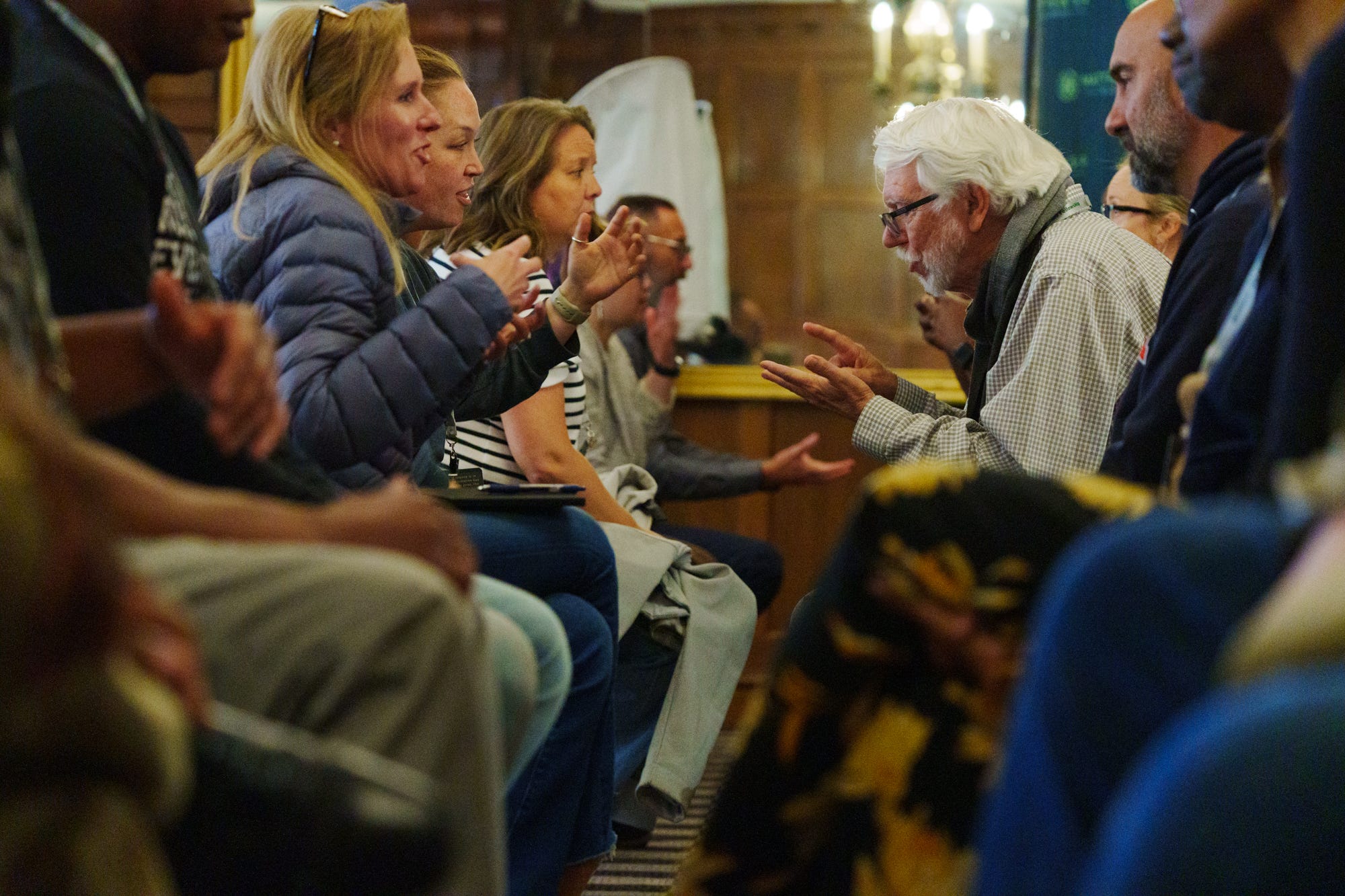
With evangelical pastors, an imam and a rabbi on staff, One America conducts outreach to and works with faith leaders across the country to gain insight into what they’re seeing in their own congregations. Then, working with experts in the social science of polarization, One America staff build workshops for these leaders “that apply the wisdom of their faith to those dynamics,” Whetstine says.
Workshops include How to Talk to Your Neighbor, the Science of Polarization, the Science of Listening, and Peacemaking and Polarization — all focused on teaching faith leaders how to have difficult conversations across divides. Faith leaders then take what they learn in those workshops and share it with their congregations via sermons, homilies and Sunday School lessons, for example, with topics ranging from what it means to love your neighbor to misperceptions about people across divides.
The latter, Whetstine says, is one of the greatest obstacles One America faces in combating toxic polarization — which is why building trust is crucial.
“So often we think people across our divides hate us, we think people across our divides are extreme in their views,” she says. “The thing we have to do is build trust enough so that people are willing to come into the room and get to know each other just as human beings.”
To help people do this, the movement partners with More in Common, a research organization whose mission is to address the underlying drivers of polarization, and Beyond Conflict, a nonprofit focused on conflict resolution. Using both organizations’ research on the perception gap and negative meta-perceptions, One America Movement facilitates both in-faith and cross-divides workshops that bring the language of faith traditions to bear on the issues of the day.
By challenging assumptions and addressing misperceptions, Whetstine says people often realize the other side isn’t as extreme as they thought. “We see a lot more overlap in views,” she notes — a fact that enables more progress.
With staff members embedded in different faith communities across the country, One America advocates for and leads both cross-divides collaboration that not only helps bridge divides, but also makes it possible to resolve real issues affecting those communities.
“[We’re helping bring] people together across divides to take action on things that matter to them in their communities,” says Whetstine. “What that looks like is bringing together an evangelical church, a synagogue and a mosque to do service projects together.”
The group in Northwest Arkansas, for example, worked with One America to plan and host a regional summit focused on bringing understanding of polarization — including the social science behind it — to more people in their community. Additionally, a group in another region came together to paint a domestic violence shelter.
“It’s really hard to have negative meta-perceptions, to have false assumptions, to hate someone when you’ve been a part of that kind of personal moment,” Whetstine says. “When you get people together up close and give them an opportunity to start to build those relationships, that’s really how we can address antisemitism, racism, all of the big bads; it really stems from fostering those relationships first.”
One America’s cross-divides work also helps build understanding across racial and religious groups, with ongoing efforts focused on combating these -isms and heading off toxic polarization. In Chicago, for example, the organization has been bringing together faith leaders from black churches and the Jewish community to foster understanding between both groups.
“They’ve spent the last 18 months together building relationships, learning about the history of each other’s communities, talking about antisemitism and how it shows up in the community, talking about racism and what different people in [the black community] have experienced, and sharing Sabbath meals together,” says Whetstine. “Nothing specifically has happened – there hasn’t been an incident among their communities – but they’re trying to build those relationships so that if something did happen, they would stay together.”
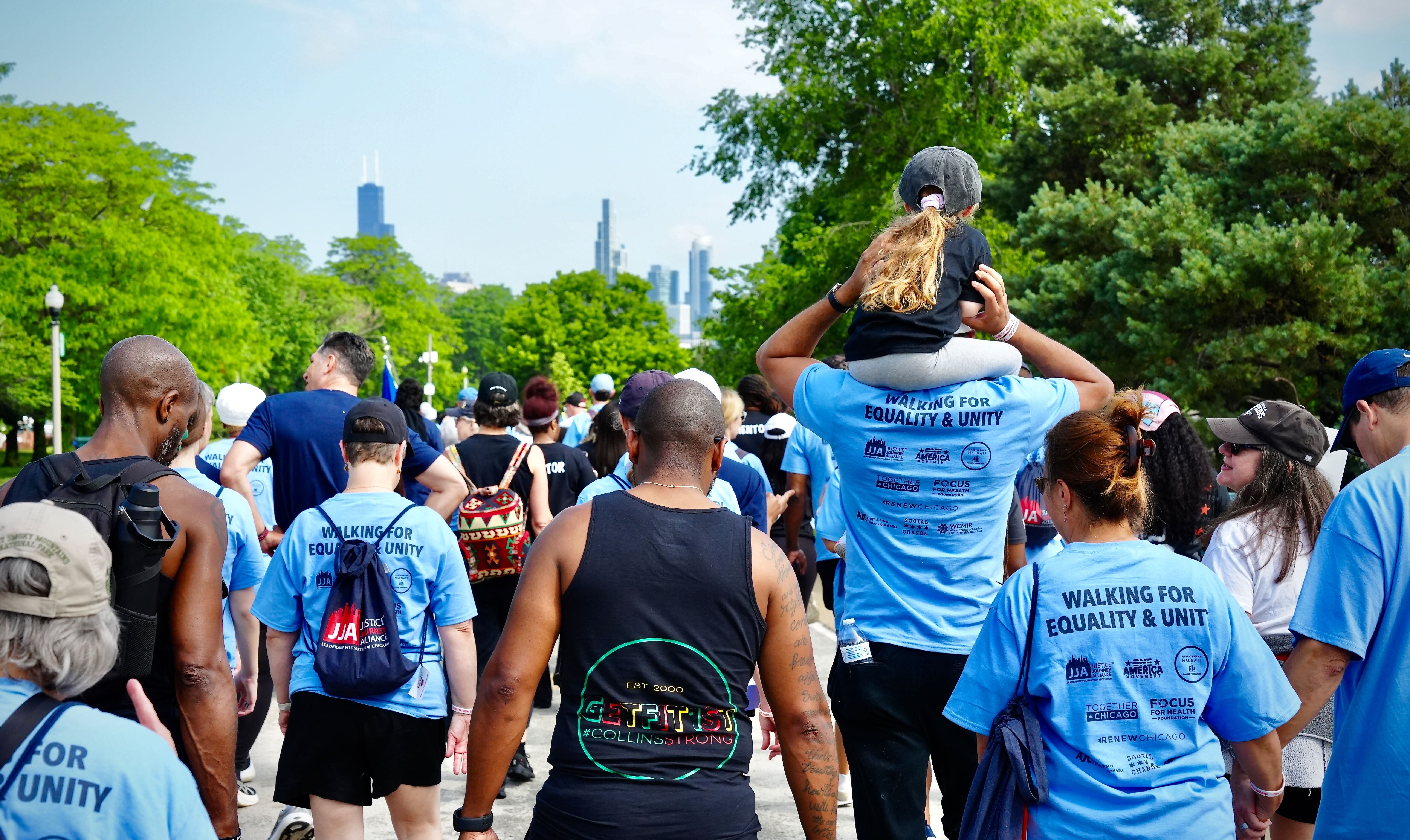
“The idea is how do we bring people together across divides so they can build those relationships and create an identity for themselves that transcends what divides them,” she adds.
Restoring our faith in each other
Preemptive and preventive efforts guide much of One America’s work, but in a country that has become increasingly more polarized, the organization has seen the need for restorative work as well.
Two years ago, the movement created a Rapid Response Toolkit in collaboration with its social science partners to support faith leaders when people in their community have been attacked. Designed with cross-divides initiatives in mind, the toolkit is meant to keep people from withdrawing from depolarization work “even in the face of traumatic events,” Whetstine says.
Yet, as One American learned in the face of events like October 7 and the assassination of Charlie Kirk, coming together across religious or political divides can take time.
“People in those times of stress often retreat to their corners,” says Whetstine. “One thing that we found after October 7th was that people are not necessarily ready in those moments to work across divides. People don’t always want to come together in the [direct] aftermath, but that doesn’t mean that the work stops; it just means the work looks different.”
Success, in One America’s book, is based on action — but as with any movement, that can take time. Ultimately, though, when it comes to toxic polarization, Whetstine says the best way to gauge success is through behavioral change: “Will you build relationships across divides? Will you speak up when people in your own group are moving toward extremes — and will you do that publicly and independently of One America’s prompting?” she says.

“When we’re seeing people who are giving sermons about polarization, for example, when we see people doing things like the cross-divides work to raise money for the refugee resettlement program,” she says, “those are the kinds of actions that we’re using to measure success.”
Practically speaking, for people feeling overwhelmed by our current polarization, Whetstine recommends two things. “It sounds very trite, perhaps, but start with prayer in your own faith tradition,” she says. “It puts us into a relationship with God that is on a different level than our politics and … helps us to recognize that there is something bigger than what’s happening with our elected officials.”
The second is to be hospitable. “Even if it simply means calling your uncle before Thanksgiving — the one you’re going to disagree with — to build the relational muscle outside of the conversation about politics,” Whetstine notes.
Ultimately, she acknowledges that coming together will take more than just our personal faith; it will require restoring our faith in each other.
“No program, no piece of paper, no five-step solution is going to be better than a deeply rooted relationship when something terrible happens in the world,” she says.
How has your faith informed your willingness and ability to listen to and learn from others across divides?

Wow! Anti-entropy works, who would have thought it? Americans are such an energetic people, huh?