The wisdom in wandering
How some of the greatest minds have made the best decisions by stepping away (and how you can, too).

“The world is changed by your example, not by your opinion.”
— Thomas Jefferson
The impulse to act or respond instantly in a moment is a strong one — especially in today’s rage bait–fueled culture. A social media post grabs our attention, makes us angry, affirms our preconceived beliefs and we click “reshare” before we’ve even finished reading it. Before we’ve even considered if the words are true or if the author’s intentions are good and just (or if the author is a real person, for that matter). And before we stop to consider our own intentions.
The pressure to act instantly – to self-reflect, to think critically and to make a decision – can feel overwhelming. Only that’s not what’s happening in those moments, is it?
Because our bodies are terrible at distinguishing perceived threats from real ones, we may respond to a social media post about Trump’s immigration policies or a trans athlete on a girls’ soccer team the same way we would a grizzly bear standing 15 feet in front of us in a forest. Increased heart rate and blood pressure, tightened muscles, quickened breath, tunnel vision — what we know as the fight-or-flight response. This serves us well when faced with a predator, but when it comes to social media, it can be detrimental.
The problem lies in the fact that our automatic physiological response can override our prefrontal cortex (responsible for rational thinking), effectively hijacking our emotions. This can lead us to make rash decisions out of fear, anger or anxiety. As an article from Harvard Health Publishing notes, the fight-or-flight response can cause the body to “overreact to stressors that are not life-threatening, such as traffic jams, work pressure and family difficulties.”
While it’s easy to tell ourselves that resharing divisive political or ideological posts has no ramifications, that’s not quite true. In resharing this type of content with no due diligence, we risk boosting false information, fueling animosity, perpetuating echo chambers, increasing polarization, incentivizing toxicity and alienating people in the name of satisfying our own impulse.
We are not, however, powerless against it.
History shows us, time and time again, that some of the wisest, most consequential decisions were not made under pressure, in a fight-or-flight moment, but after their makers stepped back, slowed down … and went out of doors. Literally.
From wooded walks to quiet fishing trips, these leaders sought solace and clarity in nature, allowing their minds the time and space to wander. And while we might not be world leaders or world-renowned scientists, our responsibility to society, to think before we act, is no less great.
Contemplating emancipation
By the summer of 1862, President Abraham Lincoln had drafted the Emancipation Proclamation but hesitated. He knew the stakes: Such a decree would redefine the Union’s purpose in the Civil War and the nation’s identity itself. While wrestling with the timing and potential consequences, Lincoln would leave the White House for long walks. Away from the cabinet room, with only the quiet of the grounds and his own thoughts, Lincoln contemplated the gravity of the situation and the task that lay before him.
When the Union won at Antietam that September, he returned to the decision with a clearer mind and resolute will, issuing a proclamation that altered the course of American history.
Strolling through Bern
Albert Einstein’s most transformative ideas were not scribbled feverishly at a desk, rather while he wandered the streets of Bern. Working at the Swiss Patent Office in 1905, he would take breaks to wander the town’s streets, allowing his imagination to also meander. On those strolls and tram rides, he envisioned himself racing alongside a light beam or standing in an elevator in space. Through these mental exercises, or gedankenexperimente, he developed his theory of relativity. Einstein later admitted that the best ideas came when he sought solitude and allowed himself to daydream, giving his mind freedom from immediate tasks.

Painting in the garden
During the darkest days of World War II, British Prime Minister Winston Churchill carried with him the weight of Britain’s survival. Yet he often retreated to painting in the gardens of Chartwell, his estate in Kent. There, brush in hand, he could immerse himself in color and form rather than Britain’s existential future. Far from dereliction, these respites steadied him for the next day’s fight in Parliament or the War Cabinet. Churchill’s ability to inspire and lead during these dark times was fueled by these shining moments, where reflection replaced panic and perspective displaced despair. As Churchill himself said, “painting came to my rescue in a most trying time.”
Fishing to find perspective
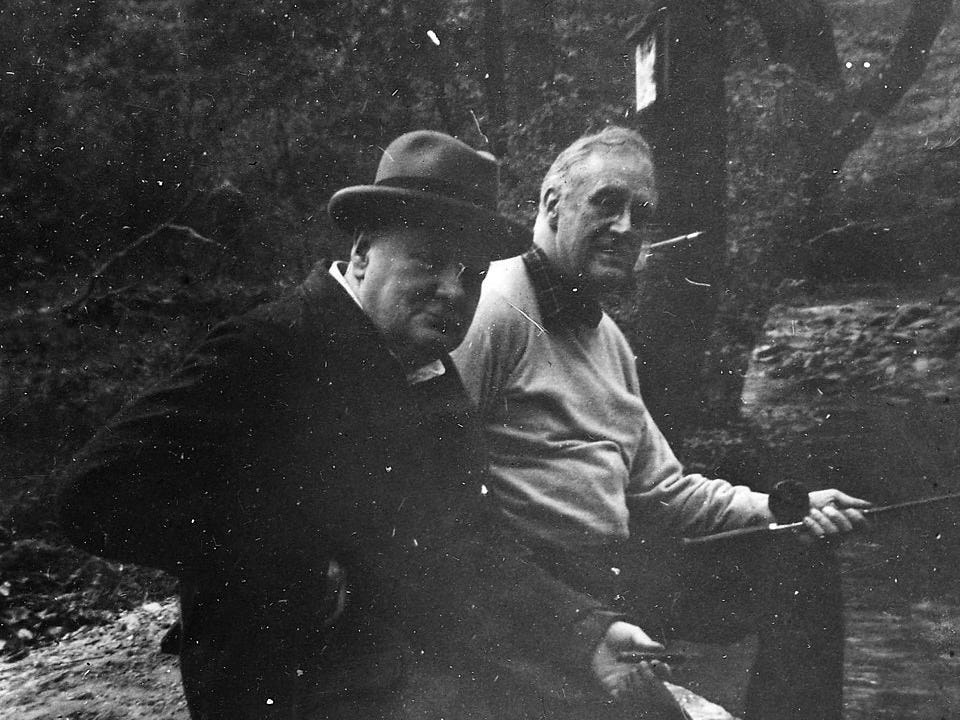
President Franklin D. Roosevelt also understood the wisdom of stepping away. Throughout the Great Depression and WWII, he would disappear on fishing trips or retreats, even taking Churchill with him on occasion. These excursions, which some – who wanted their leader constantly at his desk – saw as scandalous, were in fact critical resets. It was often after returning from such trips that Roosevelt unveiled bold programs or decisive wartime strategies — decisions shaped not by frantic meetings in Washington but by moments alone in nature.
Following one fishing trip in Texas, Roosevelt said, “The chief objective is to get a perspective on the scene which I cannot get in Washington. ... You have to go a long ways off so as to see things in their true perspective.”
When slowing down becomes a radical act
Leaders, thinkers and visionaries often changed history for the better not because they acted instantly, but because they resisted this impulse. By walking, painting, fishing, daydreaming or simply being outdoors, they granted themselves the clarity that only distance provides.
In a culture that seems to value speed above all else, their stories remind us that slowing down is sometimes the most radical act. When the stakes are high – and even when they don’t seem to be – the wisdom to pause, to step outside, go for a stroll, perhaps pick up a fishing pole, has the ability to change not only one’s own course but the course of history.
What do you do, or where do you go, when you want to slow down and reset?
“In every walk with Nature one receives far more than he seeks.”
— John Muir