

The problem with freedom
Why some are so quick to give up the freedom that Americans like Margaret Corbin gave so much for.

“They who can give up essential liberty to obtain a little temporary safety, deserve neither liberty nor safety.”
—Benjamin Franklin
On November 16, 1776, 25-year-old Margaret Corbin — dressed as a man — joined her husband John on the battlefield in the fight to defend Fort Washington on Manhattan Island. When John was struck and killed by British cannon fire, she took over his post at the cannon, continuing to load and fire upon the British until she, too, was hit in the left arm, chest and jaw, and eventually taken prisoner.
Although the British won the battle — with Corbin among the prisoners of war released back to Revolutionary hospitals — the Americans ultimately won the war. For her service, which left her unable to use her left arm ever again, Corbin was awarded a lifelong military pension (albeit only half that of male soldiers).
But, more importantly, Corbin had helped Americans gain their right to self-determination — to make decisions about their own lives and how they should be governed. Despite the fact that, as a woman, Corbin would not gain that right herself for another 140-plus years.
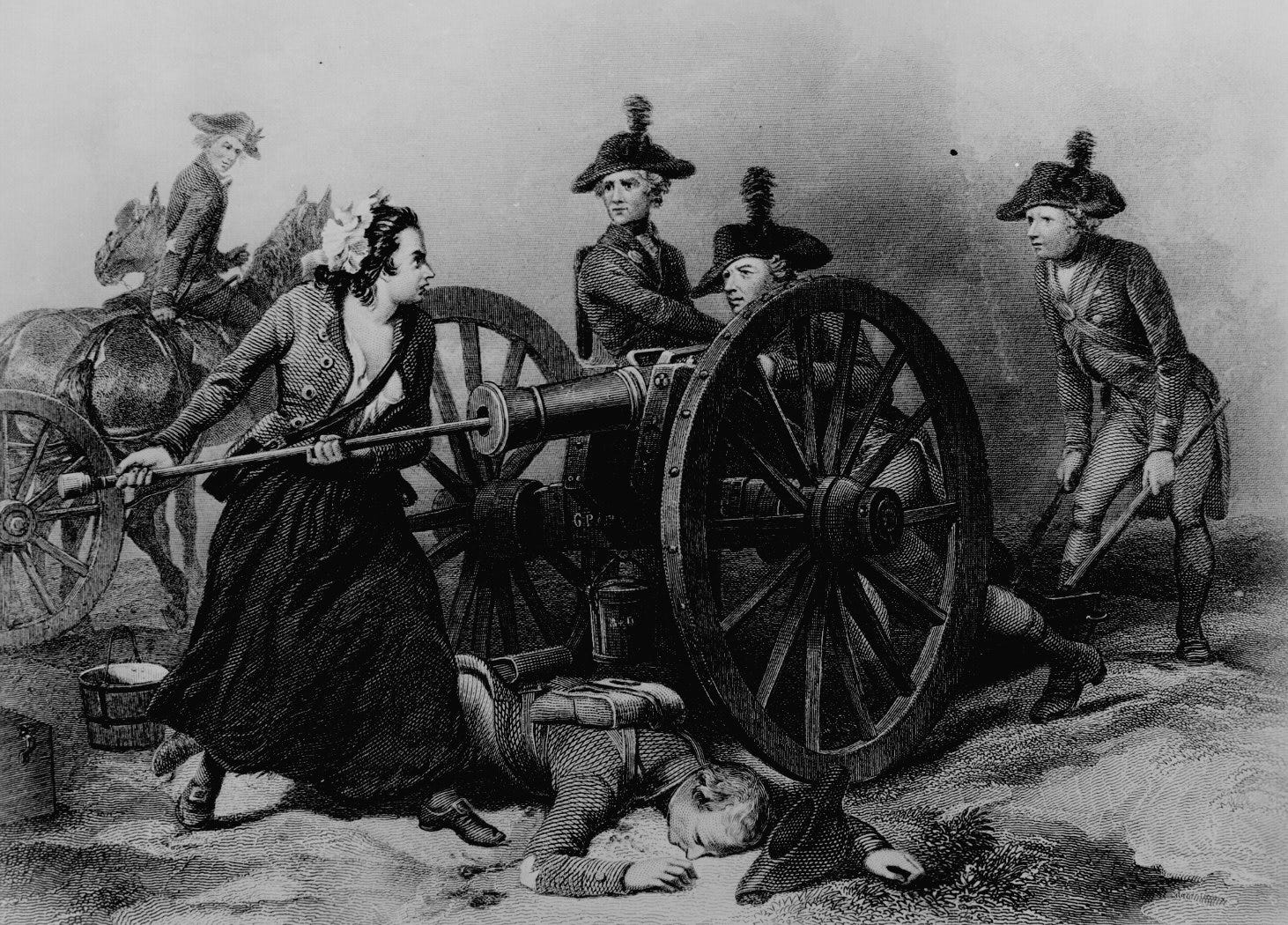
For Americans like Corbin, the path to freedom — like the American Revolution itself — has been a slow, steady climb. Achieved through incremental victories, beginning with the greatest of them all. And while its benefits were initially reserved solely for white men, freedom, like an object in motion, is difficult to stop.
By the early 1900s it was discussed at domestic gatherings and among womens’ clubs, whispered about on Indian reservations and dreamed about in black communities. And one by one, through many hard-fought battles, freedom notched another victory and another and another. Each bringing new understanding of what freedom meant and who was allowed to reap its rewards.
Albert Camus had it right when he said, “Freedom is nothing but a chance to be better” — not just from a moral standpoint. But because freedom brings with it the potential for progress.
On a basic level, the “chance” that Camus speaks of is little more than the opportunity to try. The ability to explore the world; to pursue new endeavors, fail or succeed; to build confidence; to try new ways of doing things; to choose your own path; to contribute your natural talents to the greater good; to find fulfillment.
Freedom affords us many things. What you choose to do with it is up to you.
For some, like Joni Mitchell, this has meant creating art or music: “Freedom to me is a luxury of being able to follow the path of the heart, to keep the magic in your life,” she said. “Freedom is necessary for me in order to create, and if I cannot create I don’t feel alive.”
Yet, this same freedom that allows us to conquer fears and build new things and know the power of discipline also allows us to choose idleness — a state that often inevitably gives way to sloth, apathy and insecurity. Thus the freedom that is so liberating for some is just as frightening to others. As Eleanor Roosevelt once said:
“Freedom makes a huge requirement of every human being. With freedom comes responsibility. For the person who is unwilling to grow up, the person who does not want to carry his own weight, this is a frightening prospect.”
And so, out of fear or laziness or apathy, some have sought out – even demanded – bigger government. Through government intervention and support, from programs and monies to laws and restrictions and bans, we’ve slowly given up the right to self-determination for which Margaret Corbin and others so bravely fought. As President Franklin D. Roosevelt aptly put it, “True individual freedom cannot exist without economic security and independence. People who are hungry and out of a job are the stuff of which dictatorships are made.”
Consequently, it was our nation’s first leader, who, so aware of freedom’s frailty, willingly gave up his power once he had achieved it.
At the end of 1776, George Washington’s army, badly battered and nearly broken, found renewed vigor in a series of small victories against the British army and its hired Hessians. Seeing the opportunity to retake the momentum, the Continental Congress granted Washington unlimited power to do what he thought necessary to win the war. A responsibility not taken lightly by Washington, he wrote to Congress in response:
“Instead of thinking myself free’d from all civil Obligations, by this mark of their Confidence, I shall constantly bear in Mind, that as the Sword was the last Resort for the preservation of our Liberties, so it ought to be the first thing laid aside, when those Liberties are firmly established.”
As Washington so well understood, freedom exists for those brave enough to claim it and those smart enough to never willingly give it up.