The commoditization of the news media
When we stop paying for the news, who pays the price?

This is the first in a three-part series exploring the history and implications of the news media on Americans and our democracy.
Long before modern technology enabled us to know the results of an election in France or of an invasion in Ukraine or of a new policy out of Washington — before streaming platforms, cellphones, TV, radio, newspapers and even couriers — humans used smoke signals to share critical information long distances. Useful for conveying important one-word messages — danger!, help!, victory! — the medium had its limitations.
Beyond its inability for nuance, smoke signals depended on factors like weather, visibility, timing and vigilance for effective delivery. Thus messages were easily muddled, mistaken or missed altogether. A tribe or village’s proximity to the sender affected its receipt of a message; the closer you were to its creator, the more you could accurately decipher its meaning – so long as there was a shared understanding of the signal code.
Over time, as signal fires became the telegraph became newspapers became TV, the information delivered by these media moved beyond that which is critical for our immediate survival. No longer limited by carbon communiques, we can now know what’s happening around the nation and world instantaneously, using not fire and smoke, but light and waves. Every presidential tweet, the latest celebrity gossip, every conspiracy theory, the latest outrage.
Yet while our communication has advanced, what of our ability to decipher the meaning and motives behind it?
The result of the proliferation of the news media has been an amalgam of outlets and information — and fierce competition for our attention and dollars.
But when news becomes commoditized, what gets lost in the smoke?
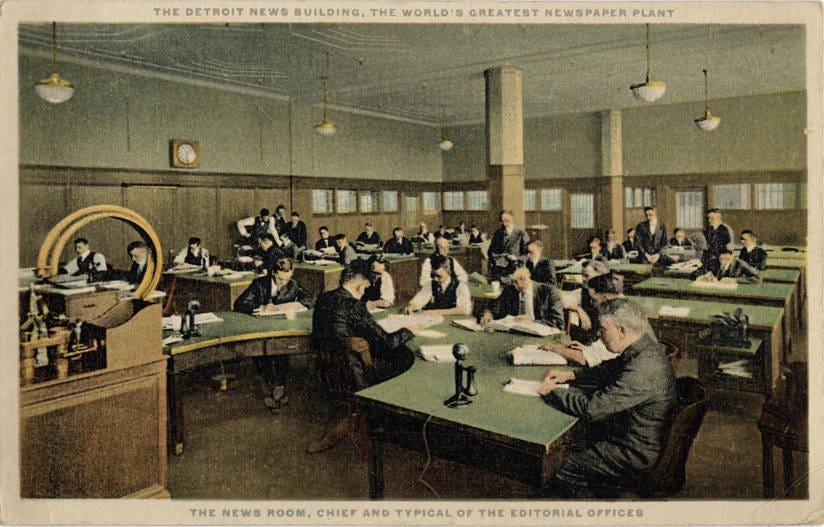
In the 1970s — a decade defined by the Watergate scandal, the end of the Vietnam war, Roe v. Wade, high inflation and unemployment — the news media in the U.S. was more trusted than the government. Public confidence in mass media hovered between 68% and 72% during the decade, according to Gallup’s first measurement of trust in the media.
Since that time, that trust has dropped markedly. In a 2025 Gallup poll, just 28% of Americans expressed a “great deal” or “fair amount” of trust in news media to report the news fully, fairly and accurately.
Somewhere in the decades that gave rise to talk radio, cable news, the 24-hour news cycle, the Internet, cellphones and social media, Americans lost their faith in the news media. At the same time, trust in government and our willingness to vote across party lines has declined, while our negative views of the opposing political party have risen. Politics have become increasingly tied to a person’s personal identity, and bipartisan cooperation is nearly nonexistent.
So, is this the chicken or the egg? Did news media help create the problem or does it simply report it? How well do news media companies serve the needs of the public and our republic? And are all mediums and outlets created equal?
To begin to answer these questions, we have to go back.
“The real issue has always been who’s going to pay, because somebody has to pay,” says Robert Picard, a specialist on media and communications economics and policy, and a senior research fellow at the Reuters Institute. For nearly 50 years, Picard has been studying the economics and management of media companies – specifically, how well they serve public needs and the needs of democracy. “We started out with newspapers where there was very little advertising,” Picard notes, “so people had to pay.”
That was in the late 1700s, when a paper cost about $5 for one to two pages of content. Limited readership, however, meant newspapers weren’t big moneymakers.
“The average people couldn’t afford a newspaper,” Picard says. “Newspapers were intended for the elites, for the emerging merchant classes, but they really weren’t for the public. Most of the public couldn’t even read at the time.”
As literacy improved and Westward Expansion spawned new towns, newspapers exploded in number. “Chambers of commerce would essentially subsidize a printer to come and run a newspaper,” Picard notes.
Yet through most of the 1800s, readers remained the primary funders of news media. But with automation came a new financier.
“What happened in the late 1800s was industrialization – the rise of machinery that made printing faster and cheaper, particularly in big cities,” says Picard. “So, we began seeing the rise of newspapers that were aimed at the masses.”
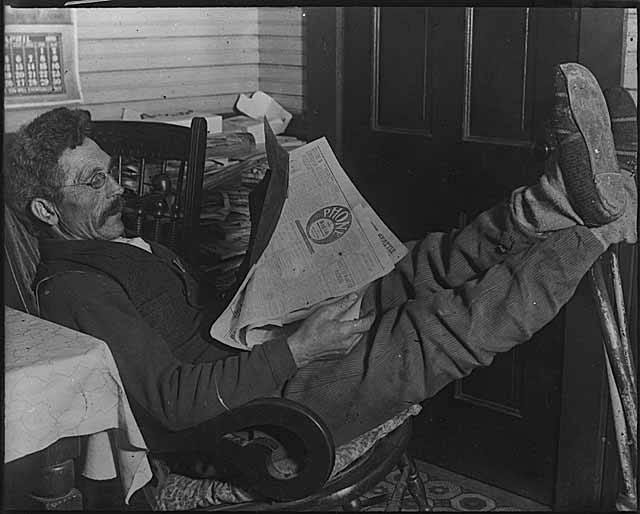
Industrialization also enabled the manufacture of consumer goods – and with that came advertising. Coupled with reductions in printing costs, advertising transformed the news media’s methodology.
An industry once narrowly focused on news began to cast a much wider net.
“Suddenly you had lots of sports, you had lots of society news, you had women’s pages, cooking pages,” Picard notes. “They began sprouting dramatically to try to appeal to everybody in the population. This was a time before there were any other media, so the newspaper was basically something for everybody and … everybody would get it.”
With the boom in U.S. consumer goods products, advertising went from making up roughly 25% of newspapers’ overall revenue in the early 1900s to 80% by the end of the century.
“You had all of these branded products and stores starting to advertise heavily,” says Picard, “with consumers basically only paying the distribution costs.”
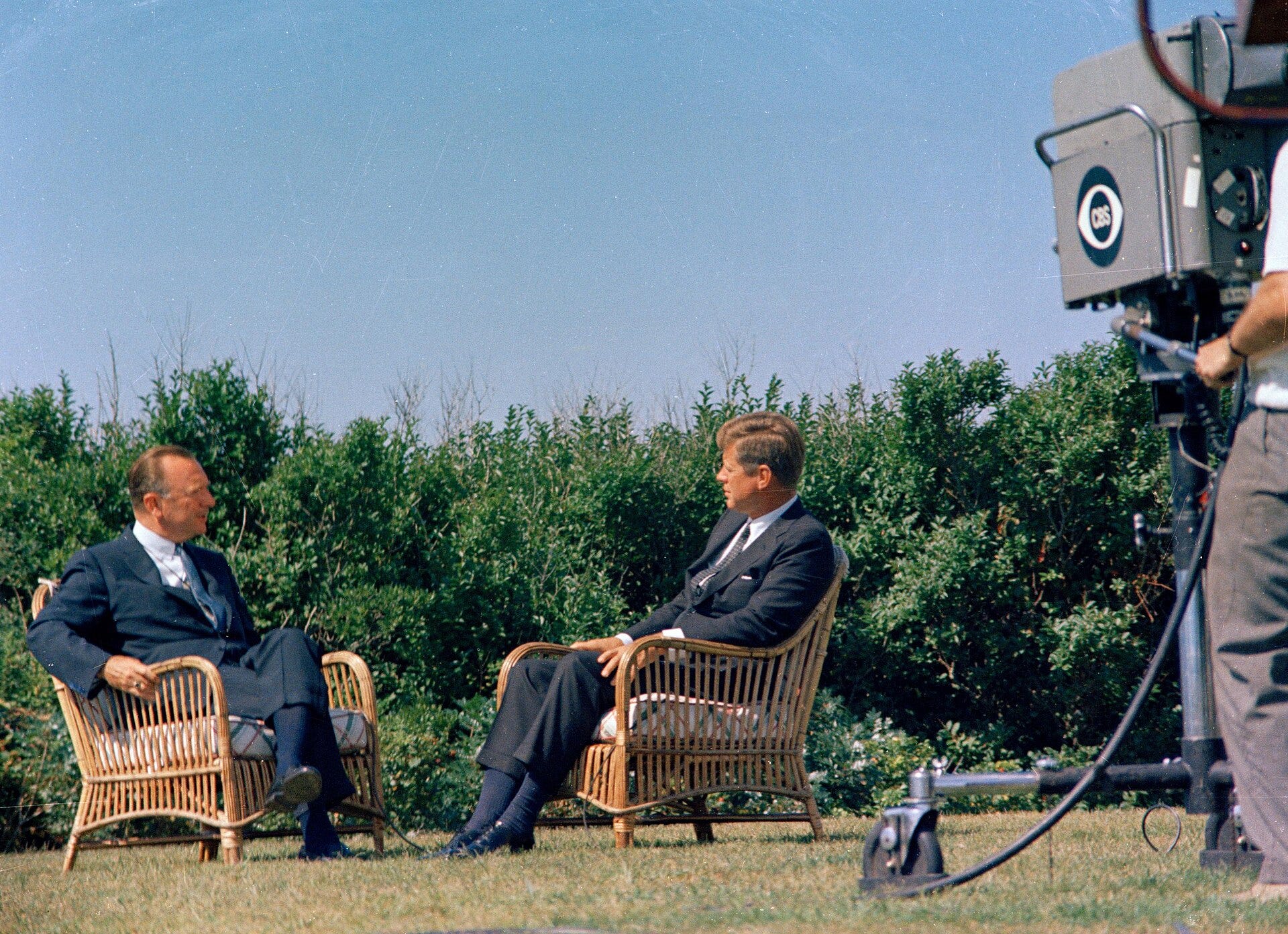
But as is always the case when a new medium comes along, newspapers took a hit when radio emerged in the 1920s. After that came television — which “nearly killed radio,” Picard says. Despite the prevalence and convenience of television news, newspapers continued to hold their own until around the turn of the century.
Around 2005, advertising and circulation growth peaked, even as many newspapers migrated to the Internet. “At that point you had essentially 40% of U.S. households getting a newspaper,” says Picard.
As they lost advertisers to television and eventually streaming news, newspapers attempted to hand more of the cost back to readers who, by this time, had grown accustomed to getting their news for free or cheap. The Internet, however, all but ensured the failure of this reversal as “there was so much advertising on the Internet,” Picard says, “that the prices of advertising plummeted.”
The loss of classified ads to the world wide web all but sealed newspapers’ fate. As they struggled to turn a profit — a challenged amplified by the 2008 recession — newspapers began reducing their special sections, followed by their news departments. Mergers, mass consolidations and closures followed, hitting small, local newspapers hardest.
The result has been fewer journalists writing more stories using fewer resources, at a time when attention is declining.
“If you go back 50 years or so, [newspapers] had lots of dedicated writers doing the news, and they might only write one or two stories a week,” Picard says. “What that meant is they were doing a lot of research, talking to a lot of people, digging into a lot of things in the community.
“Today, the average journalist is writing anywhere from eight to 15 stories a day, which means they’re not able to do a lot of research — they’re just knocking stuff out.”
While more pronounced in the newspaper industry, the problem isn’t confined to it. All media – even the now dominant streaming news platforms – are struggling to remain relevant and profitable.
“The quality has diminished simply because they don’t have the time, money or effort to [go that deep],” Picard says, “and that’s a real problem for all communities across the U.S.”
But when news outlets are so reliant on advertisers for their survival, it’s not just the quality of the news that suffers, but the integrity of the entire news media apparatus. “We’ve seen lots of conflicts of interest – particularly with advertising – where stories get killed or buried simply because the advertisers don’t want them [reported],” Picard says.
The outcome is a media landscape in which the needs of the audience, and thus those of democracy, are superseded by those of the people writing the checks. But advertisers and news outlets need eyeballs to both make and justify spending money. So, in the race to attract audiences, competition is often cutthroat and the tactics questionable.
As Syracuse University professor and Research Director at the Syracuse Institute for Democracy, Journalism & Citizenship Johanna Dunaway points out, “Whether people are listening to the radio, whether they’re reading stories or watching videos on a website or on TV, regardless, the model is to keep people engaged.”
Check back next week for the next installment in this series about the politicization of the news media and the implications for American civic life.