

A lesson in suffering
How Viktor Frankl and other Holocaust survivors found meaning in the face of immense suffering.

“We had to learn ourselves and, furthermore, we had to teach the despairing men, that it did not really matter what we expected from life, but rather what life expected from us.”
—Viktor E. Frankl
One doesn’t have to look too hard or too far nowadays to find discussions about healing and trauma — the topics now as common as the weather or our latest streaming watchlist.
Partly an outgrowth of the pandemic, mental health has enjoyed a tremendous decline in the stigma that once shrouded it — one of the only redeeming things to come out of the pandemic era. This heightened awareness of and focus on healing and health has led many to prioritize their mental and emotional well-being, seeking help and working to overcome painful past experiences.
That, in itself, is a good thing.
But the focus on dealing with and overcoming our struggles quickly became a preoccupation, followed by an obsession. It’s led to a tendency to lean into and exaggerate our trauma and suffering. Now, we don’t just look inward, we open up about negative and painful experiences with friends, family, neighbors, acquaintances, strangers on social media.
The result is a culture compulsively focused on preventing and eliminating any sources of conflict or suffering, while at the same time creating trauma where none previously existed.
The stories we tell ourselves matter

Through stories we discover universal truths, expand our minds, question the status quo, learn and grow — individually and collectively.
So, with all this attention being paid to our mental and emotional health, the question then is, are we happier?
According to recent data, the answer is, not so much.
The most recent World Happiness Report — which ranks the happiest countries based on how a representative sample of residents from 140-plus nations rate their quality of life — the U.S. dropped to its lowest ranking in the list’s 13-year history to No. 24. Americans under 30 are some of the least happy among us. If the report assessed only the contentment of these young people, the U.S. wouldn’t even rank among the 60 happiest countries. A January 2024 Gallup survey reinforces this growing discontentment, with less than half of Americans of all ages saying they’re “very satisfied” with their lives.
It seems that, despite all of our examinations, all of our attempts at healing, all of our avoidance of conflict and all of our “traumatization” — if I can coin a phrase — of events, we still struggle to find satisfaction.
Or … is it that this fixation has in fact made us worse off.
As Austrian psychiatrist and psychotherapist Viktor E. Frankl wrote, “I consider it a dangerous misconception of mental hygiene to assume that what man needs in the first place is equilibrium or, as it is called in biology, ‘homeostasis,’ i.e., a tensionless state.”
Frankl believed that stress served a purpose on the path to mental well-being and fulfillment.
“It can be seen that mental health is based on a certain degree of tension,” he said, “the tension between what one has already achieved and what one still ought to accomplish, or the gap between what one is and what one should become.”
Frankl knew all too well that suffering was often a conduit for finding deeper meaning and purpose.
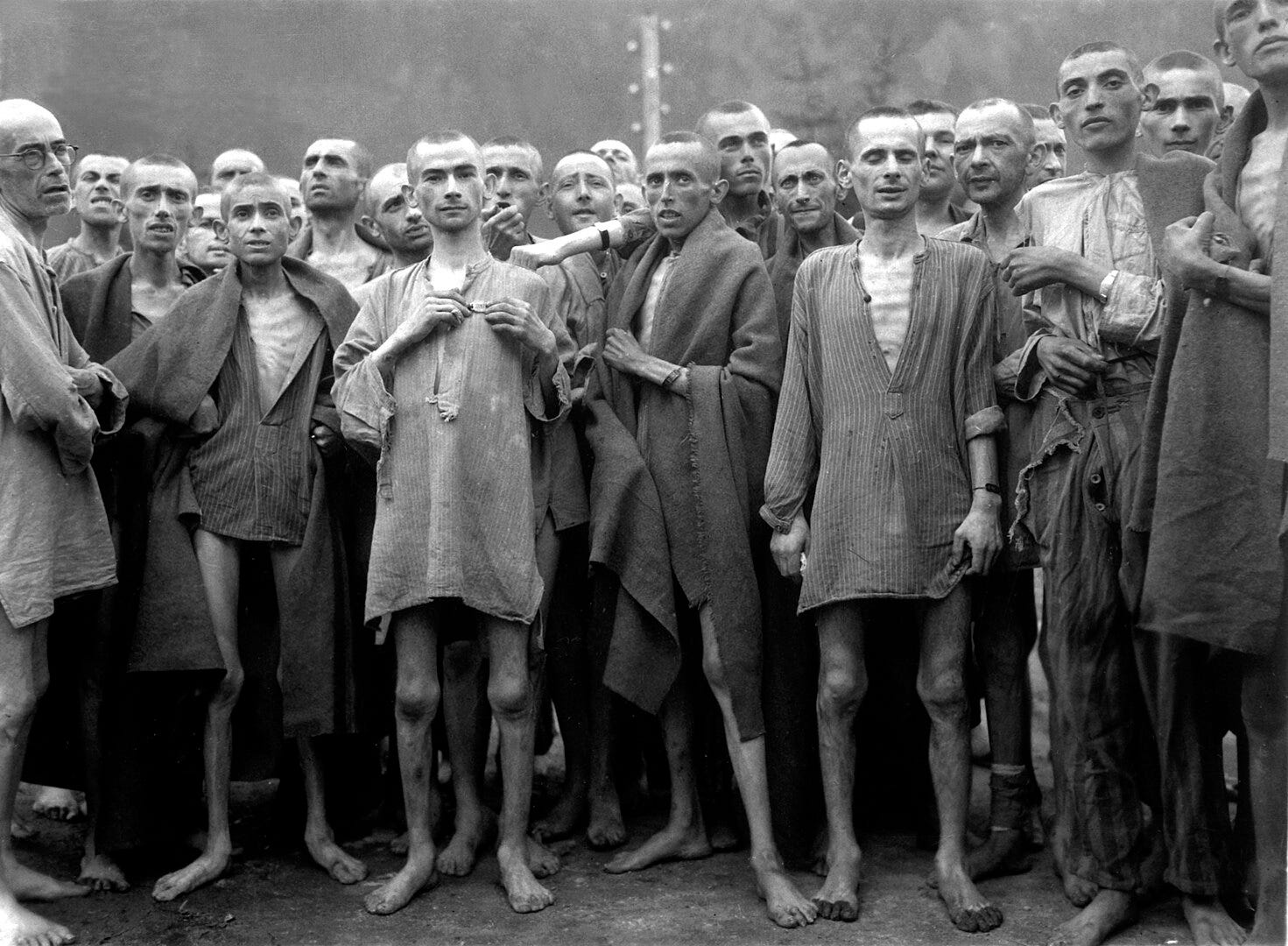
By the time he arrived at Theresienstadt ghetto and concentration camp in 1942,
Frankl had been practicing psychology for more than a decade. With a focus on suicide prevention, he had developed his own school of psychology, known as logotherapy (Greek for “healing through meaning”), distinct from the likes of Sigmund Freud and Alfred Adler. But, unlike his mentors, Frankl believed an individual’s primary motivation in life is the search for meaning.
His experience in four different concentration camps between 1942 and 1945 only deepened his belief in the importance of purpose.
During the Holocaust, Frankl, like other Nazi prisoners, endured hard labor, disease, torture, starvation, as well as separation from and the death of loved ones. Yet in spite of all of this, as Frankl observed, some of the prisoners retained their dignity and humanity.
Under such horrific circumstances, how could some find the strength to go on when others so willingly gave up, Frankl wondered?
The answer, he concluded, wasn’t just a matter of physical strength or luck, but depended on whether or not a person had a sense of meaning, or purpose. As he would later write, “He who has a why to live for can bear with almost any how.”
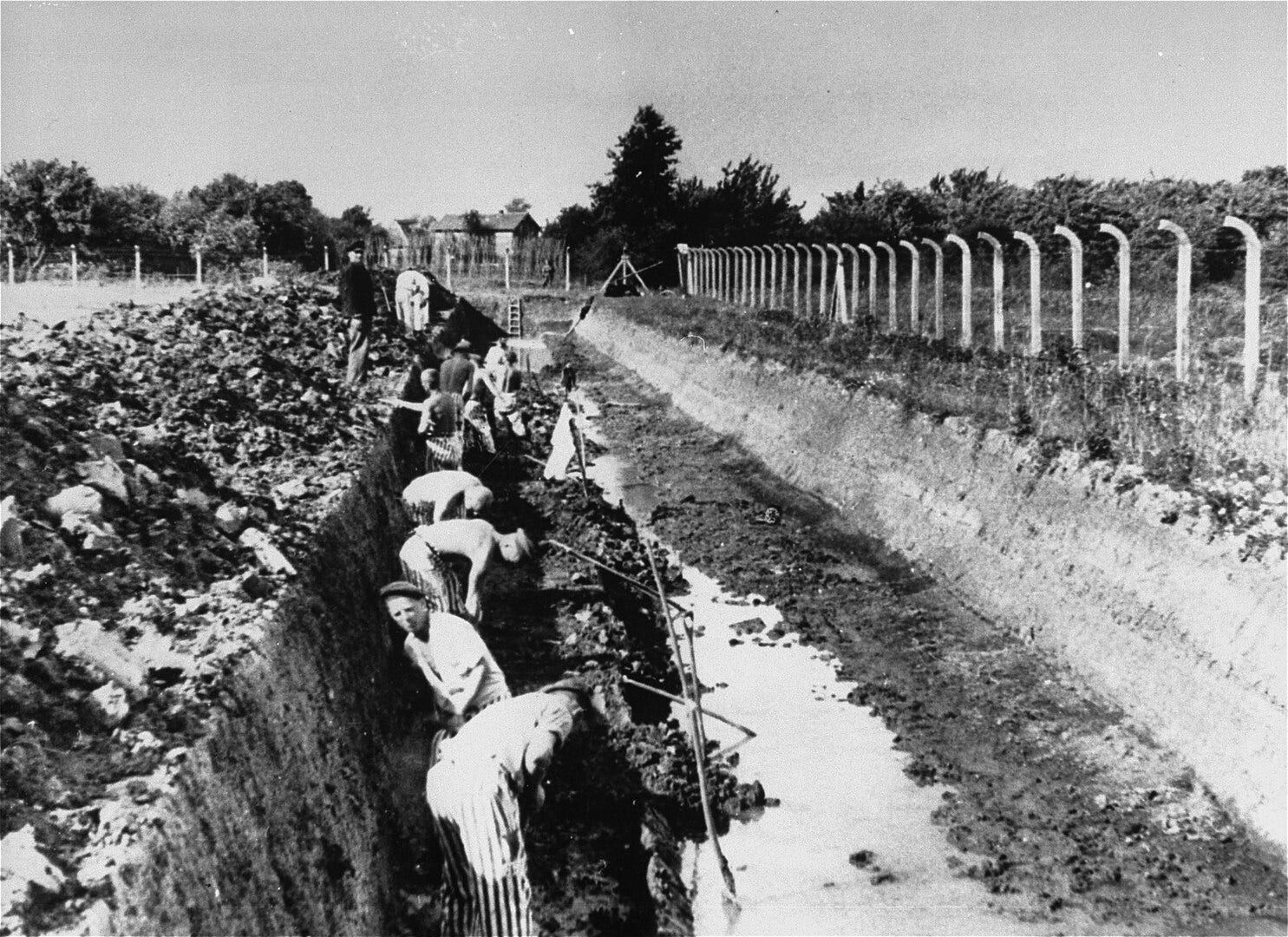
Once liberated from Türkheim concentration camp, a subcamp of Dachau, in 1945, Frankl returned to his home in Vienna alone, having lost his father, mother, brother and pregnant wife in the concentration camps. But he had also lost his book manuscript, which the Nazis had taken from him at Theresienstadt.
Over the course of nine days, Frankl completed his second iteration of the manuscript, which we now know as the best-selling book “Man’s Search for Meaning.” In it, he shares his experience and that of other prisoners in the concentration camps, including the ability of some to find meaning despite their lack of control over their circumstances.
“We must never forget that we may also find meaning in life even when confronted with a hopeless situation, when facing a fate that cannot be changed,” Frankl wrote. “For what then matters is to bear witness to the uniquely human potential at its best, which is to transform a personal tragedy into a triumph, to turn one’s predicament into a human achievement. When we are no longer able to change a situation … we are challenged to change ourselves.”
While Frankl believed that complete avoidance of suffering is impossible, he didn’t think it necessary in order to find meaning. Rather, he believed suffering could bring a kind of clarity to those who were lacking.
“I only insist that meaning is possible even in spite of suffering — provided, certainly, that the suffering is unavoidable,” he wrote. “To suffer unnecessarily is masochistic rather than heroic.”
To Frankl, how we respond to the situations life throws at us — how we endure, how we process and move past these experiences, and the meaning we derive from them — is the choice between adding value to the world, or detracting from it.
“The way in which a man accepts his fate and all the suffering it entails, the way in which he takes up his cross, gives him ample opportunity — even under the most difficult circumstances — to add a deeper meaning to his life,” Frankl wrote. “It may remain brave, dignified and unselfish. Or in the bitter fight for self-preservation, he may forget his human dignity and become no more than an animal. Here lies the chance for a man either to make use of or forgo the opportunities of attaining the moral values that a difficult situation may afford him. And this decides whether he is worthy of his sufferings or not.”
Recommended reading
If you haven’t yet, I recommend picking up a copy of “Man’s Search for Meaning.” And, if you’d like to learn more about Viktor Frankl, his life, experience or his school of psychology, check out the Viktor E. Frankl Institute of America.
This post contains affiliate links. We earn a small commission from books purchased through these links.
“Life ultimately means taking the responsibility to find the right answer to its problems and to fulfill the tasks which it constantly sets for each individual.”
—Victor E. Frankl

Beautifully written!